
Could the iron fence that looks strongest be the wrong fit for your home? A good choice starts with your property’s layout, sight lines, and design, then balances security with upkeep and curb appeal. This Residential Iron Fence Guide for Culver City Homes will help you make those decisions before installation planning begins.
It’s reasonable to want a fence that lasts, suits your home, and doesn’t create avoidable approval or boundary problems. In Culver City, new fences and walls require Planning Division approval before installation, so checking local requirements is part of the job, not an afterthought.
Here, you’ll learn how to compare iron fence designs and materials, consider rust resistance and maintenance, and identify site details that can affect the plan. We’ll also cover what to verify about property lines and local approvals, plus practical questions to ask a custom fabricator and installer. Start with the property, then match the fence to the way you want your home to look and function.
Key Takeaways
- Use the Residential Iron Fence Guide for Culver City Homes to weigh appearance, visibility, boundary definition, and security against your property’s layout.
- Compare picket spacing, fence height, and decorative details to find a design that fits your home and practical needs.
- Plan for regular visual checks, and know when damage or finish concerns call for a qualified ironwork professional.
- Confirm your property lines and applicable Culver City approvals before finalizing fence placement or starting work.
- Ask potential contractors about custom fabrication, site assessment, materials, finish, installation scope, and who handles each project step.
Why Culver City Homeowners Choose Residential Iron Fences
Start with the job you need the fence to do. A residential iron fence can define a boundary, shape the view of a front yard, and create a physical barrier around parts of a property. It can support controlled access when paired with a suitable gate. It can’t guarantee that a home will be protected from crime, and an open design won’t provide the screening of a solid privacy barrier.
A residential iron fence is a fixed metal barrier used to define and secure areas of a home’s property while maintaining some visibility through its design. It’s different from a gate, which controls an opening, and from a railing, which provides a barrier along a stair, balcony, or similar edge. Custom ironwork can be planned around a home’s layout and design preferences. It’s also distinct from options made of other materials, such as wood or vinyl.
What does an iron fence do for a home?
Its value depends on your priority. For curb appeal, the fence can create a clean visual boundary and complement the home’s architectural details. For security, it can form a sturdy physical perimeter, with a gate helping manage entry. For both, consider how the picket spacing, height, and gate placement work together. Open designs preserve sightlines and let landscaping remain visible, but they offer less visual screening than a privacy-focused barrier.
Material terminology can be confusing. The phrase “wrought iron” is often used broadly for iron-style fencing, though modern products may use other metals. Wrought iron refers to a specific traditional material, distinct from modern mild steel. Ask a fabricator to clarify what material is proposed, how it’s finished, and what upkeep it may need.
Which Culver City properties may suit iron fencing?
Iron fencing may suit a front yard where visibility and a defined edge matter, a side boundary that needs a clear perimeter, or a garden where you want to frame plantings without hiding them. A custom layout can account for the home’s features, but the site still sets the limits. Check grade changes, existing walls, walkways, and vehicle access before settling on a design. These details can affect fence placement, transitions, and gate operation.
Choose the balance that fits your property: appearance, a physical security barrier, or both. Then verify any restrictions that apply to your specific project before finalizing the plan. Iron Guys is a Los Angeles-area ironwork specialist founded in 1998, with custom fabrication and installation experience. Confirm current Culver City service availability before considering a location-specific project discussion.
Iron Fence Materials, Designs, and Details That Shape the Result
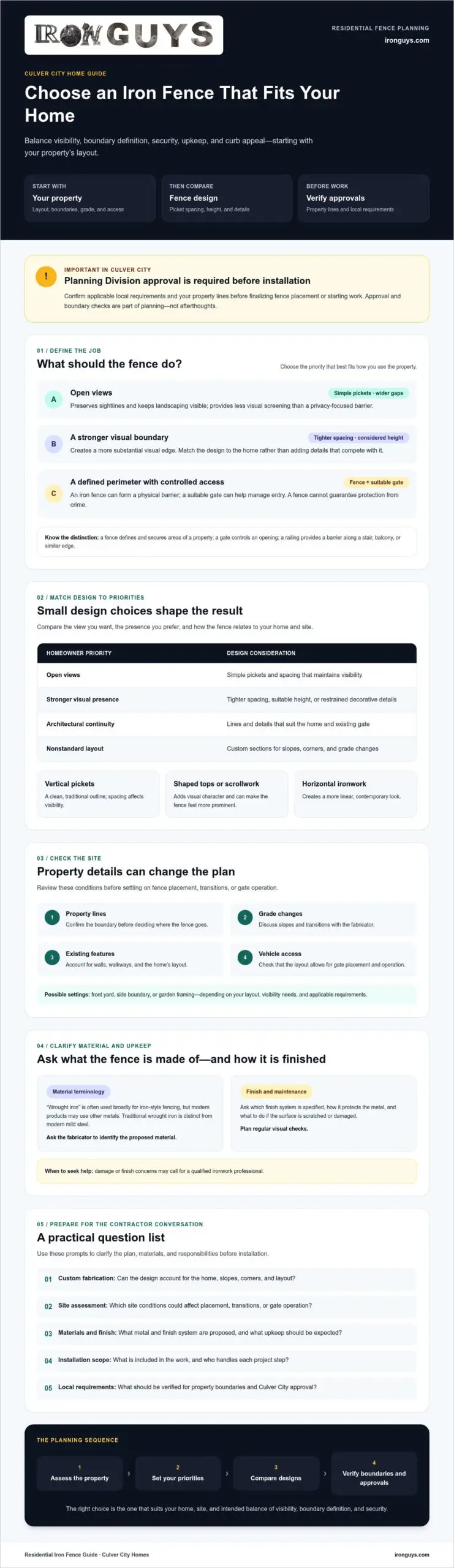
The right iron fence design should work with the house and the way you use the property. Simple vertical pickets create a clean, traditional outline. Decorative details, such as shaped tops or scrollwork, add visual character but can make the fence feel more prominent. Horizontal ironwork offers a more linear, contemporary look. These are design approaches, not one-size-fits-all products.
Spacing and height affect both the view and the barrier. Wider gaps preserve sightlines and make landscaping visible, while tighter spacing creates a more substantial visual boundary. Decorative elements can reinforce the home’s style, but they shouldn’t distract from the fence’s purpose. Use this quick comparison to clarify priorities before discussing drawings with a fabricator:
| Homeowner priority | Design consideration |
|---|---|
| Open views | Consider simple pickets and spacing that maintains visibility. |
| Stronger visual presence | Explore tighter spacing, a suitable height, or restrained decorative details. |
| Architectural continuity | Match the fence’s lines and details to the home and existing gate. |
| Nonstandard layout | Discuss custom sections for slopes, corners, and changes in grade. |
How should the fence design fit the house?
Look at the home’s architectural lines, exterior finishes, existing gates, and street-facing appearance. A fence that echoes a strong horizontal line may feel more integrated than one with elaborate details that compete with the facade. Custom fabrication can account for slopes, corners, and unusual property layouts. Before requesting a design consultation, gather property photos and examples of details you like, then identify what you want the fence to do.
What should homeowners know about finishes and upkeep?
Finish matters. Ask the fabricator what finish system is specified, how it protects the metal, and what steps to take if the surface is scratched or damaged. Water exposure and other site conditions can affect corrosion concerns, so discuss the setting and expected care rather than assuming any finish is maintenance-free. Periodically inspect visible surfaces and joints for damage or changes that may need attention.
For broader trade context as you compare fabrication approaches, the National Ornamental & Miscellaneous Metals Association provides information about the ornamental metalworking industry. Bring your questions about material, finish, design, and installation scope to a fabricator. A Los Angeles-area specialist such as Iron Guys’ custom ironwork can be a starting point for discussing how a design might fit your property; confirm Culver City availability before proceeding.
Is a Residential Iron Fence Hard to Maintain or Too Open?
Iron fencing can provide a durable-looking boundary, but it isn’t maintenance-free. Its condition depends on the metal, finish, installation, and exposure to water and other site conditions. An open-picket design also leaves views largely unobstructed, which is useful for visibility but offers limited privacy. Weigh both trade-offs against how you use the space.
- Potential advantages: Open pickets can preserve sightlines, define property areas, and create a clear physical boundary.
- Potential drawbacks: The finish and components need visual attention, and the gaps won’t screen a yard from view.
What maintenance does an iron fence need?
During routine property checks, look for damaged coating, loose components, and visible corrosion. These observations can help you spot a concern early, but they aren’t a substitute for a professional assessment when a section appears unstable or damaged. Avoid scraping or repainting without first checking the finish supplier’s care instructions.
Ask the installer what products and methods are appropriate for cleaning and touch-ups, and what to do if the coating is chipped. Maintenance needs vary with the material, finish, installation, and exposure conditions. A fence in a setting with more water exposure may raise different care questions than one in a more sheltered location. Get guidance specific to the proposed fence rather than relying on a universal maintenance schedule.
Can an iron fence provide privacy?
Conventional open pickets define a boundary without fully blocking views. If privacy matters, discuss possible design adjustments with the fabricator, such as changing the spacing or layout. Don’t assume these changes will create an opaque barrier. Ask how each option may affect visibility, screening, and the overall look before committing to a custom plan.
Use the Residential Iron Fence Guide for Culver City Homes to frame the decision around your priorities: open views, visual screening, or a balance between the two. Consider sightlines from sidewalks, neighboring properties, and the areas where you spend time outdoors. A qualified ironwork professional can help explain design and repair options for the specific fence, but confirm the scope of that work and the recommended care in advance.
What Culver City Homeowners Should Check Before Fence Installation
Before choosing final dimensions or setting posts, verify the property line, local requirements, and site conditions. This Residential Iron Fence Guide for Culver City Homes checklist can help you identify what to resolve before installation planning moves ahead.
Which local requirements should you verify?
According to the City of Culver City’s requirements verified in September 2026, all new fences and walls need Planning Division approval before installation. Residential fence height limits are 4 feet in front yards and 6 feet in side and rear yards. Any portion within a safety sight line must have an open-work design above 30 inches. Confirm how the rules apply to your specific location and design directly with the City before proceeding.
Check whether your property has additional zoning or historic review considerations. Review property documents and ask your homeowners’ association, if applicable, about design rules or shared-boundary obligations. Planning approval is distinct from a Building Safety permit, so confirm which approvals your project requires rather than assuming one covers everything.
What should a fence contractor assess on site?
A site assessment should consider the proposed boundary, grade changes, gate locations, access, and nearby structures. Existing masonry, landscaping, walkways, and vehicle paths can affect the layout and installation approach. Identify underground utilities before excavation and ask how the installer will account for them.
- Confirm the boundary. Don’t rely on visual estimates or a neighbor’s understanding of the line. The City advises homeowners to hire a professional land surveyor to establish exact property boundaries.
- Check approvals. Verify current City requirements, including applicable height, setback, visibility, and approval rules. Check association requirements where relevant.
- Review site conditions. Note slopes, existing walls, landscaping, utility locations, and access for installation.
- Plan transitions and gates. Ask how the design will handle uneven ground, corners, connections to existing structures, and vehicle or pedestrian access.
- Clarify project responsibilities. Get written confirmation of who prepares drawings, seeks approvals, coordinates site preparation, and handles installation.
For broader contractor and project-planning context, read the Los Angeles fence installation guide. For custom iron fence planning, contact Iron Guys about your project, and confirm current Culver City service availability before proceeding.
How to Choose an Iron Fence Contractor and Plan Your Next Step
A good contractor should explain how the fence will be designed for your property, not just present a standard layout. Use this Residential Iron Fence Guide for Culver City Homes to prepare focused questions and compare proposals on the details that affect the finished work.
Questions to ask before approving a fence design
- Who measures the site? Ask how measurements will be taken and how the property boundary will be confirmed. Don’t treat an estimate or visual judgment as a substitute for a professional survey.
- What materials and finish are specified? Request the material and finish details in writing, along with care guidance and instructions for repairing surface damage.
- What does installation include? Clarify preparation, installation, cleanup, and any work excluded from the proposal. Confirm who is responsible for checking or obtaining project approvals.
- How will the design fit the site? Discuss gate access, slope changes, corners, and connections to existing walls or other structures. Ask how the proposed layout will handle uneven ground.
- What happens if site conditions differ? Agree on how unexpected obstacles or needed design changes will be communicated and documented before work proceeds.
Get the final design, materials, installation scope, approval responsibilities, and project assumptions in writing. Clear answers make it easier to compare contractors and reduce the chance of conflicting expectations once work begins.
What happens during a custom ironwork consultation?
A consultation can help clarify your goals, review site conditions, and discuss design direction and installation needs. Bring property photos, your priorities for visibility or screening, and questions about the proposed finish. A useful discussion should connect those preferences to practical details such as access points, grade changes, and existing structures.
Iron Guys is a locally owned Los Angeles-area ironwork specialist founded in 1998. The company designs, fabricates, and installs custom iron security fences and architectural ironwork. If your perimeter-security needs extend beyond the fence itself, the Los Angeles security solutions guide offers broader context for considering related security elements.
Ready to discuss a custom iron fence? Contact Iron Guys about your fence project and confirm current Culver City service availability before proceeding.
Plan a Fence That Fits Your Property
A successful iron fence project starts with clear priorities and careful planning. Choose a design that balances visibility, appearance, and the level of boundary definition you need. Before work begins, confirm property lines, verify current local requirements, and get the design, materials, finish, approvals, and installation responsibilities clarified in writing.
This Residential Iron Fence Guide for Culver City Homes gives you a practical foundation for making those decisions. The next step is a project discussion focused on your home’s layout, access points, and design goals. Iron Guys, founded in 1998 and locally owned and operated by artisans and blacksmiths, provides custom fabrication and installation of security fences and architectural ironwork. Confirm Culver City service availability before proceeding.
Discuss a custom iron fence for your property with Iron Guys. With the right questions and a site-specific plan, you can move forward with greater confidence and a fence designed to suit your home.
Frequently Asked Questions
Is an iron fence a good choice for a Culver City home?
An iron fence may suit your home if you want a defined boundary, controlled access, and an open view of landscaping or the street. It can also complement the home’s architecture when its lines and details are chosen carefully. Consider your priorities, site layout, finish care, and local requirements before deciding. For Los Angeles-area homeowners, custom fabrication can help account for a property’s specific dimensions and design preferences.
Can an iron fence provide privacy around a residential property?
A conventional open-picket iron fence doesn’t provide full visual privacy. Its gaps preserve sightlines, so neighbors and passersby may still see into the yard. You can ask a fabricator about adjusting picket spacing, height, or layout, but don’t assume those changes will create an opaque screen. Before settling on a design, compare your need for privacy with visibility, curb appeal, and any local rules that may apply.
Does an iron fence rust, and how can homeowners maintain it?
Iron or steel can corrode if its protective finish is damaged or site conditions expose it to moisture. During routine property checks, look for chipped coating, loose components, or visible corrosion. Follow the finish supplier’s care guidance, and ask the installer how to handle touch-ups or repairs. Maintenance needs depend on the material, finish, installation, and exposure, so request care instructions for the specific fence rather than assuming it requires no upkeep.
Do I need approval or a permit for an iron fence in Culver City?
Yes, Culver City requires Planning Division approval for new fences and walls before installation, regardless of height, according to city information verified in September 2026. Residential height limits are 4 feet in front yards and 6 feet in side and rear yards. Fences within a safety sight line must use an open-work design above 30 inches. Confirm how current requirements apply to your specific property and design before work begins.
How do I confirm where my residential fence can go?
Hire a professional land surveyor to identify the exact property line before finalizing fence placement. Culver City says it doesn’t determine property boundaries for homeowners, so don’t rely on estimates, old landscaping, or a visual guess. Review your property documents and check any applicable association rules or shared-boundary obligations. A contractor can assess site conditions, but that assessment shouldn’t replace a survey when the precise boundary matters.
What should I ask an iron fence contractor before hiring them?
Ask who measures the site, how the boundary will be confirmed, and what materials and finish the proposal specifies. Clarify installation scope, preparation, approval responsibilities, maintenance guidance, and how the design will handle gates, slopes, and existing structures. Request the details in writing so you can compare proposals. Iron Guys, a Los Angeles-area ironwork company founded in 1998, designs and installs custom ironwork; confirm Culver City availability before proceeding.
Can a custom iron fence be built for a sloped yard?
A custom iron fence can be designed for a sloped yard, but the layout needs to account for changes in grade, corners, gates, and transitions to existing walls or structures. Ask the fabricator to assess the site and explain how the fence will follow the slope. Photos can help start the discussion, but an on-site review is useful for confirming measurements, access, and installation needs for your Los Angeles-area property.