
A small chip in your iron fence’s finish may be the first visible sign of a problem that’s easy to miss from the sidewalk. Iron Fence Maintenance Tips for Encino Homeowners start with a close-up check of the coating, joints, posts, and hardware. Spotting a change early helps you decide whether gentle cleaning is enough or whether the fence needs a closer assessment.
Use care when choosing cleaning methods. Abrasive tools and incompatible products can damage a finish, while decorative details and tight joints can hide early wear. A simple routine of inspection, gentle cleaning, and follow-up photos can help you keep track of your fence without treating every mark as a major problem.
This guide explains what to inspect, how to clean without being rough on the surface, and how the fence’s finish affects care. It also covers warning signs such as bubbling paint, recurring corrosion, and movement at posts or connections. With these steps, Encino homeowners can make more confident choices about routine care and when to ask an ironwork professional about a concern.
Key Takeaways
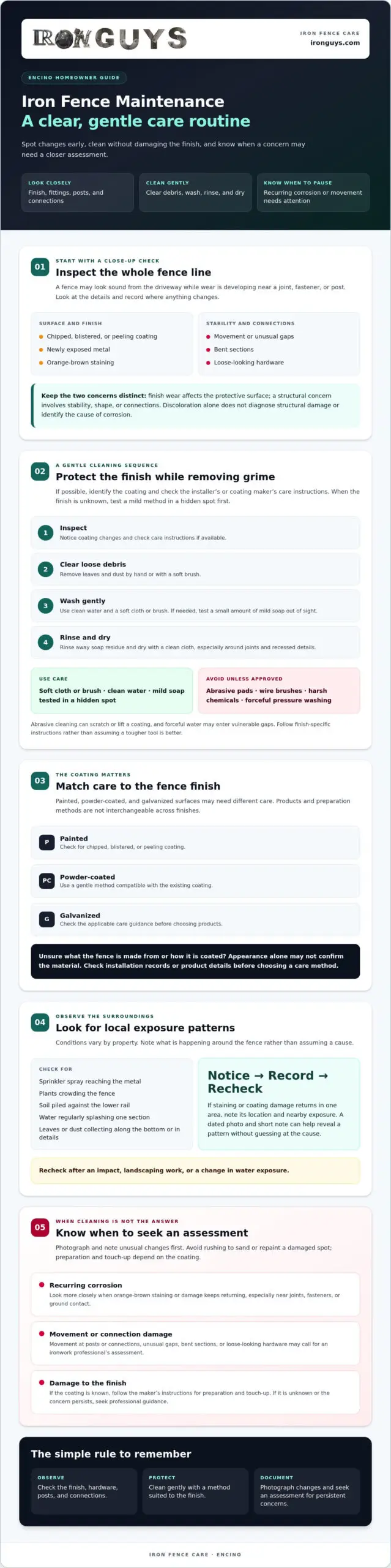
- Check the finish, fittings, posts, and connections regularly so you can notice changes and record where they occur.
- Clear loose debris, wash gently, rinse, and dry. Test your method in a hidden spot to help protect the existing finish.
- Iron Fence Maintenance Tips for Encino Homeowners should account for the coating. Painted, powder-coated, and galvanized surfaces may need different care.
- Recheck the fence after an impact, landscaping work, or a change in water exposure, and note any new concerns.
- Recurring corrosion, movement, or damage near connections may need an ironwork professional’s assessment rather than more cleaning.
Why Iron Fence Maintenance Matters for Encino Homeowners
A fence can look solid from the driveway while its finish is chipping near a joint or its hardware is starting to loosen. A close inspection helps you see whether a mark is isolated or appearing in several places. You don’t need to diagnose the cause yourself. Record what has changed, then decide whether routine cleaning or professional advice is appropriate.
Iron fences can have different materials and finishes. The term Wrought iron describes a specific material with a distinct history, but appearance alone may not confirm what a fence is made from. If you’re unsure, check any installation records or product details you have before choosing a care method.
What early signs should you look for on an iron fence?
Inspect the full fence line, including rails, pickets, joints, fasteners, and the points where posts meet the ground. Look for chipped, blistered, or peeling coating and newly exposed metal. Orange-brown staining is a reason to look more closely, especially around joints, fasteners, and ground contact. Also note movement, unusual gaps, bent sections, or hardware that appears loose. Take a photo of anything unusual so you can compare the same spot later.
Finish wear affects the protective surface; a structural concern involves the fence’s stability, shape, or connections. Either can occur without the other. Discoloration alone doesn’t prove structural damage or identify the cause of corrosion. Treat it as a prompt to inspect and document the area, not as a diagnosis.
Which Encino site conditions can affect fence upkeep?
Conditions vary by property, so pay attention to what happens around your fence rather than assuming a particular local cause. Check whether sprinkler spray reaches the metal, plants crowd the fence, soil is piled against the lower rail, or water regularly splashes onto one section. Look for leaves, dust, and other debris collecting along the bottom edge or in decorative details. These spots may be harder to inspect and can help you identify where the finish is changing.
If staining or coating damage keeps returning in one area, record its location and any nearby exposure you notice. A dated photo and short note can help you spot a pattern. This is more useful than guessing whether irrigation, debris, or another factor caused the change.
Include the fence in a walk around your Encino property, and check it again after landscaping work, an impact, or a change in water exposure. Consistent observations give you a clearer picture of the fence and useful context to share with an ironwork professional if a concern persists.
How to Clean and Protect an Iron Fence Without Damaging Its Finish
A careful wash should remove grime without scratching or lifting the coating that protects the metal. Before cleaning, identify the finish if possible and check care instructions from the installer or coating maker. If you don’t know what’s on the fence, try a mild cleaning method on a hidden area first. Check for a change before using it on a larger section.
What is a gentle cleaning routine for iron fencing?
Follow a simple sequence: inspect, clear loose debris, wash gently, rinse, and dry. Remove leaves and dust by hand or with a soft brush. Use clean water and a soft cloth or brush. If water alone isn’t enough, test a small amount of mild soap in an inconspicuous spot. The National Park Service’s guidance on preservation of historic ironwork offers useful context on careful cleaning and protective coatings, though it focuses on cast iron.
Rinse away soap residue and dry the surface with a clean cloth. Take extra care around joints, crevices, and recessed details where water can linger. Avoid abrasive pads, wire brushes, harsh chemicals, and forceful pressure washing unless the finish manufacturer specifically approves them. Abrasive cleaning can scratch or lift a coating, and forceful water may enter vulnerable gaps.
Finish-compatible cleaning removes buildup while helping preserve the coating that shields the metal. That’s the principle behind these Iron Fence Maintenance Tips for Encino Homeowners: use a gentle method suited to the finish, and don’t assume a tougher tool will do a better job.
How should you handle chipped paint or exposed metal?
Don’t rush to sand or repaint a damaged spot. Photograph it and note its location first. Check whether the chip or exposed metal is isolated, or whether similar damage appears nearby. If you can identify the coating, follow the maker’s instructions for preparation and touch-up. Products and preparation methods aren’t interchangeable across finishes, so don’t apply a generic coating without confirming compatibility.
If corrosion is extensive, returns repeatedly, or appears near a joint or other structural connection, pause before attempting a more involved treatment. Cleaning can remove surface grime, but it can’t establish the cause or condition of concealed metal. Photos and notes can help you explain what you’ve observed to an ironwork professional. If you’re unsure how to clean or touch up the area, ask a local ironwork professional about a cautious next step.
Iron Fence Finishes and Rust: How to Assess What Needs Attention
The same mark can mean different things on different fences. Painted, powder-coated, and galvanized surfaces have different protective layers, so identify the finish before choosing a cleaner, touch-up product, or treatment. If installation records or product documentation don’t identify it, ask a qualified ironwork professional rather than guessing.
Does the fence finish change the maintenance approach?
Yes. Paint forms a coating that can chip or peel. Powder coating is also a finish layer, not proof that the underlying metal never needs inspection. Galvanized surfaces have a zinc coating, and care should suit its condition. Don’t assume a product made for painted metal is appropriate for every finish. Iron Fence Maintenance Tips for Encino Homeowners should start with the fence’s actual coating, not its color or appearance alone.
When is rust a warning sign rather than a cosmetic issue?
A small surface mark may call for observation, but recurring corrosion, deep pitting, or visible material loss deserves closer attention. Document rust at joints, posts, or mounting points, where fence components connect. The National Park Service’s guide to professional ironwork restoration techniques provides more context on assessing and restoring iron fences. A photo can show what’s visible, but it can’t reveal the condition of hidden metal or prove the fence is safe.
Visible rust is a clue to investigate, not proof that the entire fence has structural failure. Use the table to choose a cautious first step and decide when an in-person assessment may be appropriate.
| Observed sign | Possible explanation | Safe first action | When to seek assessment |
|---|---|---|---|
| Small, isolated orange-brown mark | Surface corrosion or residue; appearance alone can’t confirm the cause | Photograph it, note the location, and check whether it changes | If it returns, spreads, or appears with coating damage |
| Chipped or peeling finish with exposed metal | Coating damage, with the right treatment dependent on finish type | Identify the finish and consult its care instructions | If the finish is unknown or damage is spreading |
| Deep pitting, material loss, or rust at a joint or post | More extensive corrosion may be present | Avoid aggressive scraping or coating over the area | Arrange a closer professional evaluation |
Keep dated photos and notes about changes. An ironwork professional can use these observations as context, but the fence needs to be assessed directly before drawing conclusions about its structure.
A Practical Iron Fence Inspection Routine for Encino Properties
A repeatable inspection makes fence upkeep easier to manage. Walk the full fence line and check the same areas each time instead of looking only at the section visible from the street. Note what you see, where it is, and whether it changes at a later check. The aim is to track visible changes, not diagnose the problem on the spot.
What should an iron fence inspection checklist include?
Inspect posts, rails, joints, gates, and visible fasteners. Look for chipped or peeling finish, rust staining, movement, sharp edges, unusual gaps, and components that appear loose. Check the lower edge and areas partly screened by plants. Photograph anything unusual, then note nearby sprinklers, dense planting, soil buildup, or debris that may affect access or exposure.
- Location: Record the post, gate, joint, or section where you noticed a change.
- Condition: Describe the visible sign without guessing at its cause.
- Context: Note any recent impact, landscaping work, or change in water exposure.
- Follow-up: Add the date and compare a later photo to see whether the issue has changed.
Keep these notes with any installation records you have. If you’re considering a new or replacement fence, Iron Guys’ Los Angeles fence installation guide provides related context.
How often should Encino homeowners inspect an iron fence?
There isn’t one schedule that suits every property. Choose a routine that reflects the fence’s condition and surroundings, such as checking it during an existing exterior-home walk-around. Inspect it again after a noticeable impact, landscaping work, or a change in sprinkler direction or water exposure. If a concern returns after cleaning or touch-up, reassess it rather than repeating the same surface treatment.
Use your notes to track patterns, not to certify structural safety. Photos can show whether a mark has spread or a gap has changed, but they can’t reveal every underlying issue. If movement, recurring corrosion, or damage near a connection leaves you uncertain, share your observations with an ironwork professional. For context on custom iron security fences, you can discuss your fence with Iron Guys.
When to Call an Ironwork Professional About Your Encino Fence
Basic cleaning can remove dirt and help you monitor a finish. It won’t resolve recurring corrosion, movement, or damage at a connection. Arrange an assessment if a post appears unstable, a section is significantly bent, corrosion is extensive, or the finish keeps failing in the same place. Don’t repeatedly treat the surface instead of investigating a persistent concern. Photos can help explain what you see, but they can’t confirm the fence’s structural condition.
Which fence problems deserve professional attention?
Pay close attention to anything that affects stability or safe access. A loose section, sharp edge, compromised connection, or visibly shifting post may pose a hazard. Where practical, keep people away from the affected area, and don’t attempt structural repairs yourself. A professional can assess the visible concern and advise on an appropriate next step.
Iron Fence Maintenance Tips for Encino Homeowners are most useful when they help separate routine upkeep from a problem that needs a closer look. A small mark on an otherwise stable surface may be manageable to monitor. Damage near a joint, mounting point, or post calls for more caution, especially if it returns or worsens.
What should you ask before arranging an iron-fence assessment?
Before contacting a provider, ask whether assessing an existing iron fence is within their scope and what information they need. Prepare clear photos, including close-ups and wider views that show where each concern sits. Share the fence’s age if known, any finish details you have, and a brief history of cleaning or touch-ups. Note when you first saw the issue and whether it has changed.
Iron Guys designs, fabricates, and installs custom iron security fences and other metalwork in the Los Angeles area. Its custom ironwork experience is relevant context for questions about fence construction, but don’t assume repair or maintenance is available. Confirm directly whether the specific assessment you need is offered. For broader context on custom metalwork, see the Los Angeles ironwork guide.
If your concern persists or remains unclear, contact Iron Guys about custom ironwork to ask whether they can discuss your fence and the next appropriate step.
Keep Your Iron Fence Ready for the Long Term
Keep fence care manageable: inspect the finish and connections, clean gently using a method suited to the coating, and save dated notes or photos when you notice a change. A small surface mark isn’t automatically a structural problem, but recurring corrosion, movement, or damage near a connection deserves a closer look.
These Iron Fence Maintenance Tips for Encino Homeowners give you a practical way to track changes and recognize when basic upkeep may not be enough. If you’re unsure what you’re seeing or have a concern about the fence’s construction, ask an ironwork professional whether an assessment is within their scope.
Iron Guys has designed and installed custom iron security fences in the Los Angeles area since 1998. The company is privately owned and operated by local artisans and blacksmiths. Contact Iron Guys about custom ironwork to discuss your questions and confirm what support may be available.
With careful observation and appropriate guidance, you can make more confident decisions about your fence and keep its condition on your home-care radar.
Frequently Asked Questions
How often should I maintain an iron fence in Encino?
Inspect your fence regularly, adjusting how often you check it to its condition and surroundings rather than following one schedule for every property. Add a visual check to an existing exterior-home routine, then take another look after an impact, landscaping work, or a change in sprinkler or water exposure. Note the date and location of any concern. These Iron Fence Maintenance Tips for Encino Homeowners can help you track whether changes return or spread.
How do you clean an iron fence without damaging the paint?
Test a small, inconspicuous area with water, a soft cloth or brush, and mild soap if needed. If the finish shows no change, clear loose debris, wash gently, rinse away residue, and dry the fence, including its joints and crevices. Avoid wire brushes, abrasive pads, harsh chemicals, and forceful pressure washing unless the coating maker approves them. If you don’t know the finish type, check product documentation or ask a qualified professional before using stronger products.
Can I remove rust from an iron fence myself?
You may be able to address a small, isolated surface mark, but first identify the finish and follow its care instructions. Photograph the spot and check whether the rust returns or spreads. Don’t scrape aggressively or coat over corrosion without knowing the appropriate preparation method. Extensive or recurring rust, deep pitting, material loss, or corrosion near a joint or post calls for professional assessment. A photo documents the visible condition, but it can’t confirm structural safety.
What causes rust on an iron fence?
Rust forms when iron-bearing metal corrodes, often where moisture reaches exposed metal through a chip, worn coating, or damaged connection. Sprinkler spray, water splash, and debris that traps moisture are useful conditions to note, but they don’t prove the cause of a particular mark. Record where stains appear and check whether they return after cleaning. Discoloration alone can’t establish how much corrosion is present beneath the finish.
Is powder-coated iron fencing maintenance-free?
No. Powder coating is a finish layer, not a reason to stop inspecting the fence. Check for chips, scratches, bubbling, or areas where metal appears exposed, and clean gently using care guidance suited to the coating. Don’t assume a product intended for painted metal is compatible. If you can’t identify the finish or damage keeps returning, consult the coating documentation or ask a qualified ironwork professional about appropriate next steps.
When should I call a professional about my iron fence?
Ask for an assessment if you notice an unstable post, significant bending, extensive or recurring corrosion, or damage near a connection. Keep people away from sharp edges or loose sections where practical, and don’t attempt structural repairs yourself. Before contacting a provider, gather dated photos, the fence’s age if known, finish details, and a brief maintenance history. In Los Angeles, Iron Guys designs and installs custom iron security fences. Confirm directly whether the assessment you need is available.