
A fence’s biggest weakness may be set before the first post goes in. Common Fence Installation Mistakes in Woodland Hills often start with an unverified property line, a rushed layout, or site conditions that weren’t assessed before digging. Even durable materials can’t compensate for poorly set posts, uneven sections, or drainage that flows toward the wrong place.
It’s reasonable to focus on the fence itself, but a sound installation also depends on what’s underground, where the boundary sits, and which local requirements apply to your property. Check the survey or property records, call 811 to have utility lines marked, and verify applicable permit and fire-safety rules before work begins.
This guide covers planning, layout, and installation errors that can lead to costly corrections, unstable posts, and drainage problems. You’ll learn what to confirm before digging, how to assess your site and material needs, and what to ask a prospective installer about site assessment, fabrication, and installation. A made-to-fit metal fence may suit a property where durability and security matter, but getting the groundwork right helps the finished fence fit the site.
Key Takeaways
- Common Fence Installation Mistakes in Woodland Hills often begin with layout decisions that overlook the property’s boundaries, terrain, or intended use.
- Check how slopes and water flow may affect post placement and fence alignment before finalizing the design.
- Choose a fence material and layout based on your priorities for privacy, visibility, security, maintenance, and site fit.
- Use a step-by-step pre-installation checklist to organize decisions and identify details that need professional verification.
- When the site or requirements are unclear, ask an installer how they assess conditions, define the project scope, and handle approvals.
Common Fence Installation Mistakes in Woodland Hills Start Before the First Post
Catch planning errors before they lead to repairs, layout changes, or a fence that needs replacing. Common fence installation mistakes in Woodland Hills often begin with an assumed boundary, an unexamined slope, or requirements checked too late. This section focuses on residential fence planning and installation, not a full materials or contractor roundup. Every property has its own layout, ground conditions, access points, and applicable restrictions, so a plan that works next door may not suit your lot.
A fence layout check confirms the intended line, site conditions, and constraints before digging. It can help prevent misplaced posts and avoidable changes during installation. Do this groundwork before settling on the final fence line.
Mistake 1: Guessing at property lines and fence placement
A fence that appears aligned with a wall, hedge, or older fence may still cross a boundary. That can mean moving posts, changing the layout, or dealing with a disagreement after installation. Review available property records first. If they don’t clearly establish the boundary, consult a licensed surveyor instead of relying on visual estimates.
Before work starts, document the agreed fence placement, including its position relative to the property line and nearby features. If a neighbor is involved, confirm the arrangement in writing. Clear documentation gives the homeowner and installer a shared reference.
Mistake 2: Skipping Woodland Hills site and rules checks
Walk the proposed fence line before choosing its layout. Note changes in slope, where rainwater flows or collects, narrow access areas, and nearby structures. These conditions can affect post locations and how sections align. For example, a fence line across a steep grade may need a different layout from one across level ground.
Verify the requirements for your specific property and project with the City of Los Angeles, including any relevant permits, zoning rules, or property-specific restrictions. Don’t assume every Woodland Hills lot has the same conditions. Check HOA or shared-property requirements if they apply, and confirm them before finalizing the plan. For a general overview of different types of fences and their purposes, see Wikipedia. Use local requirements and site conditions to guide decisions for your property.
How Ground, Posts, and Drainage Can Undermine a Fence Installation
A fence line may look straightforward on a drawing and behave differently once it meets the ground. Changes in grade affect how panels align, while post depth, spacing, and setting influence whether sections stay steady and even. An installation method that suits one part of a property may not suit another.
Sound post installation supports fence stability by matching post placement and setting to the fence design and conditions on site. A qualified installer should determine the technical details for the specific project rather than rely on a one-size-fits-all approach.
Mistake 3: Treating every Woodland Hills yard as level, uniform ground
On a slope, a fence may follow the grade, with panels stepping between posts, or use another layout suited to the design. Either way, account for elevation changes before fixing post locations. Otherwise, sections can look uneven, leave awkward gaps, or conflict with nearby features. Don’t assume the ground or soil is uniform across the lot. Have site conditions assessed instead of relying on general assumptions about local terrain.
Ask how the proposed layout will handle grade changes and why that approach suits your property. A site-specific plan helps the installer place posts and set spacing with the full fence line in view.
Mistake 4: Ignoring runoff and post-setting details
Water that collects around posts or flows across the fence line can make the area harder to maintain and may contribute to ground movement. Before installation, note where water drains after rain and whether the proposed fence could block an existing flow path. Don’t redirect runoff toward a building or neighboring property without confirming that the plan is appropriate.
Post depth and spacing depend on the design and site conditions, so don’t choose footing dimensions based on a generic rule. Ask the installer to explain the approach and any site-specific considerations. Before excavation, contact 811 and follow its current instructions for locating buried utilities.
During and after installation, check that posts appear secure, sections follow a consistent line, and the work area is left tidy. These visible checks don’t replace a professional assessment, but they can help you raise concerns early. For a made-to-fit metal option, review custom security iron fences and ask how the site assessment informs the proposed design.
Choosing Fence Materials and Layout Without Creating New Problems
A fence should solve a specific problem, not create new ones. Common Fence Installation Mistakes in Woodland Hills include choosing a material before deciding whether the priority is security, privacy, boundary definition, or a consistent look. Start with the job the fence needs to do. That choice affects its height, openings, visibility, and where people or vehicles need to pass through.
Mistake 5: Choosing a fence before defining its job
Each goal involves different trade-offs. A fence designed for visibility may use more open sections, while privacy calls for a layout that screens views. Consider a security fence alongside its entry points and access needs. If appearance matters, think about how the fence will relate to the home and existing features. A security fence for Los Angeles homes can offer additional considerations for planning around security needs.
Compare material options by maintenance needs, privacy, visibility, security, and fit with the site. No material is right for every property. Let the intended use and applicable restrictions guide your decision. Homeowners weighing metal against wood can explore this iron versus wood fencing guide for Los Angeles. Custom iron fencing may suit some properties, but a site assessment is needed to determine whether it fits the design and project requirements.
Mistake 6: Overlooking gates, access, and future maintenance
A fence plan includes more than the fence line. Check how each gate will swing or slide, whether a vehicle can clear the driveway entrance, and where pedestrians will enter. Consider how the gate interacts with nearby walls and landscaping. A gate that opens into a walkway, catches on a wall, or narrows vehicle access can make everyday use frustrating.
Plan for maintenance access, too. Will you be able to reach both sides of the fence to clean, inspect, or care for nearby plants? Existing landscaping may need room, and a driveway gate should be planned around the vehicles and approach space it serves. Mark these access needs on the layout before finalizing the design.
Ask the installer to explain how the proposed material and layout address your priorities and site constraints. A careful assessment can reveal conflicts between privacy, visibility, access, and appearance before fabrication or installation begins. The right choice is the one that fits the property and how you’ll use it, not simply the one that looks appealing in a photograph.
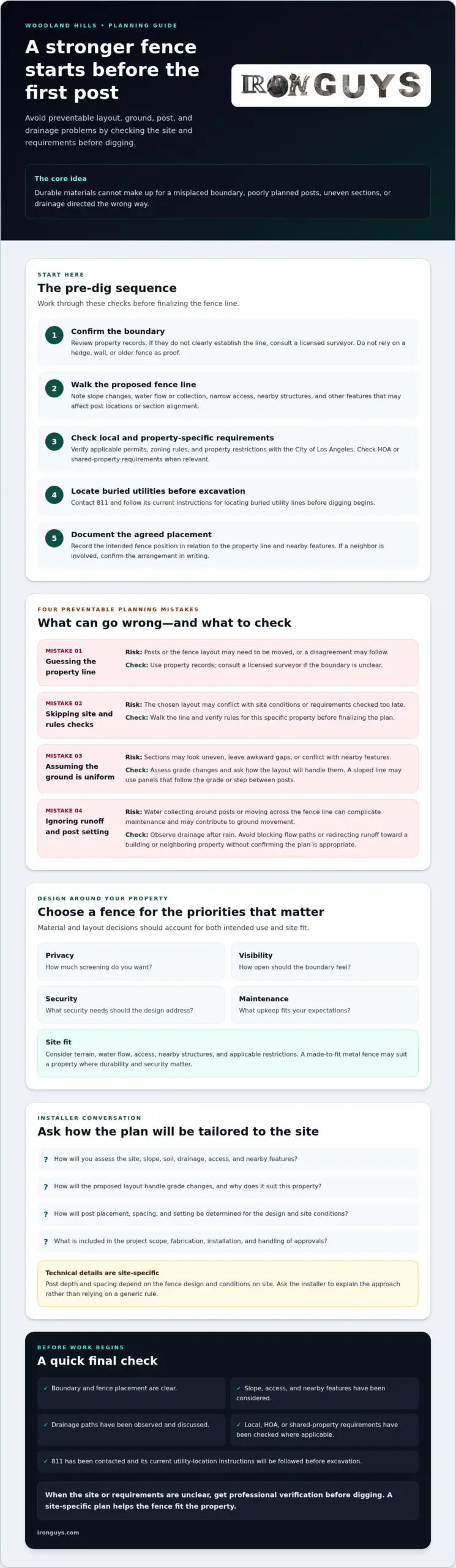
A Pre-Installation Checklist to Catch Fence Mistakes Early
A short review before work starts can catch planning gaps while the layout is still easy to adjust. Use this sequence to separate what you can prepare from decisions that need verification by a qualified professional or local authority. For more background, see this LA fence installation guide.
Before work begins: confirm the site and scope
Gather details that help everyone work from the same plan: property information, the fence’s purpose, an approximate route, and questions about approvals. Homeowners can define priorities and identify visible constraints. Boundary, structural, and regulatory questions may require input from a surveyor, qualified installer, or relevant authority.
- Confirm the boundary. Review property information and arrange input from a licensed surveyor if the line is uncertain. Record the agreed placement.
- Check requirements. Ask the appropriate City of Los Angeles authority which permits, codes, zoning provisions, or property-specific restrictions apply to the project. Check HOA or shared-property conditions if relevant.
- Locate utilities. Confirm utility-marking arrangements and follow current 811 instructions before excavation begins.
- Assess the site. Walk the proposed line and note slopes, drainage patterns, structures, landscaping, and access limits. Have the installer assess technical questions that can’t be resolved by visual inspection.
- Finalize the layout. Agree on fence placement, materials, gates, and access points. Keep a written plan that the homeowner and installer can refer to.
During installation: check the work without guessing at code
Use the agreed plan as your reference, not assumptions about what looks acceptable. Raise differences in placement as soon as you notice them. Don’t make your own call on structural details or code compliance. Direct those concerns to the installer or relevant authority.
On installation day, check that:
- The delivered materials appear consistent with the agreed scope.
- The fence line looks aligned with the approved layout.
- Posts appear secure and gates operate as planned without blocking access.
- The work area is left tidy, with tools and leftover materials cleared away as agreed.
This checklist helps address Common Fence Installation Mistakes in Woodland Hills before they become harder to correct. For a made-to-fit metal fence, explore custom iron fence options and discuss whether they suit your property and project scope.
When to Call a Woodland Hills Fence Professional
Bring in a fence professional when a boundary is uncertain, the proposed line crosses a slope, access is tight, or you can’t confirm which requirements apply. These conditions can affect the layout, installation approach, and project scope. Getting informed input before work begins can help resolve open questions before they lead to changes on site.
Iron Guys is a Los Angeles-area custom metal fabricator and installer, founded in 1998, with custom security iron fences and architectural ironwork among its offerings. For a fence project, look for clear answers about how the installer will assess your specific site and turn the agreed scope into a practical plan.
Questions to ask before approving a fence installation
Ask direct questions and request clear, written answers. A professional should be able to explain the proposed approach without glossing over unknowns. For more guidance on evaluating an installer, see how to spot a professional LA fence contractor.
- How will you confirm the fence layout, grade changes, drainage, and access constraints?
- Who will coordinate utility marking, and what must be completed before excavation?
- What materials and work are included, and what is excluded from the project scope?
- What schedule should I expect, and who is responsible for confirming approvals or permits?
- How will gate operation and access to nearby driveways, walls, and landscaping be addressed?
Get the answers in writing. If a contractor can’t explain who handles a key responsibility, clarify it before approving the work. Verify permit and approval requirements for the particular property and project rather than assuming they apply uniformly.
When custom iron security fencing may fit the project
A made-to-fit metal fence may be worth discussing if your property needs security fencing shaped around a specific boundary, access point, or architectural feature. Its suitability depends on the site, intended use, design, and applicable restrictions. A careful assessment helps establish whether the proposed fence can meet those needs. Custom iron isn’t automatically the right fit for every property.
Ready to discuss a site-specific metal fence project? Talk with Iron Guys about custom security iron fencing and the conditions your installer should assess before work begins.
Build Your Fence Plan on Solid Ground
Common Fence Installation Mistakes in Woodland Hills are often preventable. Confirm the boundary, check the requirements for your property, locate utilities before digging, and make sure the layout accounts for grade, drainage, and everyday access. A careful site assessment and clear written scope help set the project up for a smoother installation.
Iron Guys offers custom security fences and metal fabrication in the Los Angeles area. If a made-to-fit metal fence may suit your property, talk with Iron Guys about a custom security fence for your property. Resolve questions about the site and scope before work begins, then move ahead with a fence plan built around your needs.
Frequently Asked Questions
What is the most common fence installation mistake?
A common mistake is starting installation before confirming the layout and site conditions. An assumed property line, overlooked slope, or unplanned drainage path can force changes after posts are placed. Common Fence Installation Mistakes in Woodland Hills often begin with these early decisions, not just the choice of fence material. Confirm the boundary, fence purpose, access needs, and applicable requirements before digging begins.
Do I need a permit to install a fence in Woodland Hills?
It depends on the property and the fence project, so check before work starts. Woodland Hills is within the City of Los Angeles, but requirements can vary with factors such as fence location, height, materials, and property conditions. Contact the Los Angeles Department of Building and Safety or the appropriate city office to verify permits, zoning, and other applicable restrictions for your specific project. Don’t rely on a neighbor’s experience as confirmation.
How do I find my property line before installing a fence?
Start by reviewing property records and any existing survey documents, but don’t treat visible markers, landscaping, or an older fence as definitive proof of the boundary. If records don’t clearly establish the line, contact a licensed surveyor to identify it. Confirm the intended fence placement with anyone affected and document the agreed layout before installation. This is especially important if the proposed fence will sit near or on a shared boundary.
Can a fence be installed on a sloped yard?
Yes, a fence can often be planned for a sloped yard, but the layout should account for grade changes before post locations are set. Depending on the slope and design, sections may follow the ground or step along it. Each approach affects alignment and the gaps beneath panels. Ask a qualified installer to assess the site and explain the proposed layout. A plan suited to your property is better than assuming one method fits every yard.
Should I call 811 before digging fence post holes in California?
Yes. Contact 811 and follow its current California instructions before digging fence post holes. Utility marking helps identify underground lines in the planned excavation area and reduces the risk of striking them. Arrange this step before the installation date, and make sure the markings are understood before any digging begins. If you’re unsure whether a planned post location is clear, pause and confirm with the appropriate utility-marking service or installer.
Why are fence posts leaning after installation?
Leaning posts can result from installation issues or changes in the surrounding ground. Possible factors include posts that weren’t set appropriately for the design and site, inconsistent spacing, or water movement that affects the ground around them. Slope and drainage may also matter. Have the installer inspect the posts and explain the likely cause before attempting repairs. Avoid assuming every leaning post needs the same fix. The right response depends on site conditions.
How can I tell whether a fence contractor has planned the installation properly?
A well-planned project should have a clear layout and written scope, along with answers about boundary confirmation, site conditions, gate access, utility marking, materials, schedule, and who will verify approvals. Ask how the installer will handle slopes, drainage, nearby structures, and access limits. Compare the proposed work with your priorities and clarify unclear responsibilities before approving it. For a Woodland Hills property, verify local requirements with the appropriate City of Los Angeles authority.