
A fence can look dry and still be at risk of rust. In Brentwood, morning dew, occasional rain, and moisture trapped by landscaping can reach iron at joints or wherever the finish is chipped. How to Prevent Rust on Iron Fences in Brentwood starts with checking your fence’s actual exposure, not relying on broad assumptions about the local climate.
Early corrosion is easy to miss, especially around connections, posts, and sections hidden by plants. Regular checks and gentle cleaning can help you catch changes early. Recurring rust or a finish failing across a larger area may need an ironwork professional’s assessment.
This guide covers common causes of rust and how sun, moisture, and landscaping can affect an iron fence in Brentwood. You’ll learn what to look for during routine inspections, when cleaning and small touch-ups may be appropriate, and when to ask a professional to assess the fence and discuss next steps.
Key Takeaways
- Learn how dew, irrigation, rain, and shaded areas can expose iron to rust, even in Brentwood’s dry climate.
- Use a practical fence walk-through to spot early corrosion, identify moisture sources, and track changes over time.
- Compare paint systems, powder coating, and galvanizing, and consider the fence’s condition and existing finish before choosing.
- Follow a simple cleaning routine and learn how to handle coating damage without abrasive tools or untested products.
- Understand How to Prevent Rust on Iron Fences in Brentwood, and recognize when routine care may not be enough.
Why Iron Fences Can Rust in Brentwood Despite the Dry Climate
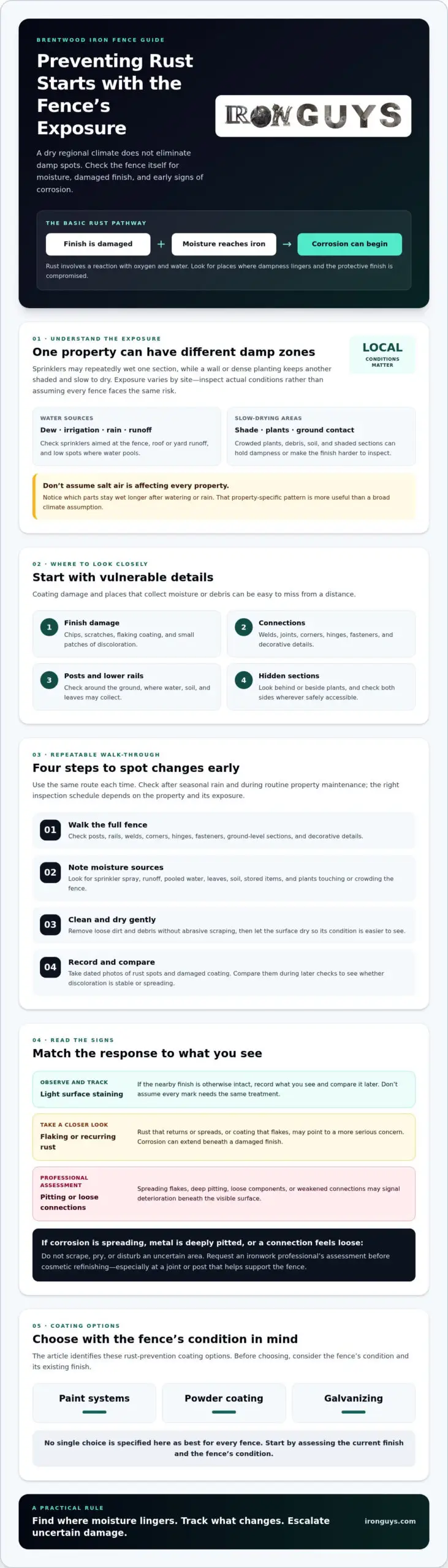
Rust can develop wherever exposed iron stays in contact with moisture and oxygen. The basic rule is straightforward: when a protective finish is damaged and moisture reaches the iron, corrosion can begin and appear as rust. For a basic explanation of what rust is, the key point is that the metal’s surface changes through a reaction involving oxygen and water. A dry regional climate doesn’t remove the need to inspect for damp areas around your property.
Fences in Brentwood can face very different conditions from one property to another. Sprinklers may repeatedly wet one section, while a wall or dense planting keeps another shaded and slow to dry. Seasonal rain and morning dampness can add moisture, but the effect varies by site. Rather than assuming every property receives salt air, assess the fence’s actual surroundings and exposure.
Which Brentwood conditions can leave iron damp?
Check for sprinklers aimed at the fence, roof or yard runoff, and low spots where water pools. Plants touching or crowding the bars can trap dampness and make the finish harder to inspect. Also look at shaded sections, ground contact, and debris around posts and lower rails. These conditions can leave parts of a fence wet longer than nearby sections exposed to sun and airflow.
Seasonal rain and morning dampness may affect a fence, but exposure isn’t the same across Brentwood. Notice which areas dry slowly after watering or rain. That property-specific pattern is more useful than assuming the entire fence faces the same corrosion risk.
Where does rust usually appear first?
Start with places where the protective coating may be compromised: chipped or scratched spots, welds, joints, corners, and decorative details. Then check around posts and fasteners, especially where water, soil, or leaves collect. These areas can be easy to miss from a distance, so examine both sides of the fence where you can do so safely.
A small patch of surface discoloration may be an early warning, particularly if the finish nearby remains intact. Flaking coating, recurring rust, or visibly deteriorated metal points to a more serious concern. Don’t dismiss these signs as cosmetic. Corrosion can extend beneath a damaged finish, and uncertain structural damage should be assessed before cosmetic work.
That’s the practical starting point for How to Prevent Rust on Iron Fences in Brentwood: identify where moisture lingers, then focus on the fence’s vulnerable details. A consistent walk-through can help you spot changes before they spread.
How to Inspect an Iron Fence for Rust in Brentwood
A repeatable inspection helps distinguish a minor surface mark from damage that needs closer attention. Check after seasonal rain and during routine property maintenance, paying particular attention to areas that stay damp. The right inspection schedule depends on the property and its exposure.
A practical walk-around inspection checklist
Follow the same route each time to help catch hidden areas. Look at both sides wherever accessible, and avoid disturbing the coating if you’re unsure of its condition.
- Walk the full fence. Check posts, rails, welds, corners, hinges, fasteners, and sections near the ground. Look around decorative details where water and debris can collect.
- Note likely moisture sources. Look for sprinklers hitting the metal, runoff, pooled water, leaves, soil, or stored items that keep a section damp. Check whether plants touch or crowd the fence.
- Clean and dry gently. Remove loose dirt and debris without abrasive scraping, then let the surface dry so you can see its condition more clearly.
- Record what you find. Take dated photos of rust spots and damaged coating. Compare them during later checks to see whether discoloration is stable or spreading.
Light surface staining with an otherwise intact finish may call for a different response than rust that returns or spreads. Record what you see rather than assuming every mark needs the same treatment.
When is a rust spot more than a cosmetic issue?
Look more closely if you see spreading flakes, deep pitting, loose components, or weakened connections. These signs may indicate deterioration beneath the visible surface. Don’t scrape, pry, or disturb an uncertain area to test it. Doing so can damage the finish or make the condition harder to assess.
If corrosion is spreading, metal appears deeply pitted, or a connection feels loose, stop and request an ironwork professional’s assessment before cosmetic refinishing. This is particularly important if damage appears at a joint or post that helps support the fence. If you’re uncertain about the material, the overview of traditional wrought iron offers useful context, since modern products described as “wrought iron” may use different metals.
For background on custom metalwork and its role in the built environment, see Iron Guys’ Los Angeles ironwork guide. If inspection raises questions about the fence’s condition or whether a custom replacement makes sense, explore custom ironwork options and discuss the next step with a qualified professional.
Which Rust-Prevention Coating Works Best for an Iron Fence?
No single coating suits every iron fence. The right choice depends on the metal’s condition, its existing finish, how the surface can be prepared, and whether the proposed products are compatible. A coating won’t create a sound repair over loose rust or failing paint. For How to Prevent Rust on Iron Fences in Brentwood, first identify what’s already on the fence and whether damage is limited to one area or spread across the structure.
| Option | Typical use | What to consider |
|---|---|---|
| Rust-inhibiting primer and exterior metal paint | Field touch-ups or recoating, if products are compatible | Surface preparation, coating condition, and label instructions |
| Powder coating | Factory-applied finish, often considered when fabricating or recoating suitable ironwork | Whether the fence can be prepared and coated as a complete piece |
| Galvanizing | Zinc-based protective process considered for suitable metalwork | Compatibility with the metal, design, and intended application |
Paint and primer for maintaining an existing fence
Rust-inhibiting primer is intended to help protect prepared metal, while exterior metal paint provides the topcoat. Before recoating, dirt, loose rust, and failed coating need appropriate preparation. Applying paint over a weak layer can leave the new finish poorly supported. Follow the manufacturer’s instructions for surface preparation, compatible primer and paint, application conditions, and curing. If you can’t identify the old coating, get qualified advice before applying a new system.
Powder coating and galvanizing for fabrication or recoating decisions
Powder coating is generally applied and cured in a controlled facility, so it may suit fabrication or a fence that can go through a suitable recoating process. It isn’t automatically the right choice for an in-place, localized repair. Galvanizing uses zinc to protect the underlying metal, but its suitability depends on the specific ironwork and application. Compare options based on exposure, design, preparation, and future maintenance, rather than assuming a particular lifespan or level of durability. For broader examples of how precision metal fabrication and coating quality impact exterior longevity, metalwork and exterior building components specialists like Pauresta demonstrate how careful manufacturing and protective finishes help metal structures withstand the elements.
For a preservation example, the NPS guide to iron fence repair describes preparation and coating considerations for historic iron fences. Its approach is useful context, but the right system for your fence still depends on its material and condition. If you’re considering a new custom iron fence, you can discuss custom iron fence fabrication and finish selection with an ironwork professional.
A Brentwood Iron-Fence Maintenance Routine That Prevents Rust
A dependable routine doesn’t require a rigid calendar. Use your inspections to guide the frequency: a fence repeatedly hit by sprinklers needs closer attention than a section that stays dry and clear. The practical approach to How to Prevent Rust on Iron Fences in Brentwood is to clean gently, remove avoidable moisture traps, inspect the finish, and record changes.
Cleaning without damaging the protective finish
Work through the fence in manageable sections. Use a garden hose, mild soapy water, and a soft cloth or suitable gentle brush. If you’re trying an unfamiliar cleaner, test it on an inconspicuous spot first. Avoid harsh abrasives and strong cleaners unless the finish manufacturer confirms they’re suitable.
- Clear debris: Remove leaves, dirt, and other buildup from lower rails, corners, and around posts.
- Wash and rinse: Gently clean the metal, then rinse away soap and residue so they don’t remain on the finish.
- Dry and inspect: Dry reachable surfaces, especially around joints and places where water pools or airflow is limited. Look for new chips, discoloration, or peeling.
- Reduce repeat dampness: Redirect sprinklers that hit the fence, and keep plants, stored items, and debris from touching or crowding it.
Use your findings to plan the next check. Note recurring damp areas and take dated photos of finish damage, then compare them during routine property maintenance or after seasonal rain. For commercial property managers coordinating broader facility care, resources covering services such as commercial driveway cleaning Jacksonville FL highlight how systematic exterior maintenance protects both hardscapes and surrounding metalwork. A record can show whether a spot is stable or worsening, without relying on a one-size-fits-all schedule.
When should you call an ironwork professional?
Cleaning and routine care can help you monitor a fence, but they can’t correct weakened metal or connections. Request a professional assessment if rust keeps returning, coating is flaking across a broad area, metal is deeply pitted, joints are loose, or you’re unsure about the fence’s structural condition. Don’t treat a cosmetic touch-up as a repair for corroded or weakened metal.
For context on custom fence construction and workmanship, read Iron Guys’ Los Angeles fence installation guide. If the fence’s condition has you considering custom ironwork or replacement, discuss custom iron-fence options with a professional. An assessment can help clarify whether continued maintenance is reasonable or whether the fence needs a different solution.
Protecting or Replacing an Iron Fence in Brentwood: Your Next Steps
Choose a next step based on what you observed. If the finish is mostly intact and rust isn’t spreading, continue gentle cleaning and monitor vulnerable areas. If the coating is failing but the metal appears sound, ask whether it can be prepared and recoated. If you see deep pitting, loose connections, or other possible structural damage, have the fence assessed before cosmetic refinishing.
That’s the decision point behind How to Prevent Rust on Iron Fences in Brentwood: match your response to the fence’s actual condition, not just its appearance from the street. Keep notes on recurring damp areas and changes in the finish so you can explain the fence’s exposure and history clearly.
Questions to ask before choosing a fence finish
Before agreeing to coating work, ask how the fence will be prepared and what the proposed finish requires. The right choice depends on the existing metal and coating, so don’t assume a product will work simply because it’s labeled for exterior metal.
- Preparation: How will dirt, loose rust, and failed coating be handled?
- Coating system: Which primer and finish are proposed, and are they compatible with the existing surface?
- Property exposure: How will the plan account for sprinkler spray, shade, plant growth, or debris that keeps sections damp?
- Care afterward: What cleaning and maintenance does the manufacturer recommend?
- Scope: Can the material, finish, and included work be confirmed before the project begins?
If the old coating or fence material is unknown, ask for qualified guidance before applying another layer. Have uncertain structural damage assessed first rather than covering it with a fresh finish.
When custom ironwork is the right next step
Custom fabrication may be worth discussing if you’re planning a new fence or the existing one needs replacement. Iron Guys is a Los Angeles-area custom metal fabricator and installer, founded in 1998 and operated by local artisans and blacksmiths. The company designs, fabricates, and installs custom iron fences. Ask directly about the scope of work for your project.
For a new or replacement custom iron fence, discuss your custom iron-fence project with Iron Guys.
Protect Your Fence With a Clear Next Step
Rust prevention starts with knowing where moisture reaches your fence. Check joints, posts, and damaged finishes, then clean gently and reduce avoidable dampness from sprinklers, plants, or debris. Choose a coating only after considering the metal’s condition, existing finish, preparation needs, and product compatibility.
That’s the practical approach to How to Prevent Rust on Iron Fences in Brentwood: match maintenance to your property’s exposure, and don’t cover possible structural damage with a cosmetic touch-up. If corrosion keeps returning or you’re considering a replacement, a custom ironwork professional can help you discuss suitable next steps.
Iron Guys is a Los Angeles custom metal fabricator and installer, with local artisans and blacksmiths specializing in custom iron-fence fabrication and installation. Discuss your custom iron-fence project with Iron Guys.
Frequently Asked Questions
How often should I inspect an iron fence in Brentwood?
Inspect your fence during routine property maintenance and after seasonal rain, rather than relying on one fixed schedule for every home. In Brentwood and the wider Los Angeles area, exposure varies by property: sprinkler spray, shade, plants, and debris can keep some sections damp longer than others. Check both sides where accessible, including joints, posts, and lower rails. Dated photos help you track whether a mark stays stable or begins to spread.
Can iron fences rust in Los Angeles’s dry climate?
Yes. A dry regional climate doesn’t eliminate rain, morning dampness, or irrigation. Rust can form where moisture and oxygen reach exposed iron, especially through a chipped finish or around joints that stay wet. To understand How to Prevent Rust on Iron Fences in Brentwood, focus on the fence’s actual exposure. A shaded section beside plants or repeatedly hit by sprinklers may need closer attention than an open stretch that dries quickly.
What is the best way to clean an iron fence without damaging its finish?
Use a garden hose, mild soapy water, and a soft cloth or gentle brush. Work in sections, rinse away residue, and dry reachable surfaces, especially around joints or spots where water collects. Avoid abrasive pads and harsh cleaners unless the finish manufacturer confirms they’re suitable. Test an unfamiliar product on an inconspicuous area first. Gentle cleaning helps reveal damage without unnecessarily wearing down the protective finish.
Can I paint over rust on an iron fence?
Don’t simply paint over rust or a failing coating. Loose rust, dirt, and peeling finish need appropriate preparation, and the primer and paint must be compatible with the metal and existing coating. Follow product instructions for preparation, application conditions, and curing. If corrosion keeps returning, is widespread, or the old finish is unknown, get qualified advice before recoating. Paint can’t restore metal that’s deeply pitted or structurally weakened.
Which is better for rust prevention: powder coating or galvanizing?
Neither is automatically better for every fence. Powder coating is generally applied and cured in a facility, while galvanizing uses zinc as a protective layer. Suitability depends on the metal, fence design, condition, exposure, and whether the work is new fabrication or recoating. Ask what preparation each option requires, how it fits the existing material, and what maintenance to expect. Avoid choosing based on an assumed lifespan alone.
How can I tell whether rust on an iron fence is structural?
Spreading flakes, deep pitting, loose components, or weakened joints can signal more than surface staining. Don’t scrape or cover uncertain damage with a cosmetic touch-up. If corrosion appears near a post, weld, or connection, or the fence seems unstable, stop and have its condition assessed before refinishing. A qualified ironwork professional can help determine whether the concern is limited to the finish or may affect the fence’s strength.
Does a Brentwood iron fence need extra protection from coastal air?
Not necessarily. Don’t assume every Brentwood property receives salt air; marine influence depends on the site and its surroundings. Start by observing actual conditions, including recurring dampness, finish deterioration, and how quickly the fence dries. Properties across the Los Angeles area can have different exposure, even within the same community. If you’re unsure whether coastal conditions affect your fence, ask a qualified professional to consider the location and existing finish before selecting added protection.