
What if a strong fence still leaves your site exposed at the gate? Industrial Security Fencing in Redondo Beach needs to do more than mark a boundary. The perimeter, entry points, and daily operations all have to work together. A durable design starts with the property’s layout and the risks you need to address, not a one-size-fits-all plan.
Choosing the right material, height, and access points means balancing security with visibility and site use. You need a barrier that supports daily operations, with gates and entry systems planned to avoid weak spots and unnecessary delays for authorized access. Iron Guys designs, fabricates, and installs custom metal security fencing, with automatic gates, phone entry systems, and intercoms planned alongside the fence.
This guide explains how to assess perimeter risks, plan fence placement and access control, and coordinate gates, intercoms, and phone entry systems. It also covers site requirements and the steps from initial planning through fabrication and installation, so you can prepare for a durable, property-specific security solution.
Key Takeaways
- Identify what the perimeter needs to protect, from property boundaries to equipment and restricted areas.
- Compare metal fence designs by visibility, boundary definition, maintenance, and the needs of your site.
- Plan pedestrian and vehicle gates with access systems so staff, visitors, and deliveries can enter smoothly.
- For Industrial Security Fencing in Redondo Beach, tailor fence height, infill, spacing, and posts to the property and its security priorities.
- Gather boundary plans, site photos, traffic patterns, and known constraints before planning assessment, fabrication, and installation.
Industrial Security Fencing in Redondo Beach: Start With the Site’s Risks
Define what the perimeter must protect before choosing a fence. A boundary fence, a barrier around sensitive equipment, and controlled access to a loading area serve different purposes. Treating them as one generic line can leave exposed areas unaddressed or interfere with daily work.
Start with a site plan, then walk the property and mark exposed boundaries, loading areas, vehicle entrances, and equipment zones. Separate public-facing edges from employee areas, delivery routes, and restricted spaces. Note where visitors arrive and where staff need reliable access. This assessment gives each fence section a clear purpose before design decisions begin.
Which areas of an industrial site need perimeter protection?
Look beyond the property line. A site may need a defined outer boundary as well as targeted protection around equipment or other restricted areas. Map pedestrian routes and vehicle movement, including where deliveries enter, turn, queue, and leave. The fence should guide circulation rather than obstruct it.
During the walk-through, check sightlines around corners, structures, and parked vehicles. These can reveal places where staff have limited visibility or where a fence line might create a blind spot. The broader functions and forms of fencing are outlined in Fence (Wikipedia), but an industrial layout should be shaped around the property’s risks and operations.
How should Redondo Beach site conditions shape planning?
Site conditions affect where the fence can run and how it meets the ground, buildings, and access points. Review grades, boundary lines, existing structures, and the clearances vehicles and gates need. Redondo Beach properties may also face coastal moisture and salt exposure. Include local exposure in material and finish planning, and consider how water drains around posts and ground-level sections.
Add local requirements to the project checklist. Review current City of Redondo Beach permit, zoning, and site requirements before finalizing the design. Property use and access constraints can also affect the layout, so identify them early, before fabrication begins.
- Mark: property edges, restricted zones, equipment, and existing structures.
- Trace: staff paths, visitor approaches, and delivery and vehicle routes.
- Check: sightlines, grades, clearances, and site-specific requirements.
These details turn a general security goal into a workable perimeter plan. With site risks mapped, the next step is to match the fence design and metal construction to the protection each area needs.
Choose Industrial Fence Design and Materials for Security and Durability
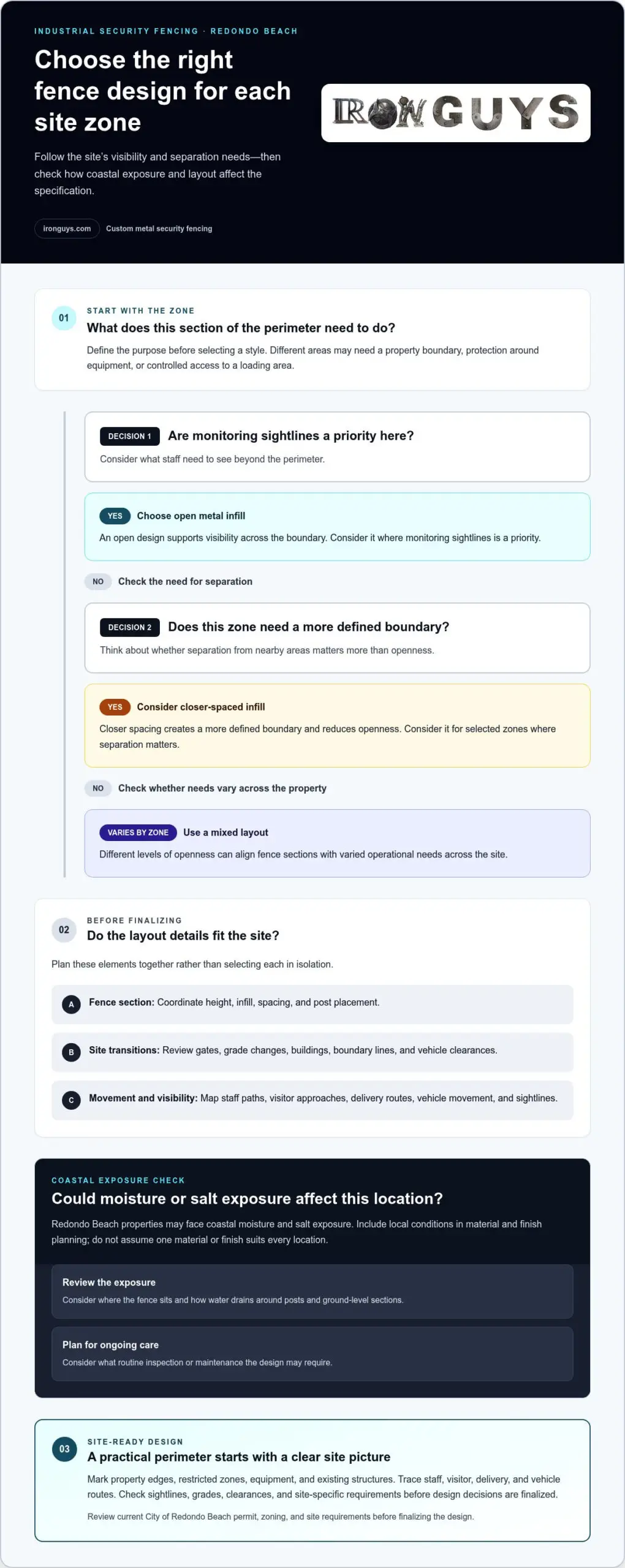
Once site priorities are clear, match each metal fence section to its purpose. An open design can preserve sightlines for monitoring, while closer spacing or less open infill can define a boundary and limit views into selected areas. Neither approach addresses every security concern on its own. Choose based on site operations, visibility needs, and the access plan.
Which fence design balances visibility and controlled access?
Choose by function rather than assuming one style must cover the entire property. Open metal infill may suit areas where staff need to see activity beyond the perimeter. Tighter spacing or less open sections may work better where the goal is to define a restricted zone. The infrastructure security fencing system standards offer broader context for security fencing applications. The property layout should guide the final design.
Open metal infill: Supports visibility across the boundary. Consider it where monitoring sightlines is a priority.
Closer-spaced infill: Creates a more defined boundary and reduces openness. Consider it for selected zones where separation matters.
Mixed layout: Uses different levels of openness across a site. It can align fence sections with varied operational needs.
Plan height, infill, spacing, and post placement together. A layout that works along a straight boundary may need adjustments near a gate, grade change, or building. Custom metal fabrication allows these details to be planned around the property rather than forcing a standard layout onto it.
What should buyers know about metal durability near the coast?
Moisture and salt exposure can affect metal surfaces over time, so local conditions belong in the material and finish discussion. Consider where the fence sits, how water drains around posts and ground-level sections, and what routine inspection or maintenance the design may require. Don’t assume one material or finish suits every location. Base the specification on the site’s exposure and intended use.
For Industrial Security Fencing in Redondo Beach, make durability part of the design conversation from the outset. A carefully planned custom metal fence can account for coastal exposure as well as visibility, boundary definition, and daily use. Learn more about custom metal security fencing from Iron Guys and how it can be planned around site requirements.
Coordinate Redondo Beach Fences, Gates, and Entry Control
A fence line controls access only when its gates and entry systems are planned as part of the same perimeter. Gate placement affects how vehicles approach the property, where pedestrians enter, and how visitors request access. Plan these elements together so the boundary supports the way the site operates.
How do gate locations affect industrial fence planning?
Start with the vehicle approach. Map turning space, the clear opening vehicles need, and the space required for gates to operate without blocking traffic. Consider delivery routes, staff parking, and visitor drop-off points. A gate that fits on a drawing can still create congestion if its location interrupts site circulation.
Where operations call for it, plan separate routes for vehicles and pedestrians. Staff may need a predictable entrance, while deliveries require room to maneuver and visitors need a clear path to the entry point. Coordinate each opening with the fence layout and the site’s access procedures, including who uses it and how entry is controlled.
When can phone entry or intercoms support a secure perimeter?
Phone entry and intercom systems give visitors a way to communicate with staff before a gate is opened. They support controlled access by connecting a visitor’s request with the site’s entry process. Position the system so visitors can reach it without obstructing a driveway or standing in a vehicle path.
Plan the hardware with the gate and fence, not as a later add-on. Account for where a visitor stops, where staff receive the call, and how authorized entry takes place. This integrated approach helps organize arrivals while maintaining a clear boundary. For broader context on coordinated access planning, see Los Angeles security solutions.
Automatic gates can be incorporated into a custom metal perimeter, with the opening and vehicle approach designed around the property. Learn more about custom driveway gates in Los Angeles and how gate integration fits into perimeter planning. For Industrial Security Fencing in Redondo Beach, align the fence, gate, and entry system with actual traffic and access needs so each part supports the others.
Plan an Industrial Security Fence Project in Redondo Beach
A clear project sequence keeps design decisions tied to the property’s needs. Start with a site assessment, define who and what needs access, develop the fence and gate design, then move into custom metal fabrication and installation. Scope and installation details depend on the layout, operating schedule, and constraints of each site.
What information helps define the fence project?
Gather information that shows how the property works, not just where its boundaries sit. A current boundary plan, site photos, and a simple map of entrances, restricted zones, and daily traffic routes help define the perimeter. Note existing gates, buildings, grade changes, tight clearances, and access limitations that may affect placement.
Record operational priorities as well. Delivery patterns, staff entry, visitor management, and areas that need controlled access all shape the design. Clear notes about these needs make it easier to develop a fence layout that supports real site use.
- Site layout: Boundary plans, photos, structures, and grade changes.
- Movement: Vehicle routes, pedestrian paths, delivery activity, and entrance locations.
- Constraints: Clearances, access limitations, and known property conditions.
- Priorities: Staff access, visitor handling, and restricted areas.
What happens during custom fabrication and installation?
Once project requirements are defined, the design coordinates fence sections, openings, and access points as one system. Custom metal fabrication follows the project-specific design, then the fence and related components are installed at the property. Installation planning should account for active site operations, including how people, vehicles, and deliveries will move while work is underway.
Before work begins, review current City of Redondo Beach permit, zoning, and site requirements that apply to the project. Requirements can depend on the property and proposed work, so include this step before finalizing the design. For broader context on fence-project planning, read the Los Angeles fence company guide.
Iron Guys designs, fabricates, and installs custom metal security fences to fit each property and its operational needs. The custom security fence planning page provides a starting point for organizing site information and project requirements.
Get Custom Industrial Security Fencing for Your Redondo Beach Property
A well-planned perimeter starts with the site’s risks and ends with a fence system that fits how the property operates. Consider what needs protection, how open or defined each boundary should be, where people and vehicles enter, and how installation can work around site activity. Together, these decisions shape a practical plan, not just a line around the property.
Why choose a custom metal perimeter for an industrial property?
Industrial properties have different boundaries, grades, structures, and access needs. Custom dimensions and layouts let the fence respond to those conditions, with openings and sections planned for the site rather than forced into a standard arrangement. The result is a coordinated design in which metal security fencing, gates, and entry systems can support one another.
Iron Guys designs, fabricates, and installs custom metal security fences, with automatic gates, phone entry systems, and intercoms as part of its security offerings. Founded in 1998, the company is privately operated by local artisans and blacksmiths. Its hands-on metalworking experience supports project-specific fabrication while keeping the perimeter’s security and operational purpose in view.
What is the next step for a Redondo Beach fence project?
Start by outlining the property’s boundaries, entry points, and primary security concerns. Include how staff, visitors, and deliveries use the site, along with any known layout constraints. This gives the project a useful starting point for tailoring the fence design and scope, including how gates and entry systems fit into the overall plan.
For Industrial Security Fencing in Redondo Beach, keep the key decisions connected: site risks guide the fence design, access needs inform gate placement, and installation planning accounts for property conditions and operations. A custom metal perimeter should serve the work happening behind it while defining how people and vehicles enter.
Ready to put a tailored plan in motion? Discuss your custom security fence project with Iron Guys and outline what your Redondo Beach property needs its perimeter to protect.
Build a Perimeter That Works for Your Redondo Beach Site
A reliable industrial perimeter starts with the property’s real risks. Identify what needs protection, tailor the metal fence design to the site, and plan gates and entry systems around how staff, visitors, and vehicles move. Review applicable site requirements and coordinate installation details before work begins.
Industrial Security Fencing in Redondo Beach should function as one considered system, not a fence line with access points added later. Iron Guys designs, fabricates, and installs custom metal security fences alongside automatic gates, phone entry systems, and intercoms. Founded in 1998, Iron Guys is operated by local artisans and blacksmiths who bring hands-on metalworking experience to each project.
To plan a perimeter around your site’s boundaries, access points, and security priorities, discuss your custom industrial security fence project with Iron Guys. A clear outline of how the property operates is a practical place to begin.
Frequently Asked Questions
How much does industrial security fencing cost in Redondo Beach?
The final quote depends on the project scope, including fence dimensions, material choices, access points, site conditions, and installation requirements. A perimeter with several gates or challenging site constraints may involve different planning and fabrication needs than a straightforward boundary. For a project-specific discussion with Iron Guys, describe your property, how it operates, and the security goals you want the fence to address.
What type of fence is best for an industrial property?
No single fence design suits every industrial property. The right choice depends on site risks, visibility needs, traffic, boundary layout, and access procedures. Open metal designs can support sightlines, while closer spacing or different infill can define selected areas more clearly. Industrial Security Fencing in Redondo Beach should be tailored to the property, with the fence and gates planned around daily operations rather than selected as a universal solution.
Do industrial security fences need to meet Redondo Beach permit requirements?
Requirements can vary with the property, fence location, project scope, and applicable local rules. Don’t assume a particular height or permit requirement applies to every site. Before finalizing a design or starting work, review current City of Redondo Beach requirements and other rules that apply to the property. Include this step in project planning so the proposed fence layout can be considered alongside relevant site requirements.
Can an industrial security fence include an automatic gate and intercom?
Yes. A custom perimeter can be planned alongside an automatic gate, phone entry system, and intercom. Consider the gate location, vehicle approach, visitor communication, and staff access together. For example, a visitor may need a clear place to stop and request entry without blocking delivery traffic. Design the gate and entry-system layout around the property’s operating needs.
How long does industrial fence installation take?
Installation timing depends on the perimeter’s size, design complexity, site access, fabrication scope, and property conditions. A project involving custom metal sections, gates, or coordinated entry components can require different planning than a simpler layout. There is no single schedule that fits every site. The project timeline depends on its scope and the coordination needed to complete fabrication and installation around site operations.
How do I maintain metal security fencing near the coast?
Maintenance should reflect the metal material, finish, and exposure to moisture and salt. Inspect the fence periodically for surface damage, signs of corrosion, loose components, and issues with gates or moving parts. Pay attention to areas where water collects or finishes appear damaged. Follow care recommendations suited to the specific materials and finish rather than assuming every metal fence needs the same treatment or inspection schedule.
What should I prepare before requesting an industrial fence project?
Gather property plans or measurements, site photos, boundary details, entry locations, and vehicle and pedestrian traffic patterns. Add a short list of security priorities, such as areas that need restricted access or points used by visitors and deliveries. Note known constraints, existing structures, and current access arrangements. These details make the project discussion more useful and help shape a fence and gate design for the property.