
What if the biggest security weakness in your apartment building isn’t the front entrance, but the side gate residents prop open or the path visitors use to bypass the intercom? The right Apartment Building Security Tips in Los Angeles start with your property’s actual layout, traffic, and access points, not a generic checklist.
Stronger protection should work with daily entry for residents, staff, and visitors. In a multi-tenant property, fences, gates, intercoms, and access control need to fit together. This guide explains how to identify vulnerable entrances and perimeter areas, set practical priorities, and plan improvements around the way people use your property.
Apartment buildings in Downtown LA, Hollywood, Beverly Hills, Santa Monica, and nearby communities have different layouts and access needs. A useful review starts with the site itself, whether the property is in Tarzana, Encino, Universal City, Altadena, San Marino, Manhattan Beach, Rancho Palos Verdes, Bel Air, West Los Angeles, Long Beach, or Mar Vista. Iron Guys is a family-owned, local LA business with 30+ Years of Craftsmanship & Metal Expertise, bringing custom perimeter security and access solutions together for local properties.
Key Takeaways
- Use Apartment Building Security Tips in Los Angeles to focus on your property’s entrances, perimeter, resident traffic, and existing infrastructure.
- Consider how security fencing, automatic gates, apartment intercoms, and access control can work as coordinated layers rather than isolated upgrades.
- Map the property and document conditions at entrances, boundary lines, and shared access areas to clarify improvement priorities.
- Compare security needs across different parts of the building. One standard setup may not suit every access point.
- Plan around the property’s needs, including custom design and fabrication, finishing, installation, electrical work, and system integration.
Apartment Building Security in Los Angeles: Start With the Property’s Real Needs
Start a security review by tracing how people and vehicles move through the property. Look at the routes residents use, how guests reach shared entrances, where deliveries are left, and which boundaries separate the building from public areas. This provides a practical basis for prioritizing improvements without relying on assumptions about a neighborhood.
Apartment building security is the coordinated protection of people, access points, and property through physical features, managed entry, and consistent resident practices. Fences and gates define and manage the perimeter; entry systems help manage access to shared spaces; resident routines help keep those measures working as intended. These are connected layers of physical security, not a single product or fix.
Which areas deserve an initial security review?
Sketch the property, then mark every place people or vehicles enter, exit, or move between shared areas. Include less obvious routes, such as a side pedestrian entrance, a path from parking, or a gate connecting separate sections of the grounds. The goal is a clear picture of access, not a technical drawing.
- Mark pedestrian entrances, driveway access, gates, and perimeter boundaries.
- Identify shared spaces and routes between entrances, parking, and building doors.
- Record doors, gates, or fence sections that appear damaged, fit poorly, or are difficult to manage.
- Note how residents, guests, delivery workers, and property staff use each access point.
Keep observations specific. “Side gate does not close consistently” is more useful than a guess about why it happens. Record the location, what you observed, and whether the issue affects daily access. These notes help you compare entrances and decide which conditions need attention first.
How does Los Angeles property context affect security priorities?
Location alone doesn’t determine what a building needs. A compact Hollywood apartment may have a street-facing entrance and limited shared space. A property in Santa Monica may have a different arrangement of pedestrian access and parking. A larger complex in Tarzana or Encino may have several buildings, vehicle entrances, and routes across the grounds. These are examples, not neighborhood rules: the site layout should guide the review.
Compare access patterns, not just addresses. Are there multiple shared entrances? Does parking connect directly to resident areas? Can people move between buildings without returning to a managed entry? Where do guests and deliveries usually arrive? The answers can help show whether a priority is a perimeter boundary, a gate, an intercom, or a clearer entry process.
Use the same observation method across the site, but don’t assume every entrance needs identical treatment. A tailored review helps managers focus on actual conditions and plan improvements that fit the building’s layout, resident circulation, and existing infrastructure.
How Apartment Security Layers Work Together in Los Angeles Buildings
Effective security depends on the purpose of each part of the system. A fence defines the perimeter, a gate manages passage, and an intercom supports communication at the point of entry. Access control helps organize who is authorized to enter. Together, these layers provide a coordinated approach instead of leaving one entrance or boundary to do every job.
That coordination matters in a multi-tenant building. A barrier can direct visitors toward a particular entrance, but residents and guests still need a clear way to request entry. An intercom supports that interaction, while access control connects entry decisions to the property’s chosen process. The right combination depends on the site layout, resident access patterns, existing infrastructure, and project goals.
What do security fencing and automatic gates contribute?
Security fencing establishes a physical boundary and helps guide people toward designated entrances. For an apartment property, its design can account for site dimensions, the relationship between the fence and building, and the desired appearance. Practical design choices include height, steel thickness, picket spacing, frame strength, reinforcement, and finish. Custom iron fencing can be tailored to the property rather than treated as a generic perimeter element.
An automatic gate manages a specific opening, such as driveway access to resident parking. Imagine a Los Angeles building where vehicles enter from the street and pedestrians use a separate entrance. Fencing can define the perimeter, while the gate manages vehicle access at the driveway. Automatic gate systems can bring together dependable motors, keypads, intercoms, access control, and safety features. The arrangement should suit the property and its daily traffic.
How can apartment intercoms and access control support entry management?
An apartment intercom gives visitors a way to communicate with residents or property staff before entering a controlled area. In a multi-tenant building, consider how visitors find the right resident and where they wait while requesting access. Apartment intercom systems can include multi-tenant telephone entry or cellular video intercoms. Intercom and access control systems can also integrate telephone entry, high-definition camera arrays, and cloud-managed intercoms.
A building with a vehicle gate and a separate pedestrian entrance may need entry communication at one or both points. Coordinating the intercom, gate operator, electrical work, and access control helps bring those components into one plan. Iron Guys installs apartment intercom systems and integrates them with access solutions.
Use Apartment Building Security Tips in Los Angeles to assess how each layer supports the others, not just which equipment to add. A Hollywood property with a compact frontage may need a different arrangement from a larger community in Beverly Hills or Santa Monica. Property-specific design can align security fencing, automatic gates, and intercom systems with daily use and the building’s appearance. Explore examples of coordinated metalwork and access projects at IronGuys.com.
Choosing Apartment Security Improvements in Los Angeles Without a One-Size-Fits-All Plan
The same security package won’t suit every apartment building. A property with a shared pedestrian entrance has different access needs from a complex with a driveway gate, several buildings, or a broad perimeter. Start with the conditions on site, then match improvements to the access points residents, guests, and staff actually use.
For a property in Beverly Hills, Long Beach, or Manhattan Beach, the address alone doesn’t determine the plan. A compact building may need to focus on its shared entrance and visitor communication. A spread-out property may need to consider perimeter boundaries, vehicle access, and how residents move between buildings. Treat each as an example of a possible layout, not a formula for every property in that city.
How should building layout shape the security plan?
Review pedestrian and vehicle access separately. At a shared pedestrian entrance, consider how visitors reach residents and whether telephone entry or a cellular video intercom suits the building’s entry process. If vehicles pass through a gate, consider how residents will use it and how the gate system fits existing infrastructure. Base these decisions on traffic patterns and property needs, not a standard package.
A phased approach can help managers organize improvements. Address a documented access issue first, then plan connected upgrades around it. For example, a property might prioritize an entrance that is difficult to manage before coordinating gate and intercom work. Phasing is a planning method, not a promise about project cost or timing.
Building condition | Security consideration
Shared pedestrian entry | Focus on visitor communication and a clear resident entry process.
Vehicle gate at parking access | Consider how gate access fits resident traffic and existing entry systems.
Broad or exposed perimeter | Assess where fencing can define the boundary and guide movement toward managed entrances.
Existing gate or intercom infrastructure | Review how proposed improvements can work with current access arrangements.
How can physical security fit the building’s appearance?
Security features can be designed to suit the property’s appearance. Custom steel fencing can be tailored by height, picket spacing, thickness, reinforcement, frame strength, and finish. Coordinated metalwork can complement a building’s architectural character while serving a practical perimeter role. The design should respond to the property’s boundaries, entrances, and overall style.
For an open frontage, managers may want a design that follows the building’s existing lines. A property with a clearly defined boundary may need a different fencing layout. Balance appearance with access needs instead of choosing a style first and forcing it onto the site.
Iron Guys fabricates and installs custom security iron fences for property-specific projects. The right Apartment Building Security Tips in Los Angeles should lead to sensible priorities: choose improvements that address observed conditions, fit resident circulation, and coordinate with the building’s existing access setup.
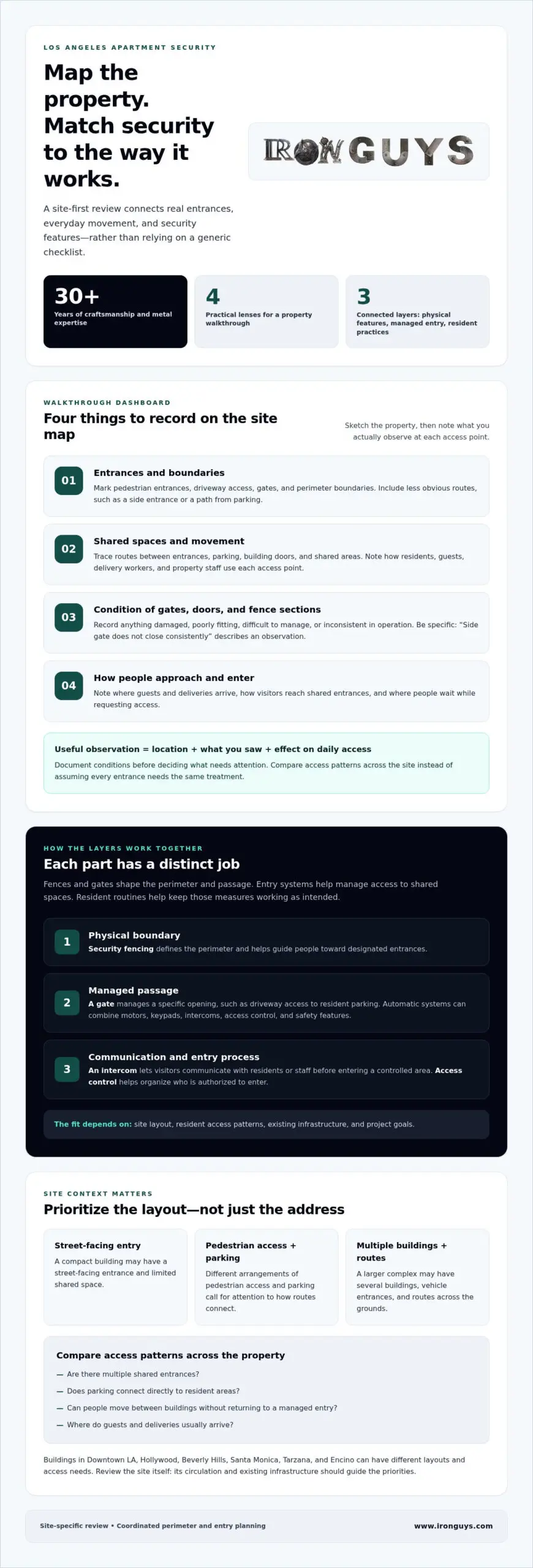
A Los Angeles Apartment Security Walkthrough: Turn Observations Into Priorities
A consistent walkthrough turns scattered concerns into a useful project record. Choose a route through the property and follow it each time, from the public-facing boundary to shared entrances, parking access, and common areas. Managers in Downtown LA, Hollywood, or Long Beach can use the same process while recording the conditions specific to each building.
What should managers document during a building walkthrough?
Use a site map or simple floor plan to label each entrance, gate, fence section, intercom, and shared access area. Give each location a clear name, such as “north pedestrian gate” or “parking entrance.” Record what you observe, not what you assume caused it. For example, note that a gate does not close fully or an intercom is difficult to use.
Track how each access point is used. Does it serve residents, visitors, deliveries, staff, vehicles, or several groups? Note the routes people take and whether the entry process appears clear. Consistent notes make it easier to compare entrances and identify repeated concerns across the property.
- Location and type of access point
- Observed condition or maintenance concern
- How residents, guests, deliveries, staff, or vehicles use it
- Whether the issue appears to be routine maintenance or a larger project need
This walkthrough is a practical record of visible conditions. It isn’t a technical assessment or legal advice. Use the notes to clarify what needs attention and organize follow-up planning.
How can managers rank improvements for their property?
Start with documented problems at the entrances people use most. Separate straightforward maintenance observations, such as a damaged fence section or a gate that is difficult to manage, from larger projects involving custom fabrication or integration between a gate, access control, and intercom system. Group related needs so they can be considered together rather than as disconnected requests.
For example, a property with a vehicle entrance and a nearby perimeter concern might plan the fence and gate work as a coordinated project. A building with a shared pedestrian entrance may first focus on visitor communication and resident entry. Managers can record the full scope, then set priorities based on observed conditions and project needs without assuming every improvement must happen at once.
Walkthrough checklist: Map the site, inspect each access point, record its condition and users, separate maintenance from larger upgrades, then rank documented needs by use and coordination.
Keep the record practical. Include the date of each observation, its location, and any change since the previous walkthrough. This gives property teams a consistent basis for planning, whether they manage an apartment building in Beverly Hills or a multi-building property in Encino. Clear site notes help frame a property-specific discussion of custom fencing, automatic gates, and intercom work at Los Angeles apartment security solutions.
Tailored Apartment Building Security in Los Angeles With Iron Guys
A practical security plan should fit the property’s layout, appearance, and everyday access needs. Iron Guys is a family-owned, local LA business serving apartment and managed properties. Its coordinated team brings design, custom fabrication, painting and finishing, installation, electrical work, gate operators, access control, and intercom integration together for property-specific projects.
This coordinated scope helps managers plan connected improvements instead of treating each component as a separate decision. Fencing can define the site boundary, a gate can manage vehicle entry, and an apartment intercom can support visitor communication. The right combination depends on the building and the conditions documented during its review.
What can a coordinated apartment security project bring together?
Relevant options include custom security fencing, automatic gates, apartment intercoms, and access control. An automatic gate system can bring together dependable motors, keypads, intercoms, access control, and safety features. Design and fabrication can be coordinated with installation and electrical work, connecting the physical metalwork with the building’s access system.
Iron Guys is fully licensed, bonded, and insured. The company brings 30+ Years of Craftsmanship & Metal Expertise to projects that require durable metalwork and coordinated installation. Planning these elements together helps property managers consider how the perimeter, vehicle entry, and resident access will function as one property-specific solution.
Apartment Building Security Tips in Los Angeles are most useful when they lead to improvements suited to the actual building. A managed property in Hollywood may have different entry conditions from one in Santa Monica or Bel Air. Iron Guys tailors designs and project scope to the site, coordinating gates, fencing, access control, and apartment intercom systems.
What is a useful next step for Los Angeles property managers?
Use your walkthrough notes to define the project: identify the access issue, record where it occurs, and clarify which parts of the property may need coordinated work. This gives the planning process a clear starting point for properties in the San Fernando Valley, Downtown LA, and other Greater Los Angeles communities.
Visit IronGuys.com to explore completed projects and read customer reviews. Iron Guys has 94 Reviews, offering property managers another way to learn about the company’s experience and reputation. Review the examples and feedback, then consider how the work relates to your building’s layout, security fencing, automatic gates, railings, or intercom needs.
Turn Your Property Review Into a Confident Next Step
Your walkthrough can serve as a practical starting point for planning. Use the notes to define the property’s priorities, the daily access patterns to preserve, and the improvements that may need to work together. A clear project brief keeps decisions focused on actual site conditions and supports thoughtful planning around materials, appearance, and scope.
For apartment properties across Los Angeles, the right next step is one that fits the site rather than forcing a standard solution. Iron Guys is a family-owned, local LA business with a 5.0 Rating ★★★★★. Explore completed projects and customer reviews to see examples of the company’s work and learn about its reputation.
Use these Apartment Building Security Tips in Los Angeles to move from observations to a property-specific plan. A well-considered improvement can strengthen access arrangements while respecting the character and daily use of your building.
Take the next step with a clear view of your property’s needs and a plan built to fit.
Frequently Asked Questions
Is security fencing enough to secure an apartment building?
No. Security fencing defines the perimeter, but it doesn’t manage every doorway, visitor request, or resident routine. A Hollywood property with a single shared entrance may need different measures from a Long Beach building with parking access and multiple entry routes. Review how people reach the building, then consider whether an automatic gate, intercom, or access control addresses a separate observed need. No single feature covers every condition.
Can apartment security improvements be tailored to an existing building?
Yes. Property-specific planning can account for an existing building’s layout, entry points, architectural character, and resident routines. That may mean shaping custom security fencing around a particular boundary or coordinating how a gate and intercom fit the routes people already use. For managers applying Apartment Building Security Tips in Los Angeles, define the needs before selecting improvements. A Beverly Hills property and a Santa Monica building may call for different plans.
How can apartment managers make security feel welcoming to residents?
Make entry instructions clear and easy to follow. Residents should know how guests request access, where deliveries should go, and how to report an entry-system problem. Keep the process consistent across shared spaces, and consider how visitors approach the building from the sidewalk or parking area. In Downtown LA and across the region, clear guidance can make access procedures easier to understand.
What should residents do if an apartment gate or intercom is not working?
Residents should notify property management promptly and follow the building’s established access procedures while the issue is addressed. Include the specific entrance, what isn’t working, and when the problem was observed. For example, say whether an intercom fails to connect or a gate doesn’t respond as expected. Managers can log the report, note who is affected, and arrange appropriate maintenance. This creates a clear record without guessing at the cause.
Should an apartment building use a video intercom?
A video intercom may suit a building when visual identification supports its entry process, but the right choice depends on the entrance arrangement and management needs. Cellular video intercom systems are an option for apartment properties. A manager in Manhattan Beach, for example, can consider where visitors wait and how residents handle entry requests before choosing a system. The goal is a practical fit for the property, not technology for its own sake.
How often should apartment building security features be inspected?
Set a consistent review routine that fits the property’s condition and use, then keep a record of observations. Note visible wear, changes in how an entrance operates, or recurring issues with a gate or intercom. A property in Tarzana or Encino with frequent daily access may have different review needs from a smaller building. Use maintenance history and observed conditions to guide the schedule, rather than assuming one interval suits every building.