
Strong apartment security starts at the points where people enter. For property managers in Manhattan Beach, gated underground parking and controlled-access entrances can help manage access to parking areas and shared spaces.
Security procedures need to work for residents, visitors, and daily operations. A well-planned approach makes entry clear while keeping access points practical to use.
This guide explains how gates and intercom-based entry can support apartment security, what to consider when planning access for residents and guests, and how to assess the right setup for your property.
Key Takeaways
- Map how residents, guests, and vehicles enter the property to identify where controlled access could improve oversight.
- Review local security concerns through building-specific observations rather than assuming every apartment property faces the same risks.
- Use a systematic security audit to assess entrances, underground parking access, lighting, and everyday access procedures.
- Understand how California’s annual rent-increase limit for covered rental units relates to planning property improvements.
- Explore how security iron fencing and automatic gates can fit into a tailored apartment access plan.
Controlled-access entry
Controlled access organizes who can enter an apartment building and where they can go. In Manhattan Beach, it can connect a vehicle gate, pedestrian entrance, and intercom into one clear arrival process. The goal is practical: residents enter without confusion, while visitors use a defined point of contact. CitiZen Beach Collection on Manhattan offers controlled access, showing how managed entry fits local residential properties.
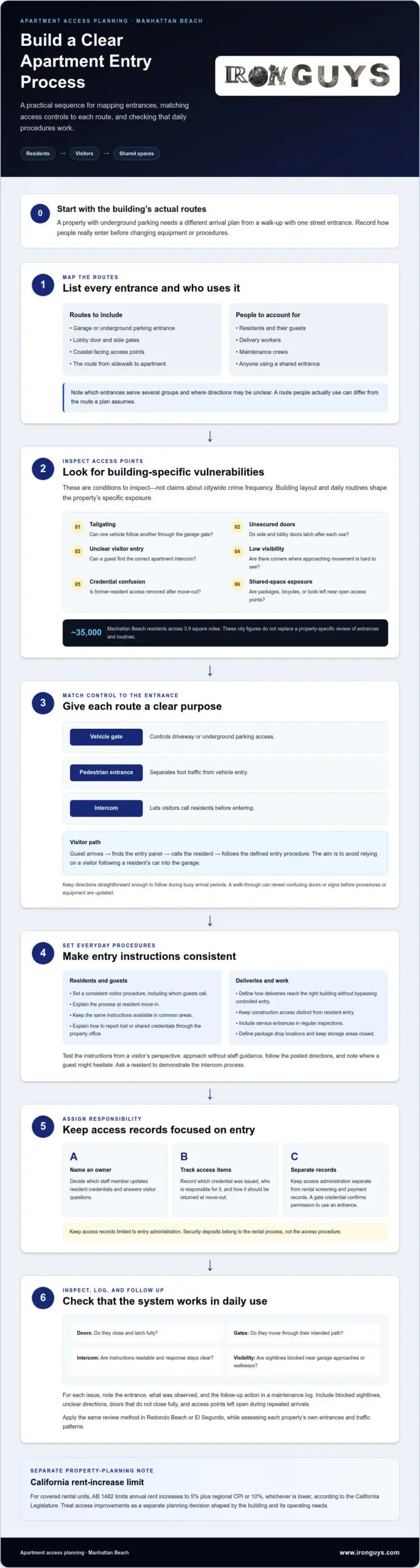
Map every route into the building, including the garage entrance, lobby door, side gates, and any coastal-facing access points. Identify who uses each route: residents, guests, delivery workers, and maintenance crews. When one entrance serves several groups, clear instructions help reduce tailgating and keep visitors out of parking areas. Record the routes people actually use before changing equipment or procedures.
Match the access method to each entrance. A vehicle gate controls driveway or underground parking access, while a pedestrian entrance separates foot traffic. An intercom lets visitors call residents before entering. For example, a guest can use the entry panel rather than following a resident’s car into the garage. Keep the process straightforward enough to follow during busy arrival periods.
- List each entrance and its purpose, such as lobby access or resident parking.
- Set a consistent visitor procedure, including whom guests call at the entry panel.
- Explain how residents report lost or shared credentials through the property office.
- Walk the route from sidewalk to apartment, noting confusing doors or signs.
Assign clear responsibility for access management. Decide which staff member updates resident credentials and answers visitor questions. Explain the procedure to residents at move-in, and keep the same instructions available in common areas. This helps prevent confusion when a household moves in or a resident changes units. Define how deliveries reach the right building without bypassing controlled entry.
Keep access management separate from rental screening and payment records. A gate credential confirms permission to use an entrance; it does not establish income, school enrollment, or lease status. Security deposits belong to the rental process, not the access procedure. Record which credential was issued, who is responsible for it, and how it should be returned at move-out. Keep records limited to entry administration.
Inspect the physical condition of each access point as part of routine property checks. Test whether doors close fully, gates move through their intended path, and intercom instructions remain readable. Note the entrance, observed issue, and follow-up action in a maintenance log. A building department may also guide project review when planned construction affects entrances or parking circulation. Keep construction access distinct from resident entry.
Access planning should account for the building’s real layout, not an assumed template. A property with underground parking needs a different arrival plan from a walk-up with one street entrance. For covered rental units in California, AB 1482 limits annual rent increases to 5% plus regional CPI or 10%, whichever is lower, according to California Legislature. Treat access improvements as a separate property-planning decision, with scope shaped by the building and its operating needs.
Test the procedure from a visitor’s perspective. Approach the entrance without staff guidance, follow the posted directions, and note where a guest might hesitate. Ask a resident to demonstrate the intercom process and consider whether the response steps are clear. This walkthrough gives Manhattan Beach property teams specific issues to address before updating instructions or equipment.
What are the most common apartment security risks and crime trends in Manhattan Beach?
For Manhattan Beach apartment managers, security risks often start with access points, not dramatic break-ins. An unsecured garage entrance, a door held open, or an unfamiliar visitor following residents inside can weaken controlled entry. These are vulnerabilities to inspect, not claims about citywide crime frequency. Manhattan Beach has roughly 35,000 residents across 3.9 square miles, but a building’s layout and daily routines shape its specific exposure.
Give vehicle areas particular attention. Underground parking brings resident access, visitors, deliveries, and vehicle movement together. A gate left open during repeated arrivals can allow someone to enter behind a resident. Walk the garage approach during busy periods and note blocked sightlines, unclear visitor directions, or doors that do not close fully. Record each issue, its location, and the action needed.
Pedestrian entrances have different vulnerabilities. Side doors, lobby entrances, and coastal-facing paths may serve residents and visitors at different times. A door propped open during a move-in may remain unsecured afterward. If visitors cannot find the right call panel, they may wait outside or follow someone through. Check the posted directions, door closure, and route from the sidewalk to the intended entrance.
Shared spaces can also expose property and resident routines. Packages left in an open lobby, bicycles stored beside an unlocked access door, or tools left near a service entrance can attract unwanted attention. These examples call for practical controls: define package drop locations, keep storage areas closed, and include service entrances in regular inspections. In Redondo Beach or El Segundo, the same review method applies, but each property’s entrances and traffic patterns differ.
- Tailgating: Observe whether one vehicle can follow another through the garage gate.
- Unsecured doors: Check whether side and lobby doors latch after each use.
- Unclear visitor entry: Test whether a guest can find the right apartment intercom.
- Low visibility: Note corners where a driver or pedestrian cannot see approaching movement.
- Credential confusion: Review how former residents’ access is removed after move-out.
Assess crime trends using property records, not assumptions about a coastal neighborhood. Compare incident descriptions by location, access route, and time period. Separate reports involving parking, package areas, and unauthorized entry rather than grouping every concern together. A repeated issue at one garage door calls for a different response than unrelated reports from separate locations. Keep descriptions factual and protect residents’ personal information.
Review each reported incident systematically. Record what happened, where it occurred, which entrance or shared area was involved, and whether an access procedure failed. Compare the report with maintenance observations, such as a damaged latch or a gate that stays open. This helps managers identify recurring weaknesses without presenting an unverified pattern as a Manhattan Beach crime statistic.
For Apartment Security for Property Managers in Manhattan Beach, the useful question is where access breaks down on this property. Review garage entry, pedestrian doors, package handling, and resident reporting together. An apartment intercom can help direct visitors to a specific resident instead of leaving entry informal. Managers assessing access improvements can also explore property security project examples as they consider practical approaches for Los Angeles-area buildings.
Separate reports about entry, package handling, and property damage, then look for recurring circumstances rather than treating every report as evidence of a wider trend. Note whether access was authorized, which door or gate was involved, and whether repairs or follow-up were completed. Share patterns with residents in neutral terms without identifying affected households. When a concern is reported, acknowledge it promptly, preserve relevant records, and explain what happens next. Consistent communication helps residents distinguish a documented response from speculation.
Those expectations make routine security maintenance part of the resident experience: a faulty latch, dim entry, or cluttered lobby should be logged, assigned, and checked after repair. Most states require landlords to return security deposits within a specified timeframe, often 30 days or less after a tenant moves out. Keep move-out documentation and deposit handling separate from incident reviews, while maintaining orderly records for each process. Clear records support timely follow-through without overstating what local incidents show.
How can property managers assess apartment security needs and conduct a building security audit?
Start with a current site plan and a clear record of how people move through the property. In Manhattan Beach, mark every entrance, garage opening, stairwell, and shared courtyard. Include service doors and routes between parking and residential floors. Walk the same paths used by residents, guests, delivery workers, and maintenance staff. Record what you see instead of relying on an outdated building diagram or general assumptions.
Review the property’s incident and maintenance records. Group reports by location and issue, such as a door that fails to latch or a gate left open. Compare the records with resident reports and staff observations. A recurring access problem at one entrance needs a different response from a one-time concern elsewhere. Keep notes factual, dated, and limited to information needed for property operations.
Conduct the physical walkthrough during different operating conditions. Inspect a garage entrance during active vehicle arrivals, then revisit it when traffic is light. Check whether staff can see approaching pedestrians and whether doors close after ordinary use. Walk from the street to the lobby, then from parking to residential floors. In Hermosa Beach or Torrance, use the same method, adapting the route to each building’s layout.
Use a written audit sheet to capture observations consistently:
- Entry points: Record each door, gate, intercom, and the area it serves.
- Condition: Note damaged hardware, doors that do not close, or obstructed paths.
- Visibility: Identify blind corners, blocked views, and unclear signs.
- Access process: Follow the guest arrival steps and note confusing instructions.
- Follow-up: Assign each finding to a responsible staff member and track its status.
Sort your findings by their effect on daily access. A garage gate that stays open weakens the boundary between public and resident parking. A confusing intercom directory can send visitors to the wrong entrance. A damaged stairwell door can affect movement between shared spaces. Describe the observed condition and its practical consequence. Avoid calling a location dangerous without evidence from inspections or property records.
Review operations alongside physical conditions. Ask staff how they handle lost credentials, resident move-outs, deliveries, and contractor arrivals, then compare their answers with written procedures. If the front desk directs guests to one entrance while signs identify another, correct the mismatch. A consistent process helps residents and visitors use the same route in Manhattan Beach and nearby communities.
Separate urgent repairs from longer-term improvements. A door that does not latch needs prompt attention through the property’s maintenance process. Repeated congestion near parking may call for a revised arrival procedure or an access-layout review. For each item, document the location, evidence, responsible person, and next action. This creates a useful audit record rather than a list of concerns.
End the audit with a resident-facing review. Share clear instructions for reporting access problems and keep contact details current. Revisit completed actions during the next walkthrough. A consistent audit cycle helps property managers compare conditions over time, refine procedures, and prioritize improvements based on observed needs rather than guesswork.
Keep administrative eligibility questions separate from the physical findings in the audit. Certain single-family homes and condominiums may be exempt from AB 1482 if the owner is not a corporation or REIT and provides proper exemption notice; buildings within the 15-year rolling new-construction window are also exempt. Treat those conditions as a separate property-record review, not as evidence that an entrance, gate, or shared route needs less attention. Record any relevant information in the appropriate property file, and avoid making assumptions about a building’s status based only on its appearance or its security arrangements.
The audit should describe what staff and residents encounter during ordinary use: whether a door closes, whether visitors can identify the right entrance, and whether the access process matches posted instructions. Keep questions about exemptions separate from observed conditions and route them for appropriate review. This helps managers prioritize repairs and procedural corrections without treating an administrative classification as a security finding. After corrective work, revisit unresolved physical observations and update the record with what you see on site and what follow-up was completed. Property records can inform management, but they do not replace a direct assessment of access and shared spaces.
Iron Guys: Security iron fence
Iron Guys helps Manhattan Beach property managers address perimeter and vehicle-access needs with custom security iron fences and electric remote control gates. Fencing can define a property boundary, while a gate creates a designated vehicle entrance. Tailoring the design to the building’s layout keeps the project focused on the access needs identified during planning.
For a specific perimeter or driveway concern, consider how the proposed work fits the site and the building’s appearance. Iron Guys designs, fabricates, and installs custom ironwork, coordinating project elements to create a durable, well-fitted result. Careful planning helps avoid features that do not serve the property’s actual needs.
Visit IronGuys.com to explore completed projects and customer reviews, or contact Iron Guys to discuss your property.
Make the Next Security Decision With Confidence
A practical plan for apartment security for property managers in Manhattan Beach starts with one decision: which access point needs attention first? Use your audit findings to define a project scope, whether the priority is a boundary, a vehicle entrance, or improved access control. A focused plan connects the work to your building’s actual needs.
Iron Guys provides security iron fences, electric remote control gates, and automatic gates for apartment properties. These options address different access needs, from defining a perimeter to controlling driveway entry. Consider how each solution fits the site layout and residents’ daily routines.
Before moving ahead, gather your site observations and identify the entrance or boundary you want to improve. Then review completed projects and customer reviews to learn about Iron Guys’ workmanship and service.
A well-planned next step can make your property’s access clearer and easier to manage. Contact Iron Guys to discuss a solution tailored to your building.
Frequently Asked Questions
What apartment security services are available for property managers in Manhattan Beach, CA?
Apartment security for property managers in Manhattan Beach can include security fencing, automatic gates, and apartment intercom systems. Fencing defines a property boundary, a gate manages vehicle entry, and an intercom lets residents handle visitor calls. If your building has a shared garage and a separate lobby, consider how residents, guests, and delivery workers use each entrance before choosing improvements. Match the system to the property’s layout and access needs.
What security measures are required or recommended for apartment buildings in Manhattan Beach?
Apartment security for property managers in Manhattan Beach should start with functioning entry hardware, clear visitor instructions, and written access procedures. Identify the doors, parking areas, or shared spaces that need attention, then prioritize improvements based on observed conditions. For example, a side entrance used by delivery workers may need clearer directions and a defined entry process. Choose measures that suit the property’s layout and daily use.