
The longest directory isn’t automatically the best fit. A telephone entry system for a business directory should help visitors reach the right person and let an authorized recipient release a door or gate by phone. The right system matches how staff and visitors use the entrance.
Equipment and upfront cost matter, but so does the day-to-day answering process. Calls may route to a landline, mobile phone, or VoIP line. Directory format, existing wiring, call connection, and integration with an automatic gate or other access hardware all help determine the right setup.
This guide explains how telephone entry works, what affects installation cost, and how to compare visitor-answering workflows and access integrations without relying on one-size-fits-all figures. Whether you manage a storefront in Los Angeles, an office in Pasadena, or a commercial property in Glendale, you’ll get a practical way to weigh directory needs, call handling, and entry control before choosing a system.
Key Takeaways
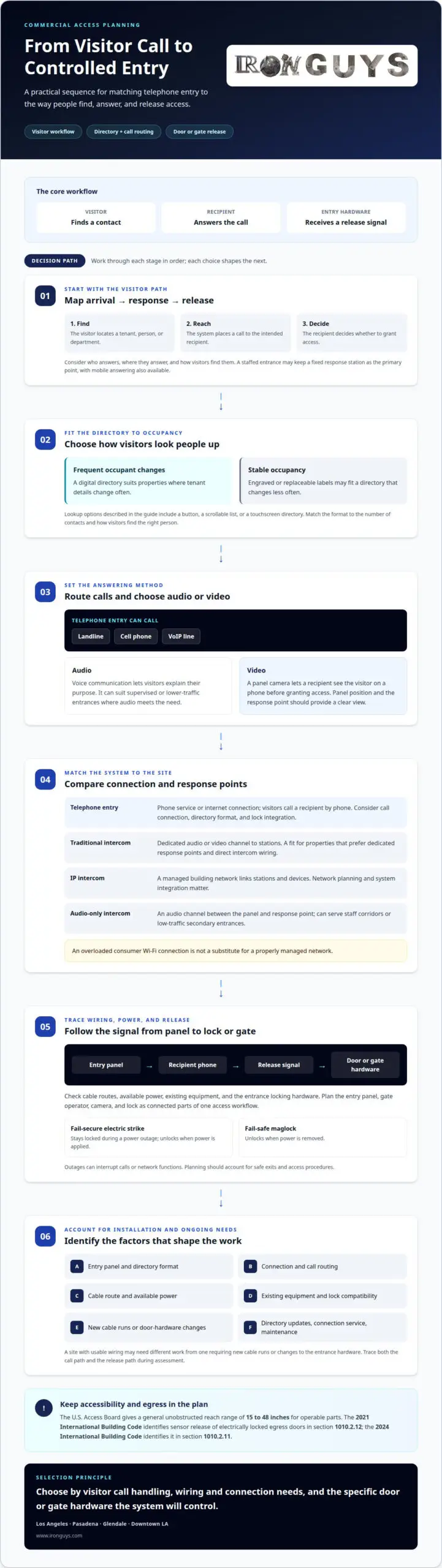
- Compare system types by their connection, wiring, power needs, and compatibility with existing entry hardware.
- Choose a directory format that fits how often occupants change and how visitors find the person they need.
- Consider whether cloud or on-premises management better suits the way your team handles directory updates and system settings.
- Plan the entry panel, gate operator, camera, and locking hardware as connected parts of one access workflow.
- Use your property’s traffic patterns and answering process to narrow down the system that best fits daily operations.
What usually drives the cost of a commercial door intercom system?
Installation cost depends on the entry panel, connection, wiring, and compatibility with the door or gate hardware. A professional assessment also considers how visitors call staff and how staff release the entrance.
Installation and Lifecycle Costs
Installation work varies with the cable route, available power, existing equipment, and entrance locking hardware. A site with usable wiring may need different work from one requiring new cable runs or changes to door hardware. Planning for ongoing use also means considering directory updates, connection service, and component maintenance.
For a commercial property, an assessment should trace the path from visitor panel to recipient phone, then from release signal to lock. This can reveal where compatibility or wiring work may affect the project. It also helps distinguish a simpler audio setup at a supervised entrance from a system serving multiple doors or a remote gate.
Telephone Entry and Traditional Intercoms
A telephone entry system calls a recipient through a phone connection, while a traditional intercom uses a dedicated audio or video channel between the entry panel and each unit. Telephone entry can reduce the need for a dedicated station at every unit, but its fit depends on the call connection and the property’s answering workflow. Traditional systems may suit sites that prefer dedicated stations and direct intercom wiring.
Audio-only intercoms can serve supervised entrances, staff-only corridors, gated service windows, and low-traffic secondary doors. An IP intercom connects door stations, desk stations, computers, and authorized mobile devices through the building network. Network planning and integration matter: an overloaded consumer Wi-Fi connection is not a substitute for a properly managed network.
Features, Standards, and Security Limitations
A professional recommendation weighs directory format, call routing, wiring, power, network needs, and compatibility with the existing lock or gate operator. Digital directories suit frequent tenant changes; stable occupancy may suit engraved or replaceable labels. The U.S. Access Board gives a general unobstructed reach range of 15 to 48 inches for operable parts. The 2021 International Building Code identifies sensor release of electrically locked egress doors in section 1010.2.12, and the 2024 International Building Code identifies it in section 1010.2.11.
Security depends on more than the intercom: the lock determines what happens when it receives a release signal. A fail-secure electric strike stays locked during a power outage and unlocks when power is applied; a fail-safe maglock unlocks when power is removed. Outages can also interrupt calls or network functions, so system planning must account for safe exits and access procedures.
| Option | Connection and wiring | Cost considerations | Typical fit |
|---|---|---|---|
| Telephone entry | Phone service or internet connection; entry-panel wiring | Call connection, directory format, and lock integration | Visitors calling a recipient by phone |
| Traditional intercom | Dedicated audio or video channel to stations | Wiring routes and number of connected stations | Properties needing dedicated response points |
| IP intercom | Managed building network links stations and devices | Network planning and system integration | Sites using network-connected response points |
| Audio-only intercom | Audio channel between panel and response point | Panel placement and wiring to supervised locations | Staff corridors or low-traffic secondary entrances |
Choose a system by matching visitor call handling, wiring and connection needs, and the specific door or gate hardware it will control.
Choosing a telephone entry system based on your visitor-answering workflow
Start with the visitor’s path from arrival to response. The right method depends on who answers calls, where they answer, and how visitors find them.
Tenant Directory and Visitor Call Routing
A tenant directory connects a visitor’s lookup with the right person or department. Telephone entry systems can call a landline, cell phone, or VoIP line, so routing can match how each tenant handles arrivals. For a multi-tenant property in Los Angeles, consider whether the directory needs to accommodate many contact entries or only a short staff list.
Map the actual response process: a visitor selects a tenant, the system places the call, and the recipient decides whether to grant access. At a staffed front entrance in Pasadena, keep a fixed response station as the primary point, even if mobile answering is also available. That gives visitors a clear route when staff are present.
Audio and Video Visitor Communication
Audio-only communication lets visitors explain their purpose and staff respond without a visual screen. Video adds a panel camera, allowing a recipient to see a visitor on a phone before granting access. This distinction matters for visitor management: a delivery entrance may need a different response method from a reception entrance where staff already greet guests.
Video should provide a clear view of the visitor at the entrance. For an office in Downtown LA, the panel’s position and the recipient’s response point should work together so the person answering can understand who is calling. Audio remains a straightforward option when voice communication meets the entrance’s needs.
Directory Lookup and Visitor Calling
Visitors can find a contact through a button, a scrollable list, or a touchscreen directory. A button-based method suits a short, fixed set of contacts; a list or screen can help visitors navigate a larger directory. The interaction typically takes 30 to 60 seconds, so clear names and a straightforward lookup path can reduce confusion at a busy entrance.
The directory experience should suit the people using it. A guest who knows a tenant’s name can search or scroll for that entry, while a visitor to a staffed office may need a clear reception option. Consistent naming helps visitors choose the intended contact instead of guessing between similar departments.
Before selecting a system, define who answers during normal operations, whether calls should reach phones or a fixed station, and whether video adds useful context. Then match those choices to the directory format and entrance setup. This ties access control to a real visitor workflow instead of adding features without a clear purpose.
For properties in Los Angeles and nearby cities, intercom system planning can help align visitor communication with the entrance’s access needs.
What Is a Telephone Entry System and Does Your Property Need One?
A telephone entry system lets a visitor call a tenant or property manager from an entrance panel. The recipient can speak with the visitor and remotely release the door lock or gate. A property may need one when visitors require controlled entry and staff or tenants need to answer from another location.
Directory capacity and updating needs help define the right setup. Panels can range from systems serving 20 residents to systems supporting more than 2,000 units. A small office in Burbank may need a short list of departments, while a large multi-tenant property needs a directory built for frequent searches and contact changes.
Connection choices affect how the panel places calls. A telephone entry system can use a dedicated landline or a cellular connection at the gate. Cellular service can avoid a dedicated landline there, while wired installations may connect the panel to existing building infrastructure. The right method depends on the property’s connection, wiring route, and entrance location.
Cloud-managed systems give property managers remote control over directory entries, access logs, and system settings. For example, a manager can update a tenant’s number without being at the entrance panel. This can suit properties in Los Angeles where staff oversee several locations or occupancy changes often. Directory accuracy still matters: an outdated number can send a visitor to the wrong person.
An on-premises arrangement centers management at the property rather than providing remote cloud access. It can suit a site where a designated staff member handles directory changes and system administration locally. The key distinction is where updates and settings are managed, not whether the entry panel can call a tenant’s phone. Depending on the setup, a mobile phone may receive calls in either workflow.
Use these factors to assess fit:
- Directory scale: Match the panel to the number of tenants and departments, from a compact office list to a directory serving more than 2,000 units.
- Occupancy changes: Digital entries are easier to update when tenants change frequently; engraved or replaceable labels can suit stable occupancy.
- Management location: Decide whether remote updates to contacts, logs, and settings support the property’s operating pattern.
- Entry connection: Compare the available wiring and phone connection at the entrance, including cellular service as an alternative to a dedicated landline.
A telephone entry system is most useful when visitor calls need a clear destination and an authorized recipient needs to control entry remotely. For a single staffed entrance with little tenant turnover, a simpler locally managed directory may fit. For a larger property with frequent changes, cloud directory management can make updates more practical. In either case, the control system should match the property’s entry and administration needs.
Integration with gate operators and cameras
A telephone entry panel can connect a visitor call with an automatic gate and security camera. When an authorized recipient sends a release signal, the gate operator responds, the camera captures the visitor interaction, and an access log records the event. Planning these functions together helps define what the entrance system should do from call to entry.
Compatibility starts with the equipment already at the entrance. A professional installer can assess the gate operator, locking hardware, power requirements, wiring route, and any existing access-control equipment. For a door, the release signal and lock work as separate parts: the intercom sends the signal, while the locking hardware determines the result. An electric strike, for example, operates differently from a gate operator.
Camera placement affects the usefulness of recorded visitor interactions. Position a video panel camera to capture visitors’ faces, and use weather-resistant exterior camera stations. At a commercial driveway in Manhattan Beach, the panel and camera should cover the visitor’s approach and communication point. Their placement should provide a clear view, not leave the camera aimed away from the person using the entrance.
Network planning matters when an IP intercom connects door stations, desk stations, computers, or authorized mobile devices. The network must be properly managed, rather than relying on an overloaded consumer Wi-Fi connection. Before installation, an access-control technician can assess network planning and integration with existing commercial hardware. That review helps determine whether the proposed communication path and gate release are compatible.
During system planning, trace the visitor interaction in order:
- Call: The visitor uses the entry panel to reach the intended recipient.
- Review: The recipient communicates with the visitor and uses the camera view where the system provides it.
- Release: An authorized response sends the release signal to the connected door lock or gate operator.
- Record: The camera captures the interaction, and the access log records the event when the systems are integrated.
Tracing the system gives an installer a practical way to identify connection points and test how the components interact. For example, a business entrance with an automatic driveway gate needs the panel’s release signal to work with the gate operator. A separate pedestrian door may use different locking hardware. Assess each entry point separately, including wiring, power, camera coverage, and network needs.
For properties in Pasadena or Glendale, automatic gate installations can be planned alongside the entry system. Confirming the operator, camera position, connection, and release path before installation helps align access control with the way visitors use the entrance.
How a telephone entry system works
A visitor uses the entrance panel to find and call a tenant, resident, or property manager. The system places the call through phone service or an internet connection. The recipient speaks with the visitor, then uses a phone keypad to request entry. The panel sends a release signal to the connected door lock or gate operator.
The sequence has distinct steps, and each component has a defined job:
- Find a contact: The visitor presses a button or searches the electronic directory for a name or unit.
- Start the call: The panel calls the selected contact’s landline, cell phone, or VoIP line.
- Assess the request: The recipient communicates with the visitor before choosing whether to grant access.
- Send the release command: The recipient presses the configured keypad command, typically 9 or #.
- Respond at the entrance: The lock or gate operator acts on the release signal.
The keypad command is not the lock itself. It tells the entry system to send a signal; the installed locking hardware determines what happens next. At a vehicle entrance in Downtown LA, the gate operator receives the signal. At a pedestrian door, an electric strike or other compatible lock performs the release. That difference makes hardware integration a key part of system design.
Phone entry also separates the visitor’s location from the recipient’s response point. A tenant can answer on a mobile phone, while a staffed office can keep a fixed station as its primary response point. For example, a Burbank business may route visitor calls to reception during normal operations. The recipient still controls the release decision from the answering device.
Administration keeps the call path useful over time. When a tenant changes, a property manager updates the directory entry or destination number. Cloud management can support remote directory and settings updates; an on-premises arrangement keeps administration at the property. Either way, accurate contact details help route visitors to the right person.
System operation also depends on its connection and power. A phone-service or internet interruption can affect how the panel places calls, while a power outage can affect connected equipment. Businesses should establish procedures for mechanical keys and safe exits. This planning matters because an intercom’s release signal does not determine how a lock behaves during an outage.
The practical takeaway is to trace the complete path: directory selection, call connection, recipient decision, keypad command, and hardware response. A professional installation assessment can confirm how those parts work together at each entrance, including the property’s existing wiring and gate operators. This keeps administration and physical access control aligned.
Iron Guys: Phone entry systems
Iron Guys installs phone entry systems for businesses that need visitors to reach the right person before entering. The system can be planned alongside the property’s entrance layout and connected access hardware, including automatic gates or security fencing. That matters when a call must lead to controlled entry through a door or driveway gate.
For a commercial property in Los Angeles or nearby communities such as Hollywood, Santa Monica, and the South Bay, the right setup starts with the visitor’s route, the person who answers, and the hardware receiving the release signal. Iron Guys also installs electric remote control gates, helping property owners plan entry equipment around how the site is used. Explore completed projects and customer reviews to learn more about the work.
Contact Iron Guys to discuss phone entry systems for your property, or find a reliable telephone entry system for business directory listings to compare local providers.
Plan the next step for your entrance
Use your visitor-answering workflow as the starting point for a project conversation. A telephone entry system for a business directory should suit how people arrive, reach staff, and enter the property. A clear plan can also connect the entry system with the physical layout, including an automatic gate or security fence.
Iron Custom offers phone entry systems, automatic gates, and electric remote control gates. The right combination depends on the property’s entrance and how access should be managed. Businesses planning a new entry setup can discuss those needs alongside the surrounding gate and fence work.
Take the next step with a clear picture of how visitors should enter. A well-planned system can make the entrance work as one coordinated part of your property.
Frequently Asked Questions
Quick answer: how can a professional help identify the best door intercom system for your business?
A professional matches the system to the entrance, visitor flow, and existing access equipment. For example, a business with a staffed reception and a separate delivery entrance may need different call destinations for each. The assessment considers who answers, how calls reach them, and what door or gate hardware must respond. This helps narrow the options to a setup that supports the property’s daily operations.
Can tenants receive telephone entry calls on their cell phone?
Yes. A telephone entry system can call a tenant’s cell phone, landline, or VoIP line. For example, a tenant working away from a Los Angeles office can answer a visitor call remotely. The recipient can then use the phone to send the entry-release signal. Call routing should match each tenant’s preferred contact method, while a staffed front desk can remain the primary response point.
What is a telephone entry system with a business directory?
It’s an entrance panel with a directory that helps visitors find and call a business contact. A telephone entry system for a business directory could list departments such as reception, leasing, or a specific tenant. The visitor selects the right entry, and the system calls its assigned number. This gives properties a structured way to route visitors without requiring them to know an individual’s direct phone number.
How do telephone entry systems work for commercial buildings?
At a commercial building, a visitor selects a contact at the entrance and places a call through the system. The recipient speaks with the visitor and can authorize entry using a phone keypad. For example, a delivery driver at an office may call reception, while a scheduled guest reaches a tenant. The door lock or gate operator responds to the release signal sent by the system.
How much does a business telephone entry system cost to buy and install?
The price depends on the project and is provided after a quote request. Cost factors include the entry panel, directory format, connection type, wiring route, power needs, and compatibility with existing locks or gate operators. A property adding a new entrance may need different installation work from one using existing wiring. Ongoing considerations can include connection service, directory administration, and system component maintenance.
How can a professional identify the best telephone entry system for a business directory?
A professional matches directory capacity and update needs to the property’s occupancy. A fixed office with stable departments has different directory demands from a multi-tenant building with regular turnover. The review also considers visitor traffic, who answers calls, the connection at each entrance, and the hardware receiving release signals. Together, these criteria help identify a system suited to the building’s daily use.
How do telephone entry systems compare with video intercom and mobile access systems?
Telephone entry centers on calling a recipient and communicating by voice. A video intercom adds a camera view, allowing the recipient to see a visitor before granting access. Mobile answering means receiving a call on a phone, while network-connected intercoms can also connect authorized mobile devices. These approaches address different needs: voice communication, visual context, or answering away from a fixed station.
How do professionals set up and manage a business directory on an entry system?
Directory entries should use names visitors recognize, such as tenant names, departments, or reception. Assign each entry its intended call destination and test the visitor call path. With cloud-managed systems, property managers can update directories remotely; some systems also allow remote access-log review and settings changes. Clear responsibility for updates helps keep contact information useful as tenants or departments change.