
Is the sound of your driveway gate the unofficial alarm clock for your entire neighborhood? You shouldn’t have to choose between high-end security and a peaceful morning. We understand the frustration of a heavy iron gate that groans every time it moves. Deciding between chain drive vs belt drive gate openers is the first step toward a more reliable, quiet entrance for your Los Angeles home.
While a chain drive offers the raw pulling power needed for a heavy 600 pound gate, a belt drive operates at a whisper quiet 40 to 60 decibels. This guide compares how these systems handle the weight of custom ironwork while surviving the corrosive coastal salt air. You’ll learn exactly how they stack up in terms of durability and 2026 UL 325 safety standards. We provide a clear breakdown of which drive system secures your property without the maintenance headaches or the noise complaints.
Key Takeaways
- Understand why belt drives operate at a whisper-quiet 40-60 decibels, making them the superior choice for high-end residential neighborhoods with strict noise concerns.
- Learn why heavy-duty custom ironwork often requires the raw tensile strength of a metal chain to handle weight capacities exceeding 500 pounds without snapping.
- Compare chain drive vs belt drive gate openers to determine which system offers the best resistance against the corrosive salt air found in Los Angeles coastal communities.
- Master the “one-inch sag” rule for identifying when a chain needs adjustment before it causes permanent damage to your gate’s structural integrity.
- Ensure your property remains compliant with 2026 UL 325 safety standards by integrating the correct entrapment protection devices for your specific drive type.
Chain Drive vs. Belt Drive: Understanding the Core Mechanics
Choosing between chain drive vs belt drive gate openers starts with understanding what actually moves your gate. A chain drive utilizes a metal roller chain, very similar to a heavy-duty bicycle chain, to propel the gate. In contrast, a belt drive uses a steel-reinforced rubber or polyurethane belt to achieve silent operation. Think of this drive system as your gate’s transmission. It manages how the motor’s torque is delivered to the physical structure. If the motor is the heart of the system, the drive is the muscle that does the heavy lifting.
For high-performance automatic gates los angeles, we typically look for ANSI #41 or #40 chain standards. These industrial-grade ratings ensure the metal can withstand the high tension required for heavy ironwork. While the basic Garage Door Opener Mechanics might seem simple, gate automation requires much higher precision to ensure the system doesn’t fail under the weight of custom iron. The drive type you choose directly impacts the longevity of the motor by determining how much resistance it faces during every cycle.
How Chain Drives Work in Gate Automation
The core of a chain system involves a drive sprocket and idler pulleys. The motor turns the sprocket, which grips the chain links and pulls the gate along its path. This metal-on-metal contact provides a massive mechanical advantage. It ensures zero slippage, even when moving a gate that weighs several hundred pounds. This reliability is exactly why chain drives remain the traditional choice for high-level security solutions los angeles. When security is the priority, you want a physical connection that won’t give way under pressure.
The Mechanics of Modern Belt Drive Systems
Modern belt systems have evolved far beyond simple rubber. These belts feature internal steel cord reinforcement to prevent stretching and snapping over time. For sliding gates, these systems often use tooth-based engagement where the belt “teeth” lock into the drive gear. This design provides the same grip as a chain but without the metallic clatter. Because there are no metallic parts striking each other, vibration is almost non-existent. It’s an engineering solution that prioritizes smooth movement and quiet performance without sacrificing the structural integrity of your entry system.
Durability and Weight Capacity: Which Drive Handles Custom Iron?
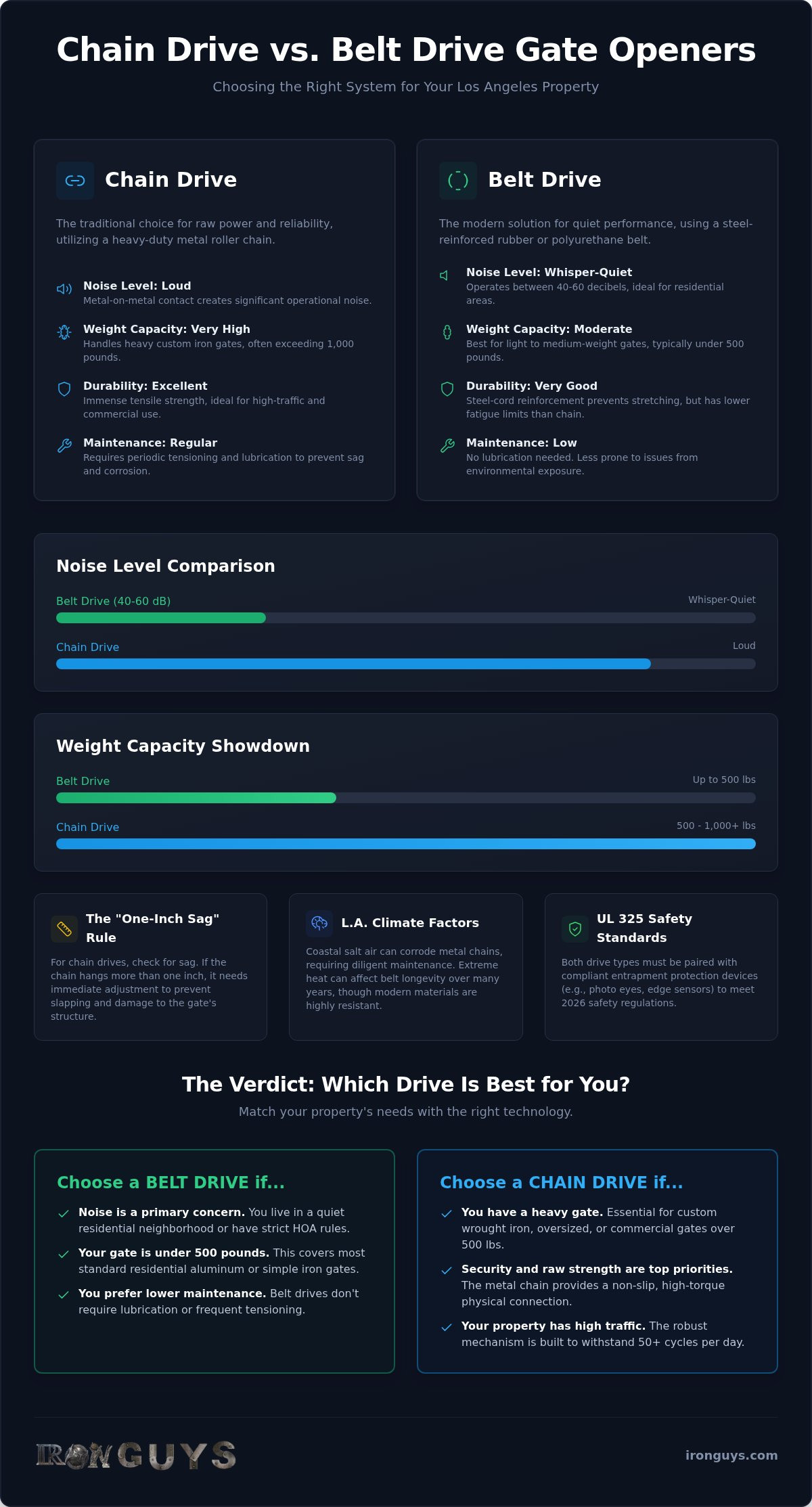
Gate weight is the single most important variable in the chain drive vs belt drive gate openers debate. While a lightweight aluminum gate might run perfectly on a belt, custom Los Angeles ironwork is a different beast. Residential iron gates typically range from 300 to 500 pounds, but high-security commercial panels can easily triple that weight. The drive system must handle this mass without failing under tension; for those interested in similarly robust engineering in the energy sector, you can discover OG VALVES LTD. for specialized industrial valves. If you choose a drive that is underpowered for the gate’s physical mass, you’ll face motor burnout within a few years.
The “snap factor” is a critical consideration for high-traffic properties. Carbon steel chains possess immense tensile strength, making them nearly impossible to break under normal operating conditions. Reinforced polymers used in belt drives are incredibly strong, but they have a lower fatigue limit when subjected to constant, heavy loads. For commercial properties in LA that see 50 or more cycles a day, the rugged nature of a chain drive is often the only logical choice. Maintaining a secure and functional entry system requires matching the drive strength to the gate’s physical reality.
Chain Drive Strength for Heavy Architectural Iron
Custom wrought iron gates weighing over 1,000 pounds almost always require chain drives. These systems are designed to manage the massive “start-stop” torque required to move a heavy sliding panel from a dead stop. As gates get longer, the risk of chain stretching increases. This is why professional tensioning is vital. A chain that is too loose will slap against the gate frame, while one that is too tight puts unnecessary strain on the motor bearings. Chains provide the raw mechanical grip needed to ensure the gate moves reliably every single time, regardless of its size or weight.
Los Angeles Climate Factors: Salt Air vs. Extreme Heat
Our local weather presents unique challenges for drive components. If your property is in Santa Monica or Malibu, the salt air is your biggest enemy. It will corrode standard steel chains in a matter of months. We recommend stainless steel chains for coastal homes to prevent rust from seizing the links. In the San Fernando Valley, extreme summer heat can cause belts to expand or “glaze” over time. This glazing leads to slippage, especially during the high-torque start of a cycle. While modern belts are UV-resistant, the relentless Southern California sun can eventually degrade non-metallic components. Chains might develop extra slack in the heat, but they won’t lose their physical connection to the drive sprocket.
Noise Levels and Maintenance: Living with Your Automatic Gate
Living with your gate system means considering more than just security; you have to think about your neighbors. In Los Angeles, where residential properties are often built close together, a loud gate can become a source of friction. When comparing chain drive vs belt drive gate openers, noise is the most immediate difference you’ll notice. Belt drive openers typically operate at a whisper-quiet 40 to 60 decibels. Chain drive openers are significantly louder, often registering between 65 and 80 decibels. This is the difference between a quiet conversation and a loud vacuum cleaner running at the end of your driveway.
Maintenance requirements also vary wildly between these two systems. Chain drives are mechanical workhorses, but they demand semi-annual lubrication to prevent rust and ensure smooth operation. Without this care, the metal links will begin to grind. Belt drives are virtually maintenance-free because they don’t require grease or oil. This makes them ideal for homeowners who want a “set it and forget it” solution. However, even a low-maintenance belt needs a visual inspection every few months to check for fraying or glazing caused by the intense Southern California sun.
Professional installers watch for a specific warning sign called “red dust.” If you see a fine, rust-colored powder accumulating around your chain or drive sprocket, it’s a sign of internal wear. This dust is actually microscopic shards of metal being ground off the chain links. It indicates that your lubrication has failed or the chain tension is incorrect. Ignoring red dust leads to a snapped chain or a seized motor, turning a simple maintenance task into an expensive emergency repair.
Managing Noise in Chain-Driven Systems
You can mitigate the noise of a chain system by using nylon-coated idler wheels. These wheels provide a softer surface for the chain to roll over, significantly reducing the metallic “slap” during operation. Choice of lubricant is also vital. In dusty LA environments, we recommend dry film lubricants over wet grease. Wet grease attracts grit and sand, which creates an abrasive paste that wears down your hardware. Proper tensioning is the final piece of the puzzle; a loose chain will rattle against the gate frame, creating unnecessary vibrations that echo through the property.
The Low-Maintenance Promise of Belt Drives
The biggest perk of a belt drive is the lack of mess. Because they require zero lubrication, you won’t find grease spots on your pristine driveway. Modern belt pulleys are often designed with self-cleaning grooves that eject dust and debris as they rotate. This is a massive advantage in the San Fernando Valley where Santa Ana winds can coat equipment in silt. There is one major trade-off to consider: failure modes. When a belt reaches the end of its life, it snaps instantly, leaving the gate immobile. A chain typically gives you warning signs, such as sagging or increased noise, before it fails completely.
Troubleshooting and Replacement: When to Swap Your Drive
Your gate won’t last without a healthy drive system. Identifying the early signs of wear prevents a minor adjustment from turning into a total system failure. For sliding gates, we use the “one-inch sag” rule. If your chain dips more than an inch below the level of the rail, it has stretched beyond its safe operating limit. This slack causes the chain to slap against the gate frame, leading to the metallic grinding sounds we discussed earlier. While you can often tension a chain, a belt that shows signs of glazing, cracking, or exposed internal cords must be replaced immediately. A failing drive system doesn’t just stop the gate; it forces the motor to work twice as hard, which can lead to a total burnout of the electronics powering your iron work los angeles.
Don’t ignore the master link during your monthly inspection. This is the connector that holds the entire chain loop together. It’s the weakest point in the system. Check for bent pins or a loose retaining clip. If the master link fails while the gate is in motion, the heavy iron panel can lose its positioning, potentially jumping the track. When evaluating chain drive vs belt drive gate openers for replacement, remember that these systems are not interchangeable. Because they use different rail designs and hardware, switching drive types usually requires a complete unit replacement rather than a simple part swap.
DIY vs. Professional Replacement
Swapping a drive system involves more than just unhooking a chain. High-tension springs and heavy iron panels pose a significant safety risk to the inexperienced. Improper tensioning is a common mistake that can void manufacturer warranties on high-end LiftMaster or DoorKing units. Furthermore, every time you replace a drive, you must re-align the limit switches. These switches tell the motor exactly where to stop. If they are off by even a fraction of an inch, the gate can slam into the stop post, causing structural damage to your custom ironwork.
The Professional Iron Guys Inspection
We don’t just replace parts; we look at the whole system. A professional inspection includes evaluating gate rollers and track alignment to ensure the drive system isn’t fighting unnecessary friction. We also verify that your automated entry meets 2026 UL 325 safety standards, which require specific entrapment protection for every danger zone. If you’re tired of constant repairs, it might be time for a professional upgrade. Contact Iron Guys today to ensure your gate system is structurally sound and fully compliant with local Los Angeles codes.
The Verdict: Which Drive System is Best for Your LA Property?
The decision between chain drive vs belt drive gate openers depends on whether you value absolute silence or raw mechanical power. For most residential homes with attached living spaces or bedrooms near the driveway, the belt drive is the clear winner. It offers a 15 to 20 year lifespan and operates at a nearly silent volume that won’t wake the household. However, if you’re securing a large commercial estate or a heavy custom iron entrance, the chain drive remains the industry standard. It provides the physical durability required for high-traffic environments where a snapped belt would cause an immediate security breach.
From a cost perspective, belt drive units typically cost $50 to $200 more upfront than their chain counterparts. While the initial investment is higher, you save money over time by skipping the semi-annual lubrication and professional tensioning required for metal chains. A chain drive is often cheaper at the point of installation, but its 10 to 15 year lifespan and frequent maintenance needs make it a more hands-on choice. We recommend evaluating your daily usage and noise tolerance before making a final commitment to one system.
Choosing for Security and Longevity
Chain drives remain the king of security solutions los angeles. Their rugged construction and visible presence act as a physical deterrent against forced entry. For modern horizontal iron designs, a belt drive offers aesthetic benefits by allowing for a more streamlined, hidden installation. Both systems now integrate seamlessly with smart phone entry systems los angeles. This allows you to monitor your property and operate your gate from a smartphone, regardless of which drive type is moving the steel.
Contact Iron Guys for Expert Gate Automation
Iron Guys has specialized in artisan ironwork and technical precision since 1998. We aren’t just installers; we’re local craftsmen who understand how the Los Angeles climate affects your security hardware. Our team is fully licensed, bonded, and insured, providing the peace of mind that your property is in the hands of seasoned experts. We ensure every installation meets the latest 2026 safety standards while maintaining the high-end look of your custom ironwork.
Upgrade Your Los Angeles Entry System
Your choice in chain drive vs belt drive gate openers defines how you interact with your property every day. If you prioritize a silent morning and low maintenance, a reinforced belt system is the modern standard for your home. However, if you’re managing a massive custom iron gate that demands maximum tensile strength, a heavy-duty chain remains the most reliable mechanical bridge for your security. Balancing these factors ensures your gate operates smoothly without compromising on safety or neighborhood peace.
Since 1998, Iron Guys has provided Los Angeles with the technical precision needed for complex automation. We aren’t just installers; we’re licensed, bonded, and insured artisans with deep expertise in heavy-duty custom iron and electronic security. We ensure your system is structurally sound and fully compliant with 2026 standards. Don’t let a sagging chain or a frayed belt compromise your property’s safety. Secure your property with expert gate repair and automation from Iron Guys, contact us today. We’re ready to build a system that lasts.
Frequently Asked Questions
Is a belt drive gate opener strong enough for a heavy iron gate?
Modern steel-reinforced belt drives are strong enough for standard residential iron gates weighing up to 500 pounds. They provide consistent torque without the risk of slipping. However, for massive architectural ironwork or commercial panels exceeding 1,000 pounds, we recommend the raw pulling power of a chain drive. Choosing between chain drive vs belt drive gate openers requires an accurate weight assessment to prevent motor fatigue.
How much louder is a chain drive gate opener compared to a belt drive?
Chain drives are significantly louder, typically registering between 65 and 80 decibels during operation. In contrast, belt drives operate at a whisper-quiet 40 to 60 decibels. This decibel gap is the difference between a loud vacuum cleaner and a quiet conversation. For homes with sleeping quarters near the driveway, the quieter belt system is the professional recommendation for maintaining neighborhood peace.
How often does an automatic gate chain need to be lubricated in LA?
You should lubricate your automatic gate chain at least twice a year in the Los Angeles environment. We suggest using a dry film lubricant to avoid attracting the grit and sand common in the San Fernando Valley. Regular semi-annual maintenance prevents the accumulation of “red dust.” This dust is a primary indicator of internal metal-on-metal wear that eventually leads to premature chain failure.
Can I switch my current chain drive opener to a belt drive?
You cannot simply swap a chain for a belt on an existing operator. These systems use entirely different drive sprockets, rail designs, and internal hardware. If you want to move from a loud chain to a silent belt, you’ll need to replace the entire opener unit. A professional installation ensures the new system aligns perfectly with your existing gate track and safety sensors.
What is the average lifespan of a gate drive belt vs. a metal chain?
A high-quality belt drive typically has a lifespan of 15 to 20 years, while a metal chain drive usually lasts between 10 and 15 years. While chains are physically rugged, they are susceptible to stretching and environmental wear. Belts are virtually maintenance-free and resist the fatigue that eventually causes metal links to sag or seize after a decade of heavy use.
Do chain drives rust faster in coastal Los Angeles areas like Malibu?
Standard carbon steel chains will rust quickly in coastal areas like Malibu or Santa Monica due to the corrosive salt air. For these properties, we exclusively install stainless steel chains to ensure longevity. Belt drives are naturally resistant to salt corrosion, making them an excellent alternative for beachfront homes where metal components require constant protection from the marine environment.
What size chain does my sliding gate opener need?
Most residential and light commercial sliding gates in Los Angeles require an ANSI #41 or #40 industrial roller chain. These sizes provide the necessary tensile strength to move heavy iron panels without snapping under the initial start-up torque. Using a smaller, non-standard chain is a safety risk and will likely lead to frequent sagging or “one-inch sag” rule violations.
Is a snapped gate belt covered under my equipment warranty?
Manufacturer warranties for brands like LiftMaster or DoorKing often cover snapped belts, provided the unit was professionally installed. However, coverage is usually denied if the belt failed because the gate was poorly maintained or off-track. We always inspect the gate’s structural integrity during a drive replacement to ensure your equipment warranty remains valid and your property stays secure.