
Iron Security Fences Los Angeles
At iron custom we fabricated and install custom Iron Security Fences and gates in Los Angeles built to protect your property with strong materials and professional workmanship.
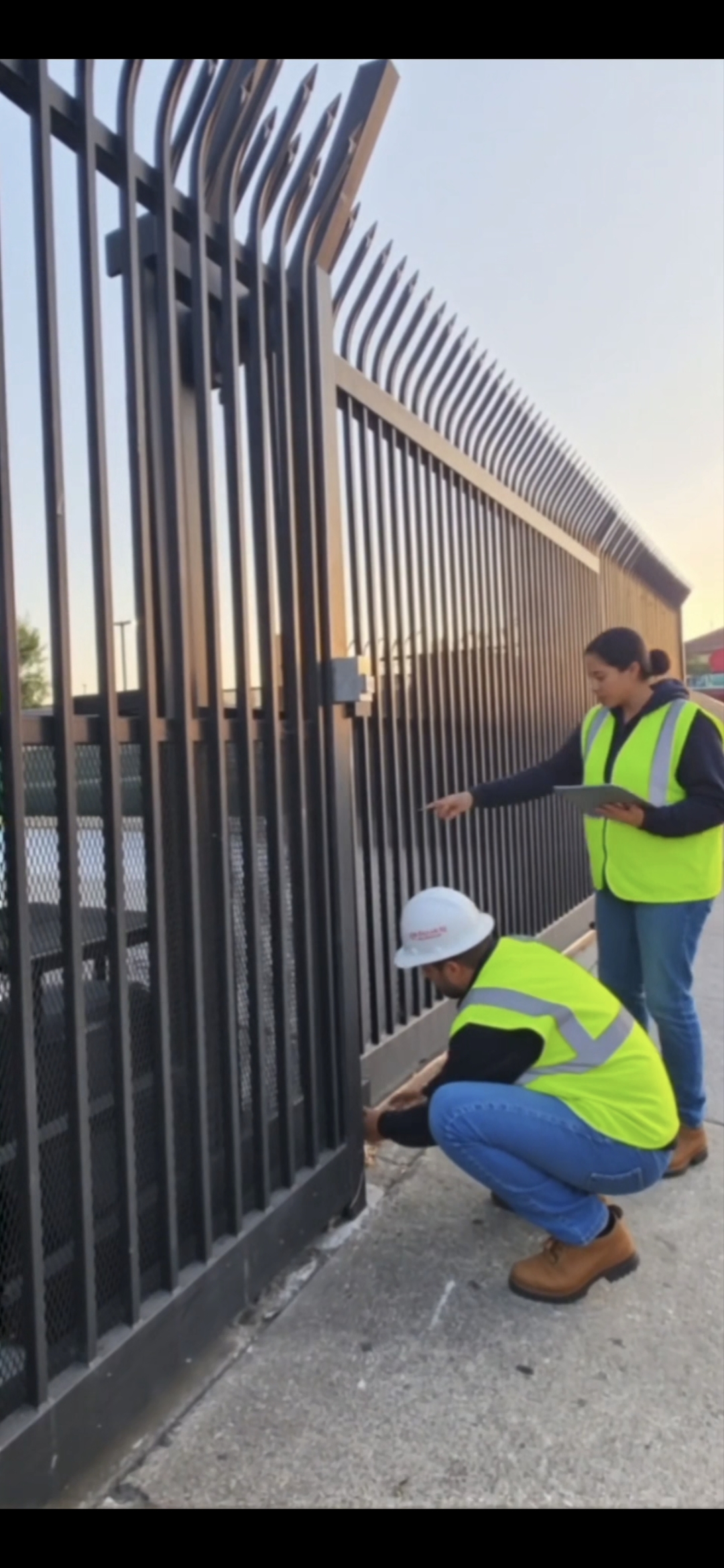
See Our Work & Reviews here in Los Angeles California
900+ video installs in our Instagram Portfolio
Explore clean, high-resolution imagery showcasing our recent wrought iron designs and fencing in the field.
600+ Video projects in our YouTube Channel
Go inside the workshop to watch our heavy-duty steel and gate fabrication processes from start to finish.
Google Reviews
Read real five-star reviews from structural engineers, builders, and local property owners who stand by our quality.
Yelp Reviews
Verify our long-standing regional reputation for premium fabrication turnaround speeds and seamless installations.
Essential Fence Specifications
Purpose of the Fence
Steel Gauge
COMMERCIAL SECURITY OR FORGING NEVER COMPROMISING PROTECTION
Custom architectural ironwork and high-security structural fabrication for premium Los Angeles estates. design it for absolute durability, commercial industrial or hand-forged by master blacksmith.
SECURE PERIMETER FABRICATION
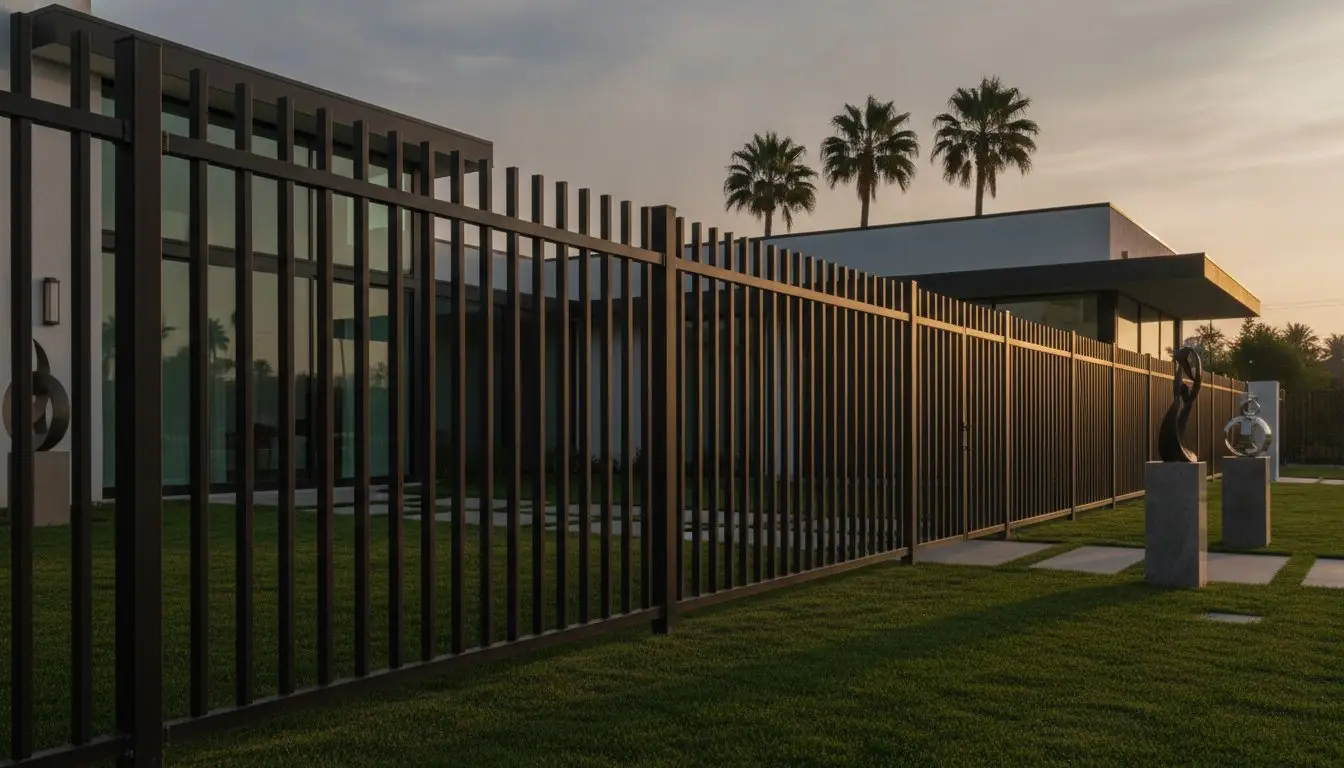
Heavy-duty custom forged steel security fence, and razor wire integrated with smart-locking mechanics and a rust-inhibitive powder finish. Fabricated locally in Los Angeles for maximum physical resistance.
Structural Architecture & Design Standards
Frame and Rail Size
Post Size
Picket Size and Spacing
Heavy-Duty Security Gate & Perimeter Fence Assembly
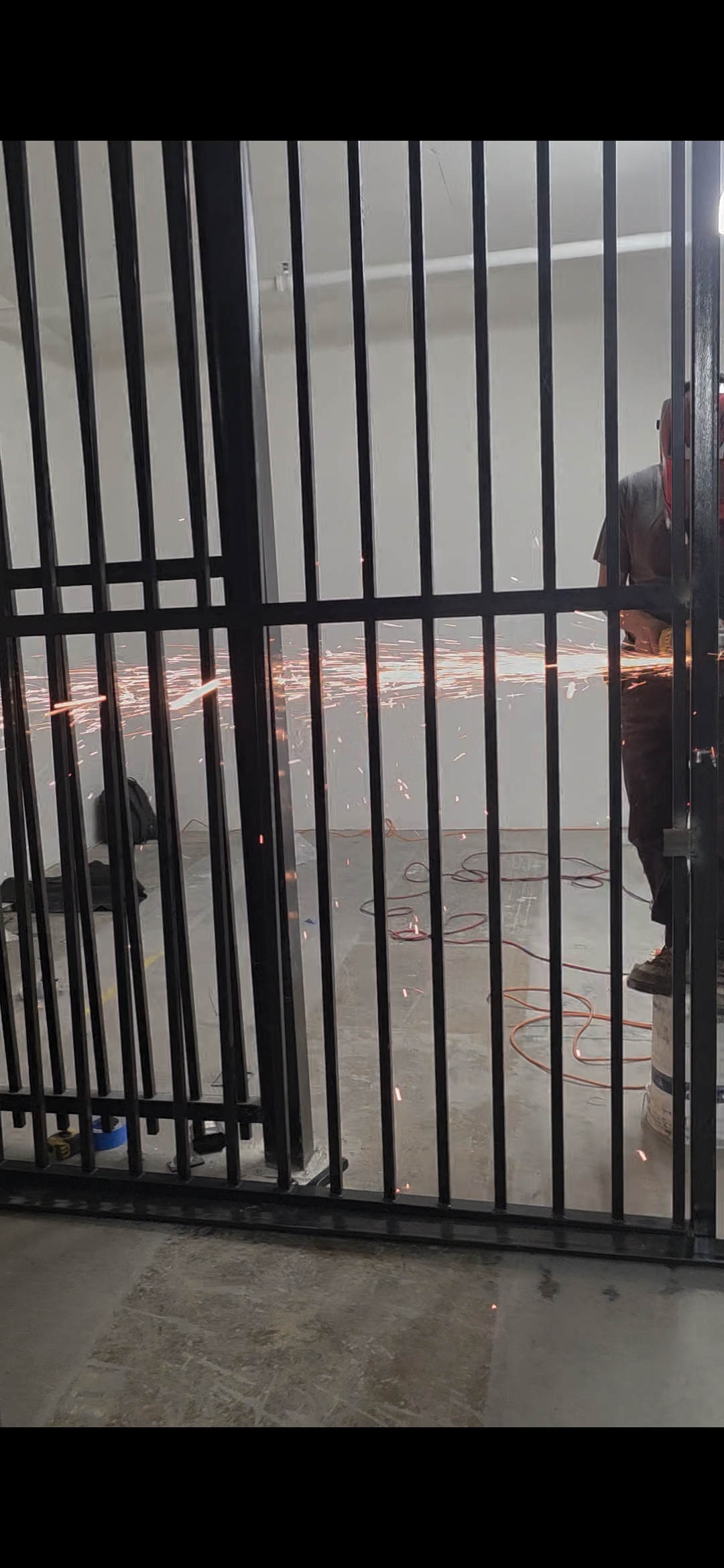
Architectural Iron Security
Height
Visibility vs Privacy
Finishes (Paint & Powder Coating)
Los Angeles Weather
PROJECT GALLERY
Heavy-Duty Security Gates & Perimeter
Custom-engineered industrial security iron fencing showcasing heavy-gauge pickets and automated sliding gate hardware. Engineered to withstand high-impact urban environments in Los Angeles.
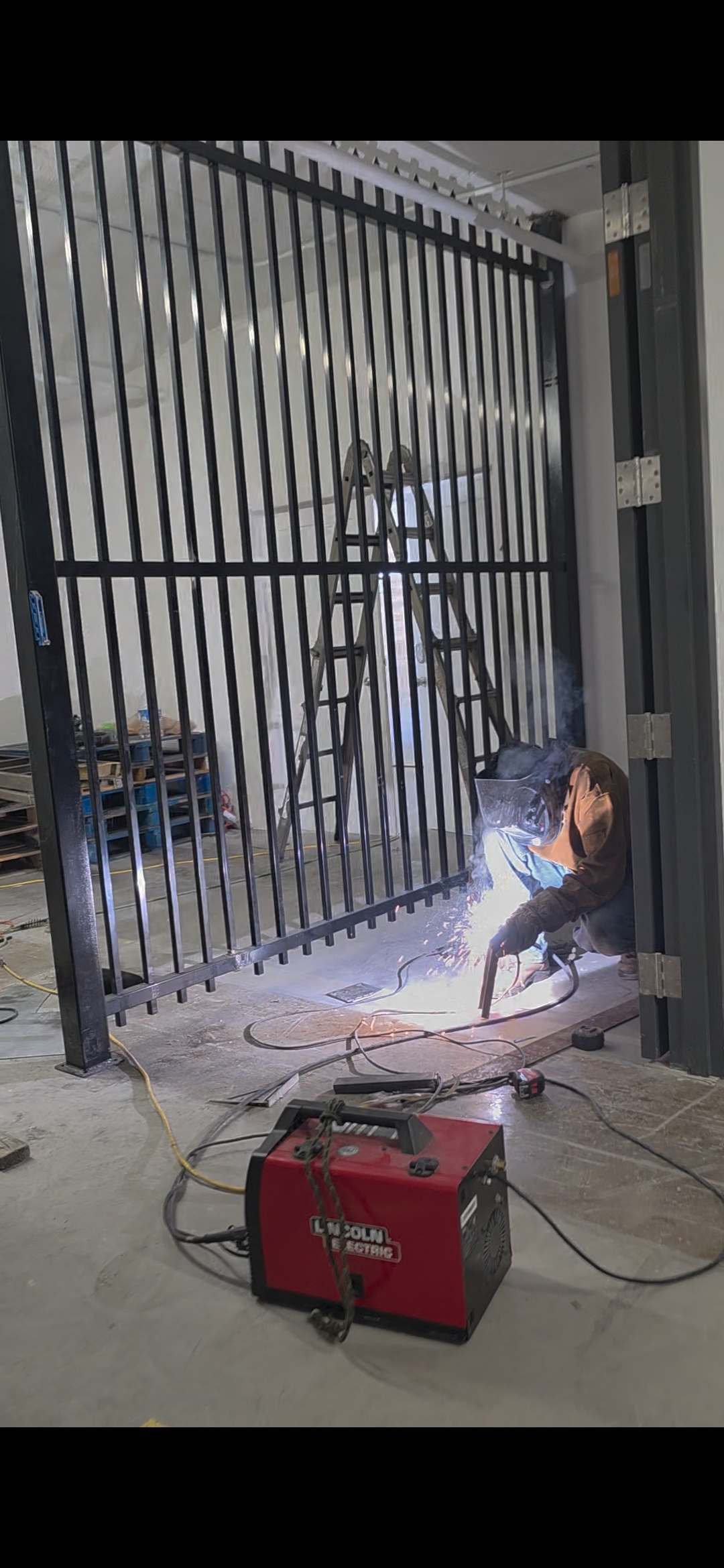
Invest in bespoke security and premium craftsmanship designed specifically for your layout. Contact Iron Guys Security for professional, heavy-duty custom gates and fabrication in Los Angeles.
Welds
Gates
Applications
A COMPLETE GUIDE TO CHOOSING THE RIGHT SECURITY IRON FENCE FOR YOUR PROPERTY
Hi, and welcome. Today we’re going to talk about security iron fences and, more importantly, some of the details people often don’t know to ask about before purchasing one.
A fence may look like a relatively simple product.
Posts. Rails. Pickets. Paint.
But there can be a tremendous difference between two iron fences that look almost identical from across the street.
The thickness of the steel, gauge of the material, size of the posts and rails, spacing between pickets, quality of the welds, depth and strength of the installation, surface preparation, and type of finish can all influence how that fence performs and ages.
Whether you’re protecting a house, warehouse, shop, apartment building, business, parking area, or vacant lot in Los Angeles, a fence is an investment that deserves some thought before fabrication begins.
So before choosing a fence based only on appearance or the lowest estimate, let’s look at what you’re actually buying.
START WITH THE PURPOSE OF THE FENCE
The first question shouldn’t be:
How much does a fence cost?
The first question should be:
What do I need this fence to accomplish?
A decorative front-yard fence and a security fence surrounding a commercial property do not necessarily need the same construction.
Think about what matters most for your property:
Security • Privacy • Appearance • Child or Pet Control • Perimeter Definition • Access Control • Durability • Maintenance • Architectural Style
For some properties, appearance is the priority.
For others, the primary concern is discouraging unauthorized access.
Many Los Angeles customers need a combination of both.
Once the purpose is clear, we can make better decisions about height, steel dimensions, spacing, posts, rails, gates, finishes, and security details.
STEEL GAUGE — ONE OF THE DETAILS YOU CANNOT SEE FROM A PHOTOGRAPH
This is one of the most important things to understand when comparing iron fence estimates.
Two contractors can show you fences that look almost identical.
Same height.
Same color.
Same basic design.
But they may not contain the same amount or thickness of steel.
Steel tubing is manufactured in different wall thicknesses, commonly described by gauge or by actual wall thickness.
In general, as the gauge number decreases, the steel becomes thicker. For example, 14-gauge tubing is thicker than 16-gauge tubing when comparing equivalent types of steel tubing.
But gauge should never be considered by itself.
The dimensions of the tubing matter too.
A properly designed fence considers both the size of the steel member and its wall thickness according to what that component is expected to do.
Heavier is not automatically better in every location, and lighter material is not automatically wrong.
The important question is:
Is the material appropriate for the application?
A residential decorative section may have different structural requirements from a tall security fence surrounding a warehouse or commercial lot.
FRAME AND RAIL SIZE — THE STRUCTURE HOLDING EVERYTHING TOGETHER
The horizontal rails are an important part of the fence structure.
They connect the pickets, maintain alignment, and transfer loads through the fence sections and posts.
Depending on the design and application, rectangular or square steel tubing may be used in different dimensions and wall thicknesses.
The appropriate rail size depends on factors such as:
Fence Height • Distance Between Posts • Picket Size • Overall Weight • Design • Security Requirements • Wind Exposure • Site Conditions
Longer spans and heavier fence sections may require a different approach from short decorative panels.
This is why simply asking, “How much per foot?” doesn’t tell you everything you need to know.
You should know what is being built for that price.
POST SIZE — YOUR FENCE DEPENDS ON ITS FOUNDATION
A strong fence with inadequate posts can still become a weak fence.
Posts transfer the loads of the fence into the ground or supporting structure.
Their size, wall thickness, spacing, embedment, concrete footing, and installation method all matter.
A typical residential fence may not require the same posts as a taller commercial security fence.
Gate posts are another subject entirely.
A gate places very different forces on a post because the post may be supporting a heavy moving structure.
The larger and heavier the gate, the more important proper post design and installation become.
A good fence should be considered as a complete system:
Pickets + Rails + Posts + Footings + Welds + Gates + Hardware + Finish
One weak component can affect everything around it.
PICKET SIZE AND SPACING — SECURITY IS IN THE DETAILS
Pickets are not only decorative.
Their dimensions and spacing influence both appearance and security.
Wider spacing creates a more open appearance and greater visibility.
Closer spacing can make climbing or passing through the fence more difficult, depending on the design.
Pickets can also be fabricated in different sizes and profiles.
A residential ornamental fence might use relatively slender members for elegance, while a security-oriented commercial fence may benefit from a more substantial design.
The top of the fence also changes its character.
You might choose:
Flat Top • Spear Top • Extended Pickets • Decorative Finials • Anti-Climb-Oriented Configurations
The correct choice depends on the property.
A beautiful Los Angeles residence may need security without looking institutional.
A warehouse, vacant lot, or commercial property may place much greater emphasis on perimeter protection.
Good security fencing should respond to the property rather than using the same design everywhere.
HOW TALL SHOULD A SECURITY FENCE BE?
Height is important, but taller is not automatically better.
Fence height should be considered together with the intended security level, visibility, architecture, location on the property, and applicable local requirements.
A front-yard fence may be subject to different rules than fencing along a side or rear property line.
Commercial properties can have different considerations as well.
Before fabricating a tall security fence, it is important to determine whether local zoning, building, visibility, or permit requirements affect the proposed design.
Design first — but verify what can legally and safely be installed before fabrication begins.
VISIBILITY OR PRIVACY?
Traditional iron fencing has an important security advantage:
You can see through it.
That may allow residents, employees, neighbors, cameras, or security personnel to observe activity on both sides of the perimeter.
But not every customer wants an open fence.
Some Los Angeles properties require more privacy.
In those situations, we can consider different approaches, including closer spacing, metal panels, expanded metal, perforated materials, horizontal designs, or combinations of iron with other materials.
Privacy and security need to be balanced carefully.
A completely solid fence provides visual separation but can also create areas that cannot be seen from the opposite side.
The best solution depends on what you’re protecting and how the property is used.
OIL-BASED PAINT — TRADITIONAL, SERVICEABLE AND REPAIRABLE
Paint remains a practical finish for exterior ironwork when the steel is properly prepared and the correct primer and coating system are used.
But the most important word here is:
Preparation.
Putting expensive paint over poorly prepared steel does not create a durable finish.
Before painting, the steel should be appropriately cleaned and prepared, and rust, mill scale, contamination, welding residue, and other surface conditions need to be addressed according to the coating system being used.
A suitable primer is then applied before the finish coats.
Oil-based or alkyd metal coatings have traditionally been popular for ironwork because they provide a durable finish and can generally be touched up or recoated in the field.
How long will they last?
There is no responsible single number.
A fence several miles inland under favorable conditions may age very differently from one close to the ocean in Santa Monica or another coastal community.
Direct sun, moisture, sprinklers, scratches, standing water, salt air, surface preparation, primer, coating quality, and maintenance all influence service life.
The quality of the preparation underneath the paint can be just as important as the paint itself.
POWDER COATING — A DIFFERENT APPROACH TO FINISHING STEEL
Powder coating is another popular option for iron gates and fences.
Instead of applying conventional liquid paint at the job site, properly prepared metal is coated with a dry powder and cured under controlled heat, creating a hard, uniform finish.
A professionally specified powder-coating system can provide excellent appearance and durability.
But powder coating is not magic.
Surface preparation still matters.
The coating system should also be appropriate for exterior exposure, and special consideration may be appropriate for coastal or highly corrosive environments.
Another practical difference is repair.
Conventional painted ironwork can often be cleaned, primed, and touched up relatively easily at the property.
Damage to a powder-coated finish can require a different repair approach, and matching an aged finish perfectly may not always be possible.
So the question isn’t:
Which finish is always better?
The better question is:
Which finish makes the most sense for this particular fence, environment, budget, appearance, and long-term maintenance plan?
LOS ANGELES WEATHER MATTERS — AND THE COAST MATTERS EVEN MORE
Los Angeles may not experience the severe winters found in other parts of the country, but exterior iron still lives outdoors every day.
Sun.
Morning moisture.
Rain.
Irrigation.
Pollution.
Scratches.
And in coastal communities, airborne salts.
Properties in Santa Monica, Venice, Marina del Rey, Malibu, and other areas closer to the ocean can present more aggressive corrosion conditions than many inland locations.
That doesn’t mean iron should not be used near the coast.
It means material preparation, coating selection, drainage, design details, and maintenance deserve additional attention.
THE WELDS MATTER TOO
A beautiful finish can hide a lot.
Look more closely at the fabrication.
Are the components aligned?
Are the spacing and proportions consistent?
Are connections properly fitted?
Are weld areas finished appropriately for the intended design?
Does the fence feel like one continuous structure, or like individual pieces loosely assembled together?
Quality fabrication is not only about making something attractive.
The connections between the pieces are part of the strength of the fence.
DON’T FORGET ABOUT THE GATES
Your fence may be excellent, but the entrance is usually where the system experiences movement and repeated mechanical stress.
Pedestrian gates and driveway gates require additional consideration.
Hinges.
Posts.
Locks.
Latches.
Frames.
Clearances.
Stops.
Gate weight.
And, if automated, the gate operator and safety equipment.
A pedestrian gate may also need to work with a keypad, electric lock, intercom, card reader, or other access-control equipment.
A driveway gate may be integrated with an automatic operator, vehicle detection, remote controls, intercoms, and safety devices.
The fence controls the perimeter. The gate controls the entrance. Both should be planned together.
RESIDENTIAL SECURITY FENCING
For a home, security doesn’t have to make the property look like a fortress.
A well-designed iron fence can provide separation and controlled access while complementing the architecture of the house.
Traditional ornamental designs may work beautifully with Spanish, Mediterranean, Colonial, or historic Los Angeles architecture.
Clean horizontal or geometric designs can complement contemporary homes.
Wood and iron combinations can add privacy and warmth.
Security and architecture can work together.
APARTMENT BUILDINGS AND MULTI-UNIT PROPERTIES
Apartment fencing has additional considerations because many different people interact with the entrance every day.
Tenants.
Visitors.
Delivery drivers.
Postal carriers.
Maintenance personnel.
Gardeners.
Utility workers.
Property managers.
A well-planned perimeter may combine iron fencing, pedestrian gates, automatic driveway gates, intercom systems, and access control to help manage all of that movement.
Here, the fence isn’t an isolated product.
It becomes part of the property’s overall access strategy.
WAREHOUSES, SHOPS, BUSINESSES AND VACANT LOTS
Commercial security fencing often has a different purpose.
The property may contain vehicles, tools, inventory, equipment, materials, or areas that should not be freely accessible.
Visibility may be important.
Height may be important.
Gate width may be important.
Vehicle access may be important.
The level of security may be substantially higher than what is required around a typical residence.
For vacant lots, durability and perimeter control may take priority over decorative details.
Different properties require different fences.
That sounds obvious, but it is one of the most important principles when designing a security perimeter.
COMPARE MORE THAN THE FINAL PRICE
When comparing proposals for an iron fence, try to compare what each contractor is actually proposing to build.
Ask about:
Steel Dimensions • Wall Thickness or Gauge • Post Size • Rail Size • Picket Size • Spacing • Footings • Gate Construction • Surface Preparation • Primer • Finish System • Hardware • Access Control • Warranty or Service Terms
A lower price may represent an excellent value.
Or it may simply represent less material, lighter construction, different preparation, or fewer included services.
Likewise, the highest price does not automatically guarantee the best fence.
The objective is to understand what you’re receiving for the price you’re paying.
CHOOSING WHO WILL BUILD YOUR FENCE
The contractor is another part of the decision.
A security fence can remain on your property for many years, so it is reasonable to know something about the people who will fabricate and install it.
Look at completed work.
Read customer experiences.
Ask questions.
Understand what materials are being proposed.
Make sure the scope of work is clear.
Confirm appropriate licensing and insurance where required.
And choose someone you feel comfortable communicating with if you have a question before, during, or after the project.
A professional relationship should begin with clear information, not pressure.
A FENCE IS NOT JUST A FENCE
By the time you reach this point, you can probably see why we say that.
A security iron fence is a combination of:
Design. Steel. Structure. Fabrication. Installation. Finish. Security. Maintenance. Access.
Those decisions determine much more than what the fence looks like on installation day.
They influence how it performs and how it ages.
At Iron Custom / Iron Guys, we have worked with iron gates, fencing, automatic entrances, and access systems throughout Los Angeles for many years, and we believe an informed customer is in a much better position to choose the right solution for their property.
Whether you’re considering security fencing for a home, apartment building, warehouse, shop, business, commercial property, or vacant lot, take the time to understand what is being proposed.
Ask about the steel, gage and tickness
Ask about the posts, frame and verticals
Ask about the finish, is this oil base paint, or powder coating
Ask about the size of the gates.
Ask about security. how hight
And most importantly:
Choose the fence that makes sense for your property — not simply the fence that looks good in a photograph.
Iron Custom / Iron Guys
Security Iron Fences • Custom Iron Gates • Automatic Gates • Access Control • Custom Iron Fabrication
Los Angeles and Surrounding Communities
Call or Text: (323) 804-2578
Iron Security Fencing & Custom Fabrication in Los Angeles
Premium architectural security solutions, custom-engineered for durability and high-end aesthetics.
Premium Industrial Security & Ironwork
Custom Security Fencing
Heavy-duty perimeter protection tailored to your property. Built with premium reinforced iron to withstand extreme force and protect high-value assets.
Architectural Ironwork
Bespoke designs that combine strength with elegance. Elevate your architectural appeal with hand-crafted ironwork patterns designed by professional artisans.
Integrated Access Control
Smart entry systems for seamless security management. Automate your iron gates with biometric scanners, remote keyless entry, and encrypted digital loops.

ENGINEERING UNBREAKABLE PERIMETERS
Forged for modern architecture and built to withstand the toughest demands, our custom-fabricated structural iron gates deliver unparalleled security across the Greater Los Angeles area. Every gate we build integrates heavy-gauge steel framing with sophisticated engineering to establish a formidable, aesthetic perimeter that stands guard 24/7.
- Multi-Point Smart Lock & Automation Integration
- Heavy-Duty Structural Steel & Custom Forged Details
- LA County Compliant Wind & Seismic Load Engineering
Secure Your Perimeter with Iron Guys
Serving Greater Los Angeles with 40+ years of master fabrication expertise.
Iron Security Fencing & Custom Fabrication Los Angeles
Get an Estimate
See Our Work & Reviews
Instagram Portfolio
Explore clean, high-resolution imagery showcasing our recent wrought iron designs and fencing in the field.
YouTube Channel
Go inside the workshop to watch our heavy-duty steel and gate fabrication processes from start to finish.
Google Reviews
Read real five-star reviews from structural engineers, builders, and local property owners who stand by our quality.
Yelp Reviews
Verify our long-standing regional reputation for premium fabrication turnaround speeds and seamless installations.