
Your dream driveway gate might look perfect on paper, but if it doesn’t account for Glendale’s unique slopes and strict 2026 building codes, it’s just a high-priced headache waiting to happen. Choosing between Sliding Gates vs. Swing Gates for Homes in Glendale isn’t just about curb appeal. It’s a technical decision dictated by your lot’s topography and local safety mandates. You need a system that stands up to heavy use while keeping your property fully compliant with the latest California Building Standards.
We know you want a secure, impressive entrance that adds value without the stress of navigating “F” overlay zone restrictions or UL 325 safety requirements. You’ll discover exactly which system suits your specific driveway layout, whether you’re dealing with a steep hillside or a tight street front setback. This guide compares the space-saving performance of sliding tracks against the classic aesthetic of swing gates. We’ll show you how to achieve a high-security setup that integrates with modern intercoms and satisfies every local regulation. By the end, you’ll have the professional insight needed to choose a gate that offers both peace of mind and lasting durability.
Key Takeaways
- Learn how your driveway’s specific slope and soil stability dictate whether a sliding or swing mechanism is physically possible for your home.
- Compare motor types and structural requirements for Sliding Gates vs. Swing Gates for Homes in Glendale to ensure long-term mechanical reliability.
- Understand the security advantages of heavy-gauge custom iron, which offers far greater resistance to forced entry than mass-produced retail products.
- Stay ahead of 2026 Glendale building codes and fire department mandates, including essential Knox Box and emergency override requirements.
- Discover how a professional on-site survey and 3D rendering prevent costly installation errors in Glendale’s challenging hillside terrain.
The Glendale Terrain: How Your Driveway Dictates Gate Choice
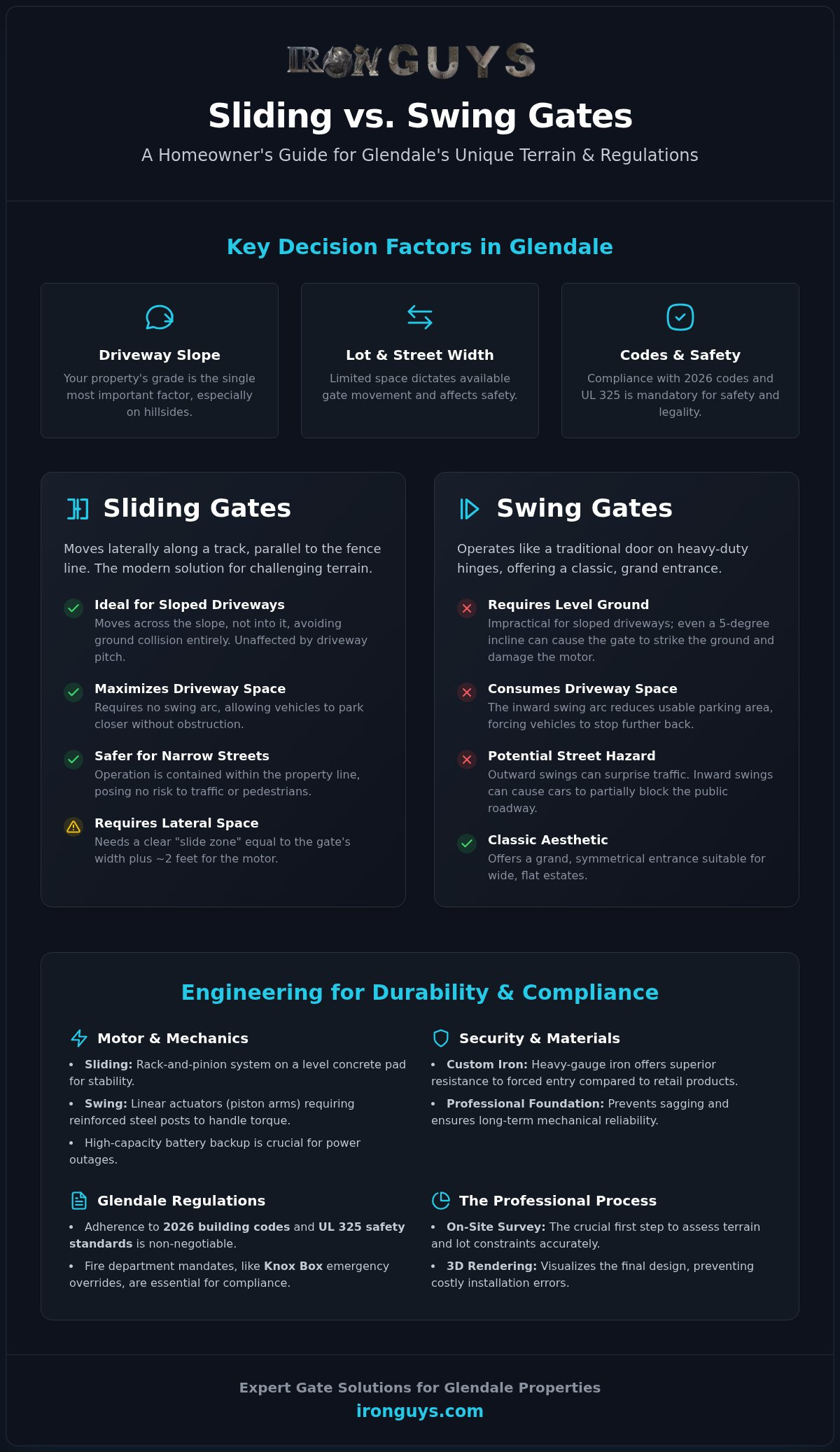
Glendale isn’t flat. The steep grades of Chevy Chase Canyon and the Verdugo foothills demand specific engineering. Most homeowners start by looking at photos, but the land tells you what’s actually possible. Choosing between Sliding Gates vs. Swing Gates for Homes in Glendale depends heavily on whether your property is a flat estate or a hillside perch.
Swing gates operate like a standard door on heavy-duty hinges. Sliding gates move laterally along a track or cantilever system. When you’re planning electric gate systems, you have to account for the physical sweep of the metal. Narrow Glendale streets often prevent gates from swinging outward toward the curb, meaning an inward swing is usually the only option for that style. This can eat up valuable parking space on your driveway.
The Slope Factor: Upward vs. Downward Driveways
Upward driveways are a common hurdle in our local hills. A standard swing gate requires level ground to clear the pavement throughout its entire arc. If your driveway rises even slightly, the gate’s bottom frame will strike the concrete. Even a 5-degree slope can interfere with standard swing gate operation, causing the motor to burn out or the frame to bend. You can buy specialized uphill hinges, but they’re expensive and put massive strain on the pillars.
Sliding gates solve this problem entirely. They move across the slope rather than into it, staying clear of the rising ground. Because the gate runs on a level track or a balanced cantilever, the pitch of your driveway doesn’t affect the motor’s workload. It’s a more reliable setup for properties with challenging elevations.
Lot Width and Lateral Clearance
You need a “slide zone” for a sliding gate to retract. This pocket must be the width of the gate plus about two feet for the motor and hardware. Many Glendale lots are narrow, which makes a single long slider impossible. In these cases, we look at bi-parting swing gates or telescopic sliding systems that stack sections to save space. Horizontal iron designs are excellent for these setups because they naturally mask the industrial look of the mounting tracks.
Narrow Glendale streets create two major safety issues for swing gates:
- Reduced reaction time: A gate swinging toward the street can surprise oncoming traffic or pedestrians.
- Vehicle clearance: An inward-swinging gate forces cars to stop further back. This often leaves the rear of the vehicle hanging into the public roadway.
A sliding gate keeps the entire operation within the plane of your fence line. It’s the most efficient way to maximize your driveway length while keeping your car off the street during the opening cycle. For tight urban lots, the sliding mechanism is usually the superior choice for both safety and functionality.
Mechanical Comparison: Swing vs. Sliding Gate Systems
The mechanical heart of your entryway determines how long it lasts before needing a service call. When evaluating Sliding Gates vs. Swing Gates for Homes in Glendale, you’re choosing between two entirely different drive systems. Swing gates typically rely on linear actuators. These are piston-like arms that push and pull the gate. Sliding systems use a rack-and-pinion setup, where a motor-driven gear moves a toothed track attached to the gate.
Structural prep work is where most DIY projects fail. Custom iron is heavy. A swing gate puts massive rotational torque on your pillars. We use reinforced steel posts buried deep in concrete to prevent sagging. Sliding gates require a different foundation. You’ll need a level concrete pad for the motor and a perfectly straight run for the track. If you want a system that stays silent in a quiet Glendale neighborhood, a well-maintained sliding gate often operates with less mechanical chatter than an aging swing arm.
Power reliability is a major concern in Southern California. Glendale’s fire-prone hills often see preventive power shutoffs. Your system must include a high-capacity battery backup to ensure you aren’t locked in or out during an emergency. If you’re unsure about your property’s electrical capacity, our team can evaluate your current setup for automatic gates.
Swing Gate Mechanics and Hardware
A single swing gate is simple and cost-effective. A double swing creates a grand, symmetrical entrance for larger Glendale estates. Because we work with heavy-gauge iron, standard hinges won’t cut it. We install heavy-duty ball-bearing hinges designed to carry hundreds of pounds without binding. Maintenance is straightforward. You’ll need to lubricate the grease points twice a year and check that the hinges haven’t shifted due to soil movement.
Sliding Gate Tracks and Rollers
The V-track is the industry standard. It’s reliable and durable, but the track must stay clear of dirt and gravel to prevent the gate from jumping. For driveways with drainage issues or uneven ground, we recommend a cantilever system. This “floating” gate doesn’t touch the ground across the driveway opening, using a counterweight and internal rollers instead.
Safety is the top priority for heavy moving iron. Every installation must meet the UL 325 safety standard to prevent entrapment. This includes “edge” sensors that stop the gate instantly if they touch an object. For families with kids or pets, these sensors are non-negotiable.
Security and Durability: Why Custom Iron Matters
Security is the primary reason most homeowners invest in a perimeter gate. When comparing Sliding Gates vs. Swing Gates for Homes in Glendale, you have to look at how each system handles a forced entry attempt. A sliding gate is naturally more resistant to being pushed or rammed open. Because the gate leaf sits within a recessed track or a heavy duty cantilever pocket, there is no central swing point for an intruder to exploit. Swing gates are impressive, but they require additional hardware to provide the same level of rigid closure against a determined breach.
Durability in Glendale also means surviving the environment. Our custom iron work is finished with high grade powder coating that resists fading under the intense Southern California sun. Standard spray paint on retail gates will peel and rust within a few seasons. We build for longevity, ensuring your investment stands up to the battering of Santa Ana winds and the unique soil conditions of the Verdugo foothills.
The Strength of Custom Fabrication
Retail gates from big box stores are usually made of thin walled aluminum or hollow tubes. These mass produced products are the #1 point of failure in residential security because they can be easily cut or bent with basic hand tools. We use heavy gauge steel that provides a physical presence intruders won’t want to challenge. While wood warps and vinyl cracks over time, custom iron stays structurally sound for decades with minimal maintenance. Solid iron pickets are superior to hollow tubes for security because they offer massive resistance to cutting tools and cannot be easily crushed or pried apart.
Access Control Integration
A heavy gate is only useful if you can control exactly who goes through it. We integrate professional phone entry systems that allow you to verify visitors from your smartphone before they ever set foot on your property. For larger estates or multi family properties, we install apartment intercoms that manage high traffic volumes without compromising safety.
If you choose a swing gate, we often recommend magnetic locks with at least 1,200 pounds of holding force. These prevent the wind from rattling the gate and stop intruders from prying the leaves apart. Modern RFID readers and encrypted keypads complete the setup, giving you a seamless way to enter your property without relying on outdated remotes that can be lost or copied.
Navigating Glendale Regulations and Curb Appeal
Glendale doesn’t just have hills. It has some of the strictest building codes in Southern California. If you are planning to install Sliding Gates vs. Swing Gates for Homes in Glendale in 2026, you must comply with the updated California Building Standards and local amendments. A gate that looks great but blocks a public right of way or violates a setback will be flagged by code enforcement. We ensure every project meets the 30 foot setback requirement from the roadway, allowing vehicles to stop safely without obstructing traffic while the mechanism cycles.
Fire safety is a major priority in our hillside communities. The Glendale Fire Department requires specific emergency access for all automated entries. This means your gate must have a Knox Box or an approved emergency override switch. Without these, emergency responders can’t reach your home during a crisis. We specialize in installing heavy duty driveway gate systems that integrate these life saving features without compromising your home’s security or aesthetics.
A custom iron gate is more than a barrier. It is a significant investment in your property value. In neighborhoods like Rossmoyne or the Verdugo Woodlands, architectural harmony is essential. A well designed gate should complement the Spanish Colonial or Mid-Century Modern lines of your home. A mismatch looks cheap and can actually hurt your curb appeal. We focus on creating a cohesive look that suggests permanence and prestige. Contact us to discuss your property’s specific zoning needs.
Permits and Local Compliance
Most new gate installations in Glendale require a permit. The city planning department specifically looks at the “Visibility Triangle.” This rule ensures that your gate and pillars don’t block the view of oncoming traffic when you’re pulling out of your driveway. In the “F” overlay zone, regulations are even tighter. Gates in street front setbacks cannot exceed 42 inches in height and must maintain at least a 50% open design. We handle the technical drawings and compliance checks to make sure your submission is approved without delays.
Design Trends for 2026
Modern Glendale renovations are moving away from overly ornate scrolls toward cleaner, sharper lines. We are seeing a massive rise in horizontal iron works that provide a sleek, contemporary feel while maintaining maximum security. Many homeowners are now incorporating laser cut privacy panels into traditional wrought iron frames for a custom, high end look. Choosing the right finish is the final step. While matte black remains the standard for its timeless appeal, oil rubbed bronze finishes are gaining popularity for their ability to mask dust and maintain a premium look in our dry climate.
The Iron Guys Process: From Consultation to Installation
A high-quality gate is only as good as the technical measurements behind it. We don’t guess. We don’t use “standard” templates. Every property in Glendale has its own unique challenges, from shifting hillside soil to complex elevations. Our process is designed to eliminate the guesswork and ensure that your choice between Sliding Gates vs. Swing Gates for Homes in Glendale results in a system that works perfectly on day one and year twenty.
We start with a comprehensive consultation that moves quickly from your vision to technical reality. Deciding between Sliding Gates vs. Swing Gates for Homes in Glendale requires a partner who understands both the aesthetic and the engineering requirements of our local terrain. Once we establish the best mechanism for your lot, we provide custom designs and 3D renderings. This step allows you to visualize the final product against your home’s architecture before fabrication starts. Because we handle all ironwork in-house, we control the quality of every weld and the thickness of every picket. We never rely on third-party sourcing or mass-produced retail components that compromise your security.
The Technical Site Survey
Our technicians perform a rigorous site analysis before a single piece of steel is cut. We measure the “fall” of your driveway across the entire travel path of the gate. This is critical for sliding systems where even a minor calculation error can lead to track binding. We also test your existing electrical capacity to ensure it can handle high-cycle gate operators without tripping breakers. This survey identifies the optimal placement for intercoms and pedestrian gates, ensuring a logical flow for your property entrance.
Uncompromising Installation Standards
Installation is where we separate professional ironwork from amateur fencing. We set deep, reinforced concrete footings that exceed standard building codes. This prevents the “gate sag” that plagues cheaper installations. While others might use bolt-on hardware to save time, we prioritize structural integrity through on-site welding where appropriate. This creates a unified, rigid structure that can withstand Santa Ana winds and daily use without shifting.
Every system undergoes a 50-point safety and performance check before we sign off. We test the sensors, verify the battery backup, and ensure the access control integration is seamless. You deserve an entrance that provides total peace of mind. Contact the Iron Guys for a custom Glendale gate consultation today to secure your property with the best in the business.
Secure Your Property with Precision Engineering
Choosing the right entrance is a high-stakes decision for any Glendale homeowner. We’ve analyzed how steep hills and narrow lots demand more than just a standard gate. Whether you need a space-saving sliding system for a hillside driveway or a grand swing gate for a flat estate, the technical details define your success. Your lot’s topography, local 2026 fire codes, and material thickness are the real factors that ensure long-term reliability.
Iron Guys has served the community as licensed LA contractors since 1998. We specialize in difficult hillside installations that other companies won’t touch. We don’t use mass-produced retail products. We only install heavy-duty iron custom-built for your security. When you weigh the pros and cons of Sliding Gates vs. Swing Gates for Homes in Glendale, you need a partner who values durability as much as you do. Don’t settle for a flimsy barrier that can’t handle the Santa Ana winds. Secure your home with a custom Glendale iron gate today. We’re ready to build your property’s ultimate defense.
Frequently Asked Questions
Is a sliding gate or swing gate more expensive to install in Glendale?
Sliding gates typically require a higher upfront investment because they need a ground track or cantilever hardware and specialized rack-and-pinion motors. Swing gates use simpler linear actuators, but the cost often increases when you factor in the reinforced pillars needed for heavy custom iron. Your final price depends on the weight of the materials and the structural prep required for your specific property layout.
Can I install an automatic gate on a steep driveway in the Glendale hills?
Yes, but a sliding system is almost always the superior choice for steep terrain. Swing gates often strike the ground on upward slopes unless you use expensive uphill hinges that put massive strain on the motor. Sliding gates move laterally across the slope. They stay level and operate reliably without the mechanical stress that causes swing arms to fail on a pitch.
How much space do I really need for a sliding driveway gate?
You need the full width of the gate plus roughly two feet of “pocket” space for the motor and hardware. For a standard 12 foot driveway, you’ll need at least 14 feet of lateral clearance along your fence line. If you are comparing Sliding Gates vs. Swing Gates for Homes in Glendale and lack this side room, a bi-parting swing gate is usually the only viable option.
What are the height restrictions for residential gates in Glendale?
Under the 2026 Glendale Municipal Code, gates in the “F” overlay zone street front setback cannot exceed 42 inches in height. They must also maintain a 50% open design to ensure visibility. Outside of these specific setback areas, standard residential heights usually go up to 6 feet. You must verify your specific zoning with the city planning department before our fabrication process begins.
Do sliding gates require more maintenance than swing gates?
Sliding gates require more frequent cleaning of the ground track to prevent dirt and gravel from causing a derailment. Swing gates rely on heavy-duty ball-bearing hinges that need lubrication twice a year to handle the weight of custom iron. Both systems require an annual inspection of the motor and safety sensors to ensure they remain compliant with UL 325 standards and operate smoothly.
Will an iron gate interfere with my home’s Wi-Fi or intercom system?
A heavy iron gate won’t kill your signal, but it can act as a partial shield for low-power wireless devices. We solve this by mounting external antennas for your phone entry systems and using hardwired connections for apartment intercoms. This ensures your verified access remains stable regardless of the gate’s material thickness or the distance to your home router. Reliability is our priority.
What happens to my automatic gate during a Glendale power outage?
Every automatic gate we install includes a high-capacity battery backup system to handle Glendale’s occasional fire-related power shutoffs. In the event of a total electrical failure, the motor features a manual release key. This allows you to disengage the drive and move the gate by hand. You’ll never be trapped on your property during an emergency evacuation or a utility outage.
How long does a custom iron gate installation take from start to finish?
A custom project typically takes four to eight weeks from the initial site survey to final testing. This includes time for design approval, in-house fabrication, and the 109-day average for Glendale permit plan reviews. Professional installation of Sliding Gates vs. Swing Gates for Homes in Glendale usually takes two to three days once the permit is issued and the site is prepped.