
Security and curb appeal don’t have to compete. Iron fencing is a metal boundary that can provide a defined perimeter while keeping an apartment’s architectural features in view. Choosing the right iron fence for apartments in Los Angeles starts with the site: most residential fences are limited to 6 feet in front yards and 8 feet in backyards unless a special permit is secured, and hillside or coastal zones can differ.
It’s understandable to want a fence that feels secure without making a building look closed off. The right choice depends on how the fence’s height, design, installation conditions, and material durability work together. This guide explains what iron fencing offers and how to assess those factors for apartment properties in Los Angeles, Pasadena, Glendale, and nearby communities.
Key Takeaways
- Weigh security, appearance, upkeep, and budget together to identify the priorities your apartment fence needs to meet.
- Plan fence heights around each area’s purpose and the applicable Los Angeles rules, which can vary by location.
- Choose a design that complements the building’s architecture while supporting the level of privacy and visibility you want.
- Account for grading, drainage, hardscape, and property boundaries before installation to help the finished fence fit the site.
- Consider the local environment and maintenance needs when selecting ironwork, then explore Iron Guys’ completed projects and customer reviews for examples of its work.
1. What is Iron Fencing?
Choosing the right iron fence for apartments in Los Angeles means weighing security, appearance, upkeep, and budget together. Iron fencing forms a fixed metal boundary, often with vertical pickets that preserve sightlines. Metal fences are durable and secure, but their performance depends on construction, installation, and care. With proper maintenance, metal fences can last up to 40 years.
Wrought iron brings a traditional aesthetic to apartment entrances, courtyards, and street-facing boundaries. Its substantial look can suit older buildings in Pasadena or Spanish-style properties in Glendale. Ornamental details, including custom scrollwork, add character without requiring a solid visual barrier. For a cleaner profile, plain pickets and simple rails keep the design restrained and let building features remain visible.
Compare iron fencing with other metal options by considering the property’s security needs, appearance, and maintenance plan, rather than relying on material labels alone. Assess the design and construction against the job it must do. A shared courtyard boundary may benefit from clear sightlines, while a more exposed perimeter may call for a stronger visual presence.
When setting a project budget, look beyond fabrication to account for design details, site preparation, installation conditions, and ongoing care. Intricate ornamental work adds detail and complexity; a straightforward picket layout creates a simpler visual rhythm. Compare these choices with the apartment’s architecture and how residents use each area, rather than adding decoration without a clear purpose.
Maintenance is part of choosing a fence. Metal fences need cleaning and painting to remain in good condition, and iron may need occasional rust prevention. Inspect the finish, joints, and posts regularly. Arrange repairs or replacement of damaged sections promptly. In coastal communities such as Santa Monica and Manhattan Beach, consider the site’s exposure when planning upkeep.
Security and visibility can work together. Open picket fencing allows views through the boundary, helping residents and visitors see entrances and shared spaces. A more solid visual effect may provide greater privacy, but can block sightlines across a courtyard. Walk the perimeter from both sides, identify vulnerable access points, and choose spacing and ornamental details suited to the property. This review helps balance protection, architectural fit, and maintenance.
2. Using different fence heights in different areas
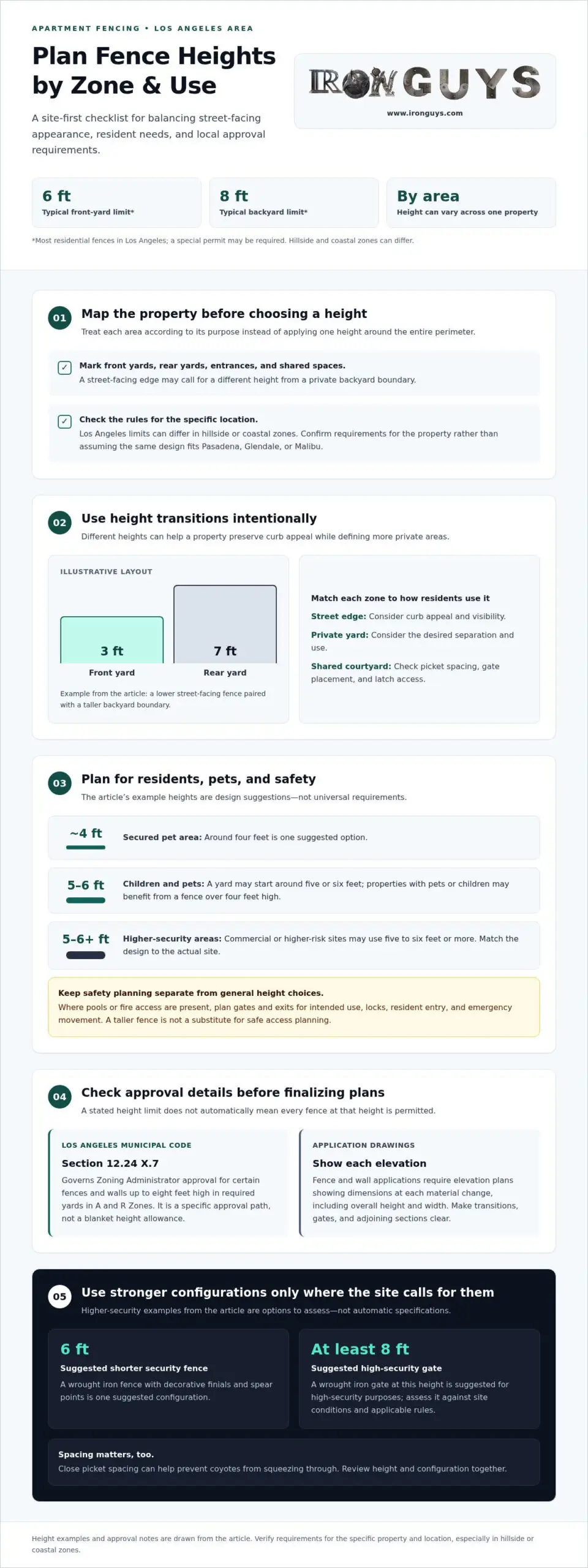
Choose height by location and purpose, not by a single perimeter-wide rule. In Los Angeles, most residential fences are limited to 6 feet in front yards and 8 feet in backyards unless a special permit is secured. Hillside and coastal zones can differ, so a design that suits a property in Los Angeles may not suit one in Malibu.
A property can use different heights in different areas. For example, a 3-foot front-yard fence and a 7-foot rear-yard fence create a lower street-facing edge and a taller backyard boundary. The change can preserve curb appeal near the sidewalk while giving residents more separation in a private area. Before choosing styles, map the front yard, rear yard, entrances, and shared spaces.
Los Angeles Municipal Code Section 12.24 X.7 governs Zoning Administrator approval for certain fences and walls up to eight feet high in required yards in A and R Zones. This is a specific approval path, not a blanket height allowance. Fence and wall applications also require elevation plans showing dimensions at each material change, including the structure’s overall height and width. Those drawings help make transitions, gates, and adjoining sections clear.
Consider how residents use each area. A property with pets or children may benefit from a fence over four feet high. A secured pet area may use a fence around four feet tall, while a yard intended for children and pets may start around five or six feet. These are design suggestions, not universal requirements. For shared courtyards, consider whether picket spacing, gate placement, and latch access suit the intended users.
Pool safety and fire access need separate consideration wherever those features are present. General height limits alone do not address these needs. Align gates and exits with their intended use, and consider how locks affect residents’ entry and emergency movement. A taller fence is not a substitute for planning safe access.
For higher-security areas, commercial spaces and higher-risk sites may use fences five to six feet high or more. A 6-foot wrought iron fence with decorative finials and spear points is one suggested shorter security option; a wrought iron gate at least 8 feet tall is suggested for high-security purposes. Match those choices to the site, rather than applying them automatically. Picket spacing also matters: close spacing can help prevent coyotes from squeezing through. Review iron fence layouts to consider how height and configuration work together.
3. Matching fence design to home architecture
A fence becomes part of a building’s exterior, not a separate decoration. In Pasadena, a residential apartment with arched entryways may suit curved details, while a modern property in Culver City may call for straight lines and restrained ornament. Start by identifying the building’s strongest features, such as window shapes, balcony rails, entry gates, and façade materials. Then choose fence proportions and details that echo those features rather than compete with them.
When reviewing design samples, compare them with the actual building rather than in isolation. Photograph the entrance and courtyard, then note repeated shapes, finishes, and visual rhythms. Vertical rails can relate to tall windows, while horizontal ironwork may complement a façade with strong horizontal bands. Keeping one or two design cues consistent helps the fence feel like a considered addition.
The style should also reflect how residents use each space. A street-facing boundary in Beverly Hills may call for a more formal appearance than an enclosure around a service area. Ornamental details can add character near an entrance, while a simpler pattern can keep a long side boundary from dominating the property. Review the design from the sidewalk, lobby, and courtyard, since each viewpoint reveals a different effect on the building’s overall appearance.
Child- and pet-conscious design starts with openings and access points. Walk the proposed fence line at a child’s and pet’s eye level, then inspect gaps, corners, and changes in ground level. Choose a picket arrangement suited to the residents using the area, and make sure the gate operation and latch placement fit their needs. A family courtyard in Los Angeles may need different access considerations from a decorative boundary around a quiet entrance.
Material and detail choices also affect long-term durability. Elaborate scrollwork creates a distinctive look, while simpler profiles can be easier to clean around. Before choosing a finish, consider the fence’s exposure, nearby landscaping, and how easily each section can be inspected. The best visual match is one that remains practical to maintain, not just attractive in a rendering.
Use a clear selection process: record the building’s architectural details, identify the purpose of each fence area, compare design samples with the exterior, and review gates and openings in context. This helps apartment property owners across Los Angeles avoid mismatched styles and choose a fence that supports the building’s character, daily use, and lasting appearance.
4. Professional installation and site conditions
Iron fencing depends on more than strong materials; grading, drainage, hardscape, and property boundaries shape installation. Before setting posts, map the fence line against sidewalks, retaining walls, paving, and building entrances. A sloped lot in Los Angeles may need a stepped or contoured layout, while a level courtyard in Burbank may allow consistent top and bottom lines.
Los Angeles fence posts typically go 24–36 inches deep and are secured with reinforced concrete. The required placement depends on the site and fence design, but stable posts help support the panels and resist movement. Installation planning should also account for underground utilities, existing walls, and changes in ground level. Marking these conditions before work begins helps avoid conflicts along the planned boundary.
Drainage matters. A fence should not block the path water already takes across a property or create pooling beside a building. Check low points and drainage features before finalizing the line. Existing hardscape can affect post locations, too. For example, a paved driveway in Glendale may require a different post layout from a landscaped courtyard in Pasadena. Record those constraints on the site plan.
Gate installation needs the same site review, with added attention to movement and hardware. Confirm the opening width, ground clearance, hinge locations, and whether the gate swings into a clear area. A sloped driveway can affect a swinging gate’s path, while a shared apartment entrance needs hardware residents can operate consistently. Match the gate frame and supporting posts to its size and intended use.
Accessibility and egress affect fence lines and gate layouts. Preserve usable accessible routes and exit paths, and consider gate swing, passage space, and operating hardware together. In a Los Angeles apartment, a gate should not obstruct the route residents need to enter or leave the property.
When comparing installation proposals, align each written scope against the same fence line, materials, site preparation, gate hardware, and finish. Compare warranty terms by reviewing what work they cover, applicable exclusions, how claims are handled, and whether maintenance affects coverage. Matching these details makes proposal differences easier to understand without relying on a headline warranty period.
Before installation, document fence height, panel transitions, post locations, gate openings, and nearby drainage or paving. A drawing that shows those details gives the fabrication and installation teams a shared reference. For a closer look at custom iron fence fabrication, review designs that balance site conditions, strength, and the building’s appearance.
5. Fence material selection and climate durability
Los Angeles weather and site exposure affect how long a metal fence remains serviceable. A coastal property in Santa Monica or Manhattan Beach faces different conditions from an inland site. Longevity depends on the metal and its environment, so compare materials with the fence’s actual exposure. Consider salt air, nearby landscaping, and how easily each section can be inspected and maintained.
For iron fences in Los Angeles, protective paint or sealant helps shield the metal from the elements. Plan to renew the protective coat every few years, and inspect the finish for damage between maintenance visits. Galvanized steel railings are more corrosion-resistant and rust-resistant than aluminum railings. This comparison can help when evaluating metal options, but the best fit still depends on the fence’s location and use.
Los Angeles has an observed galvanized-coating corrosion rate of ~1.6 µm/year in an industrial, coastal, moderate environment. That figure describes a particular environment, not every neighborhood or property. It highlights why exposure matters: coastal conditions can affect metal differently than a more temperate setting. A fence near the ocean in Santa Monica may need closer attention to its protective finish than one farther inland.
Use a practical comparison before choosing a material. First, map which fence sections face coastal air, irrigation, or other potential sources of moisture. Next, review the material and its protective finish. Then consider how accessible panels, joints, and posts will be for cleaning and inspection. This helps property managers compare durability and upkeep alongside appearance, rather than judging materials by their initial finish alone.
Maintenance protects the investment. Clean the fence as needed, inspect for rust or damage, and address affected areas promptly. If a coating is scratched or peeling, arrange repairs and renew the protective layer. For a large apartment perimeter in a coastal community such as Manhattan Beach, divide inspections by gate, frontage, and courtyard sections. This makes changes easier to track and areas needing attention easier to spot.
A durable selection should complement the building while matching local exposure and realistic maintenance needs. Compare the finish, material, and inspection access for each proposed section. Keep the maintenance plan with property records so future managers can follow the same routine. Iron fences can last up to 40 years with proper maintenance and care, making consistent inspection and protective upkeep central to long-term performance.
Iron Guys: Security iron fence
Iron Guys designs and installs security iron fences for Los Angeles apartments, balancing perimeter protection with architectural fit. Where a project also needs controlled vehicle access, electric remote control gates and automatic gates can complement the fence. Horizontal ironwork offers another design direction for properties seeking clean, linear details.
Bring the site layout, preferred fence design, and access priorities into the discussion. That gives the project a practical starting point, whether you’re upgrading a courtyard boundary in Glendale or planning a driveway entrance in Pasadena. Explore completed projects and customer reviews to see examples of the workmanship and designs.
Visit IronGuys.com or contact Iron Guys to discuss your apartment fence project.
Set a Clear Direction for Your Apartment Fence
Choosing the Right Iron Fence for Apartments in Los Angeles means turning the property’s priorities into a clear project brief. Before moving ahead, identify who uses each entrance, how residents move through shared spaces, and what the fence should communicate from the street. That gives the design process a practical starting point for apartments in Los Angeles, Glendale, or Pasadena.
Iron Guys installs security iron fences, electric remote control gates, and automatic gates. These options support a coordinated approach to perimeter security and vehicle access, with choices shaped around the apartment’s layout and architectural character. A focused discussion about the property’s needs helps bring those elements together in a functional, cohesive plan.
Turn your priorities into a design conversation with Iron Guys. Explore completed projects and customer reviews, then discuss how the details could work for your property.
A well-planned project starts with a clear purpose. Contact Iron Guys to make the fence a considered part of your property.
Frequently Asked Questions
What is Iron Fencing?
Iron fencing is a metal boundary made from connected posts, rails, and upright bars or decorative elements. Apartments may use it to define a driveway entrance, separate a courtyard, or mark a street-facing edge. Unlike a solid barrier, an open picket layout can preserve views through the perimeter. Design, construction, finish, and exposure all affect how the fence performs and what maintenance it needs.
What types of iron fencing are suitable for Los Angeles apartment buildings?
Open picket fencing, ornamental wrought iron, and horizontal iron designs can suit different apartment areas. Pickets can define a sidewalk edge while keeping the frontage visible; ornamental patterns can add detail around a main entrance. Horizontal designs may suit contemporary buildings or courtyard boundaries. For a property in Hollywood or Downtown LA, compare each style with the building’s façade and the purpose of each fence section.
What are the pros and cons of wrought iron, steel, and aluminum apartment fencing?
Wrought iron supports ornamental details and a traditional appearance, while steel offers a durable metal fencing option. Galvanized steel railings are more corrosion-resistant and rust-resistant than aluminum railings, a useful comparison for exposed settings. Aluminum is another material to consider, but the best selection depends on the site, design, and maintenance plan. In coastal areas such as Santa Monica and Manhattan Beach, account for salt exposure when comparing finishes.
What Los Angeles building codes and permit requirements apply to apartment fences?
Requirements depend on the property and project. Los Angeles Municipal Code Section 12.22 C.20 (f) includes ornamental fences, latticework, screen walls, hedges, and thick shrub or tree growth within “fence” and “wall” terms. Fence and wall applications require a plot plan showing uses and distances from structures within 50 feet, plus Master Filing Instructions form CP-7810. Hearing notices involve abutting owners and on-site posting, with procedures using forms CP-2074 and CP-7762.
What fence height limits and setback rules apply in Los Angeles?
Most Los Angeles residential fences are limited to 6 feet in front yards and 8 feet in backyards unless a special permit is secured. Hillside and coastal zones can differ. If a street dedication exists, show it on the plot or site plan and measure setbacks from the dedication line, not the existing property line. A and R Zone projects may also involve Los Angeles Municipal Code Section 12.24 X.7.
How do apartment owners choose iron fence height, style, and security features?
Start by mapping the property’s entrances, shared spaces, and street frontage, then assign a purpose to each boundary. Match the design to the building and consider how residents use gates and walkways. A courtyard in Beverly Hills may need a different balance of visibility and separation than a driveway in Rancho Palos Verdes. Review the full layout together so height, picket spacing, and access features work as one plan.
How often does an iron apartment fence need maintenance, and what does it cost?
Inspect the fence regularly for rust, loose connections, or damage, and repair affected sections promptly. A fresh coat of paint or sealant every few years helps protect iron from the elements; coastal exposure can influence upkeep needs. Maintenance cost depends on fence length, condition, finish, and access for the work. Project pricing depends on the case and is provided after a quote request.