
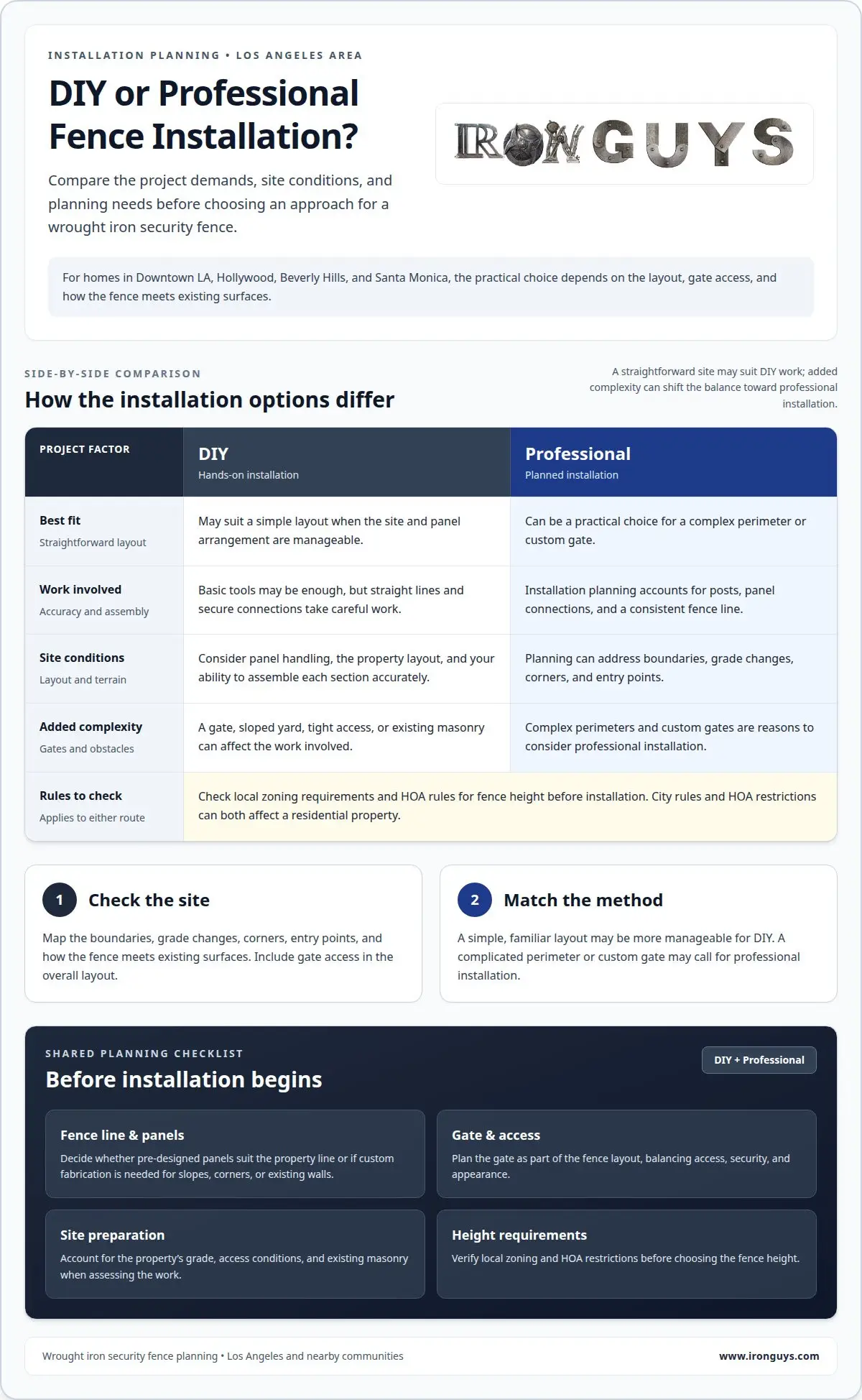
A wrought iron security fence may require thoughtful planning and careful assembly. Before starting, check local zoning requirements and HOA rules for fence height. DIY may suit a straightforward layout, while a complex perimeter or custom gate can call for professional installation.
It’s understandable to want control over the work and a fence that complements your home. The right approach depends on the property’s layout, gate access, and how the fence meets existing surfaces. This guide explains what to consider before deciding whether to install a wrought iron security fence yourself.
You’ll learn how fence styles balance security and garden appearance, what affects rust resistance, and how gates fit into the design. We’ll also compare DIY and professional installation for homes in Los Angeles and nearby communities, including Downtown LA, Hollywood, Beverly Hills, and Santa Monica. This will help you plan a fence that suits your property and choose a practical approach to the work.
Key Takeaways
- Compare pre-designed panels with custom ironwork to find a layout that suits your property and garden.
- Learn what helps limit rust and how periodic inspections and coating touch-ups can protect a fence.
- Assess whether your site and installation skills make a DIY project practical, and account for local height rules.
- Plan gates and garden fencing as part of the overall layout, balancing access, security, and appearance.
- Weigh iron fencing’s durability and visual appeal against its maintenance needs before choosing a design.
Will my wrought iron fence panel rust?
Yes. An iron fence panel can rust if its protective coating wears away, chips, or leaves metal exposed. Inspect the finish periodically and touch up damaged coating to address exposed spots early. In the United States, permit and height requirements depend on the location. Check local zoning requirements and HOA rules before installation, since both city rules and HOA restrictions can affect a residential property.
The cost of a wrought iron fence depends on the project and is provided after a quote request. Key factors include fence length and height, panel count, custom details, finish, site preparation, and whether the design includes a gate. A sloped yard, tight access, or existing masonry can also affect the work involved.
Pre-designed panels can simplify planning because their dimensions and decorative details are already established. They can suit a straight property line or familiar layout, where repeated panels create a consistent appearance. Custom fabrication offers more flexibility around slopes, corners, existing walls, and ornamental preferences. For example, a curved garden edge may need a different panel arrangement from a level driveway boundary.
Security and appearance are shaped by the same design choices. Pointed spear tops, finials, and anti-climb coatings are features used on metal fencing; finial tips can make climbing more difficult. Closely considered rail spacing can also affect access. Some iron fence designs describe rails spaced up to 4 or 5 feet apart, but the right arrangement depends on the panel and its intended use. Ornamental scrolls and decorative details can add character, while simpler lines create a more restrained look.
- Panel style: Choose between repeated pre-designed sections and a layout tailored to the property’s boundaries.
- Climbing deterrence: Consider spear tops, finials, and anti-climb coatings as part of the fence design.
- Finish care: Inspect panels periodically, then touch up coating where it is chipped or worn.
Rust prevention is ongoing, not a one-time decision. Check corners, joints, and areas where the coating looks damaged, since these spots can expose the metal beneath. Clear away dirt and plant growth that hide the surface during inspection. A durable fence combines a suitable panel design with regular attention to its protective finish. Across Los Angeles, including coastal areas such as Manhattan Beach and Santa Monica, thoughtful design can keep ornamental details aligned with the home while creating a practical security boundary.
Metal fencing durability and corrosion resistance
Metal fence durability depends on material, construction, exposure, and upkeep. Steel provides a rigid frame for residential ornamental fencing, while its protective finish helps shield the surface from moisture. If that finish is damaged, exposed steel can corrode. Inspect rails, joints, and post bases for chipped coating or rust, especially where water or soil collects. A wrought iron fence erected in England in the 17th century is still in service, showing how enduring ironwork can be when its structure and care hold up over time.
Design also affects how a fence works as a perimeter barrier. A picket layout can define a boundary while keeping sightlines open. Closely spaced vertical bars and secure connections can make the boundary harder to cross than widely spaced elements. Consider the full perimeter, including corners, changes in grade, and transitions beside walls. Careful planning avoids vulnerable openings and gives each panel a clear connection to neighboring sections.
Tubular and solid steel differ in weight and material use. Tubular steel fencing uses hollow tubes, making it lighter and more affordable than solid steel fencing. Solid steel uses more material in each component. The best fit depends on the fence’s purpose, design, and the demands of the property. Compare posts, rails, and pickets as a complete assembly rather than judging durability by one component.
Steel and aluminum also behave differently over time. Steel can rust when moisture reaches exposed metal; aluminum does not form iron rust, but its surface can still corrode. Finish condition, drainage, and contact with surrounding materials all matter. At home, inspect the bottom edge of panels and the areas around fasteners. These locations can collect moisture or suffer coating damage during routine yard work.
For security fencing, evaluate both strength and maintenance access. A tall, uninterrupted perimeter may look imposing, but gates and changes in terrain affect how the boundary works. Match panel construction to the site, then plan inspection access so damaged finishes remain visible. In coastal or damp conditions, exposure makes consistent surface care especially relevant. In Los Angeles neighborhoods such as Pacific Palisades or Pasadena, property layout and landscape contact can shape that maintenance plan.
Reviewing custom iron fence fabrication can help you compare how ornamental designs meet perimeter needs. Look at the panel pattern, connection points, and finish together. That practical review makes it easier to choose fencing that suits a home’s architecture and supports lasting use.
DIY and professional installation
Metal fencing can be installed with basic tools, but straight lines and secure connections take careful work. A DIY decision depends on the site, panel handling, and the installer’s ability to assemble each section accurately.
Professional Installation
Professional installation accounts for the property’s boundaries, grade changes, corners, and entry points. Review how the plan handles posts, panel connections, and a consistent line across uneven ground. A commercial perimeter may need a different layout from a residential yard, but both require panels that meet cleanly and remain aligned. On broader property developments where perimeter security is integrated into a comprehensive build, full-service design-and-build firms such as Wallpro System & Construction Inc routinely coordinate site planning, boundary structures, and general construction.
Welding a panel to its posts, or welding a bracket connection, can create a joined unit. That choice affects how sections connect and how the installation is assembled. Review the proposed layout and connection method before work begins, especially where the fence meets a wall or driveway.
Installation Problems and Safety Risks
Common problems include misaligned posts, uneven panels, gaps at corners, and connections that do not hold their intended position. Heavy sections can shift during handling, while sharp pickets or decorative finials can cut skin. Welding creates heat and sparks, so keep people clear and use suitable protective equipment.
Before installing a fence, check local zoning requirements and HOA rules for fence height. In Los Angeles, a sloped lot or a boundary beside a driveway can make measuring and alignment more demanding. Account for these conditions before setting posts.
For a DIY project, begin with a clear site plan. Mark the fence line, identify corners and gates, then compare panel widths with the available space. Measure each run rather than assuming the property edge is straight. A small error can leave a panel short at the final corner or force an awkward fit near a wall.
Next, prepare each post location and check alignment as you work. Set posts consistently, then test the panel fit before securing every connection. A dry fit can reveal a mismatch while adjustments are still manageable. Keep tools and loose materials out of the work area, and arrange help when moving a large panel.
During assembly, use the chosen connection method consistently from one section to the next. If welding brackets or panels, control access around hot work and protect nearby surfaces. For bolted connections, tighten each fitting evenly and check the panel for movement. Even a section that looks secure needs a final walk-through.
Finish by checking the entire fence line from both sides. Look for leaning posts, loose joints, uneven gaps, and exposed sharp points. Open and close any gate to confirm its path is clear. This final inspection can catch installation issues before the fence becomes part of daily use.
Gates, garden fences, and trellises
Plan the gate and garden boundary as parts of one layout. A driveway entrance needs a clear opening, while a garden path benefits from convenient pedestrian access. Aligning the fence pattern across both areas gives the property a consistent appearance. Iron picket fencing has roots in the 17th and 18th centuries, yet its open lines still suit traditional and contemporary homes around Los Angeles.
For a residential perimeter, panel height and spacing shape both visibility and presence. Common described iron panels stand 5 or 6 feet tall, while some designs leave about a 4-inch air gap between elements. A taller panel can create a more substantial boundary; an open design lets the garden remain visible from the street. Choose a pattern that complements the home without blocking the views you want to keep.
Garden borders serve a different purpose from perimeter fencing. Lower panels can define planting beds, separate a lawn from a walkway, or protect a narrow border without enclosing the whole yard. For example, a listed garden fence spans 32.5 feet with panels 22 inches high. Other decorative examples include 17-inch-high fencing in 10-foot lengths. These dimensions illustrate how low ironwork can mark garden areas while preserving an open feel.
A trellis adds a vertical framework for climbing plants and can add height without using a full-height boundary panel. Place it where it supports the garden plan, such as beside a patio or along a planting bed. Coordinate the trellis with the fence so ornamental details do not compete. Iron provides a defined structure, while the chosen pattern determines whether it reads as architectural or decorative.
Consider these choices together before settling on a design:
- Driveway access: Set the gate opening around the vehicles and approach path using the property’s actual layout.
- Garden separation: Use shorter borders to define beds, lawns, and paths without closing off the yard.
- Visual continuity: Repeat picket shapes or ornamental details between the gate and adjoining panels.
- Plant support: Position a trellis near the area where climbing plants will grow, not across a needed access route.
In Beverly Hills or San Marino, a front garden may suit a low decorative border, while a long driveway needs a coordinated entrance and boundary. Sketch each opening, planting area, and fence run before selecting panels. This helps show where a gate interrupts the line, where a trellis fits, and whether the design balances access, strength, and garden detail.
What are the benefits and drawbacks of wrought iron security fencing?
A wrought iron security fence can define a clear boundary while keeping the home visible from the street. That open structure suits a front yard where homeowners want security without a solid visual barrier. For example, an ornamental picket design can complement a traditional Pasadena home while marking its property line.
Strength and design flexibility are key advantages. Iron fencing can use straight pickets, decorative finials, or ornamental details to match a home’s architecture. A consistent pattern across the front boundary and driveway entrance can give the property a unified look. Open panels also allow light and sightlines through the fence, helping preserve views of a garden or landscaped entry.
Security depends on the complete layout, not appearance alone. A well-planned boundary can make access points more deliberate and distinguish public space from private grounds. Consider where visitors approach, how the driveway connects, and whether a side path creates an easy route into the yard. A gate can organize entry, but it and the adjoining sections need to work together as one boundary.
Iron also requires maintenance. A damaged protective finish can expose metal to moisture and lead to rust. Inspect the surface, joints, and lower edges periodically, especially where irrigation or plants keep the fence damp. Touching up worn coating helps address exposed areas. In a landscaped Los Angeles yard, trimming plants away from panels makes inspections easier and keeps the finish visible.
Open picket designs provide less privacy than solid barriers. Neighbors and passersby can still see into the yard, even when the fence clearly marks the property edge. Ornamental details may also call for more careful cleaning than a simple pattern, since dust and leaves can collect around scrollwork. Consider these trade-offs against the home’s setting in Glendale or Beverly Hills, where front-yard appearance and privacy needs can differ.
- Choose an open design if visibility, light, and an architectural boundary matter most.
- Plan for upkeep by making the finish easy to inspect and touch up.
- Review privacy needs before choosing open pickets for a yard near a sidewalk.
- Coordinate the entrance so gates and fence panels form a coherent boundary.
Iron fencing suits homes where defined access, visible landscaping, and decorative detail matter. It may be less suitable when privacy is the main goal or routine finish care does not fit the homeowner’s plans. Weigh these factors against the property’s layout before choosing a style.
Iron Guys: Security iron fence
Iron Guys designs and installs security iron fences around property boundaries and entry points. Turn to the team when your layout needs coordinated fencing and driveway access, or when an existing iron fence or gate needs repair. Electric remote control gates and automatic gates can complement the fence, while horizontal ironwork offers another design direction.
A practical plan starts with the property itself: boundary lines, driveway approach, garden layout, and the home’s appearance. These details guide how the fence and gate work together, whether you’re securing a home in Downtown LA, Hollywood, or another Greater Los Angeles community.
Visit IronGuys.com to explore completed projects and customer reviews, then contact Iron Guys to discuss your fencing needs.
Plan a fence that fits your property
Your next step is to decide what the boundary must do every day. Consider how residents and visitors enter, which views you want to preserve, and how the design fits your home. These priorities can guide a wrought iron security fence that feels deliberate rather than like an afterthought.
Iron Guys offers security iron fences, electric remote control gates, and automatic gates. Explore completed projects and customer reviews to see examples of the team’s work and how these options can suit homes in Los Angeles and nearby communities.
Choose the details that matter most, then take the next step toward a more secure, well-planned entrance.
Frequently Asked Questions
Can I install residential fencing by myself?
Yes, homeowners can install fencing themselves if they can manage measuring, material handling, and assembly. Before committing, assess whether you can safely move the panels and complete each connection without rushing. Also consider how you’ll handle delivery, tools, and disposal of removed materials. Custom fabrication and welding require skills beyond simply positioning fence sections.
Can my fence post be installed on a slope?
Yes, a post can be installed vertically on sloping ground. The key is to plan how the fence transitions between higher and lower sections, particularly near a driveway or property corner. Mark changes in slope and the gate opening on a site sketch before choosing panel sizes. This can reveal awkward transitions and help keep the entrance usable without forcing the gate to follow the ground’s angle.
What is a wrought iron security fence and how does it deter intruders?
A wrought iron security fence is a metal perimeter barrier made of posts and connected fence sections. It can make unauthorized entry less direct by establishing a physical boundary around a home. By itself, it does not detect attempted entry or notify residents. If you need those functions, consider how the fence can work alongside separate entry and communication systems.
How does wrought iron compare with steel, aluminum, and chain-link security fencing?
The material name alone doesn’t determine how a particular fence performs. Construction, finish, connection details, and the condition of the installed sections all matter. Compare samples or drawings rather than relying only on labels. Examine how each option handles corners and gate transitions, and whether its appearance suits the home. This gives a more useful comparison than judging material names in isolation.
What fence height, picket spacing, and security features are recommended for wrought iron fences?
Choose dimensions around specific access points and household needs, rather than selecting a pattern by appearance alone. Note where children, pets, delivery visitors, and residents use the yard, then mark those routes on a property sketch. This can reveal openings or sightlines that deserve attention. The final layout should also suit the home’s architecture, so security details look intentional rather than like an afterthought.
What maintenance does an iron security fence require, and how long does it last?
Keep a simple maintenance record with dated photos of areas that need attention. This makes changes easier to spot during later inspections and provides a clear reference if repairs become necessary. There is no single lifespan that applies to every iron fence. Assess its current condition: whether sections remain stable, connections hold, and damaged areas can be addressed before deterioration spreads.
How do I choose a contractor and get quotes for an iron security fence?
Ask for a written proposal that clearly describes the work, materials, finish, installation scope, and any exclusions. Compare proposals line by line to see whether they cover the same project. Review how the design addresses unusual corners, driveway access, or transitions to existing structures. For a Los Angeles property, clear drawings and a defined scope make it easier to discuss decisions before fabrication begins.