
Iron window guards aren’t rustproof, but the right finish and regular care can slow corrosion. Preventing rust on iron window guards starts with keeping the protective coating intact, since rust often begins where paint is scratched or chipped. Inspect outdoor guards regularly, especially after storms or prolonged rain.
A sturdy iron guard still faces wear from moisture, dirt, and coastal salt, which can gradually weaken its protective finish. Clean it with mild soap and water, and address paint chips promptly to keep exposed metal from becoming a larger problem. This guide explains a practical cleaning routine, compares galvanized steel and powder-coated finishes with untreated steel, and covers maintenance that helps preserve the guard’s finish. It also explains when rust or damage needs professional attention, particularly around welds and joints or if a guard feels loose or brittle.
Key Takeaways
- Before repainting, remove surface rust and apply a rust-inhibiting primer followed by a weatherproof topcoat.
- Use a soft cloth for routine cleaning, and mild soap and water when grime needs more attention.
- Galvanized steel and powder-coated finishes offer more corrosion resistance than untreated steel.
- Wipe outdoor guards every few weeks to clear away pollen, dirt, and coastal salt residue.
- Pay close attention to rust at welds and joints, and to guards that feel loose or brittle.
Are wrought iron security bars resistant to rust?
Wrought iron guards can rust when moisture reaches exposed metal through chipped or scratched coating. A sound protective finish, regular inspection, and timely touch-ups help slow corrosion.
-
Check Existing Coatings for Damage
Inspect the full guard once or twice a year, and after storms or long periods of rain. Look for chipped paint, scratches, bubbling, and rust-colored spots, including along edges and around fasteners. Rust often starts where the coating has failed. Addressing small defects before corrosion spreads helps preserve the metal and gives a new protective layer a clean surface to bond with.
-
Choose a Protective Coating
Remove surface rust before painting, then make sure the metal is clean and dry. Apply a rust-inhibiting primer followed by a weatherproof topcoat. For a paint system, use at least one coat of oil-based primer, then two coats of oil-based enamel paint. To preserve the existing appearance, a clear rust-resistant sealant can protect the finish without changing how it looks.
Refresh protective paint or coatings every few years, or sooner if an inspection reveals damage. The right approach to preventing rust on iron window guards starts with the condition of the existing finish.
-
Apply Linseed Oil or Penetrol
Use boiled linseed oil or Penetrol only as a coating option suited to the surface and its existing finish. Apply it to clean, dry metal and follow the product’s directions for application. Allow boiled linseed oil to dry for 24-48 hours. Penetrol-coated metal should dry overnight or for 24 hours. Don’t cover the surface with another layer before the coating has dried.
-
Protect Joints and Hard-to-Reach Areas
Pay particular attention to welds, joints, corners, and narrow gaps where moisture can linger. Use a suitable applicator to reach recessed surfaces, and check for missed spots from more than one angle. Rust along welds or joints needs prompt attention. Guards that feel loose or brittle also need professional assessment, since coating alone won’t repair a weakened connection.
Painting and maintenance requirements can depend on the building and applicable local rules. Don’t assume the same coating method suits every residential property, especially if the guard’s operation or an exit could be affected.
Rust removal and repainting costs depend on the amount of corrosion, the guard’s size and condition, access, and the coating work required. The price is determined by the case and provided after a quote request.
To limit outdoor rust, keep the coating intact, clean away dirt and salt residue, and repair exposed areas with primer and a weatherproof topcoat. Check guards regularly so small coating failures don’t go unnoticed.
Cleaning guards with mild soap and water
Routine cleaning removes dirt, pollen, and salt residue before they build up on an outdoor guard. In coastal Los Angeles, use a soft cloth and mild soap to clean the surface without harming its coating.
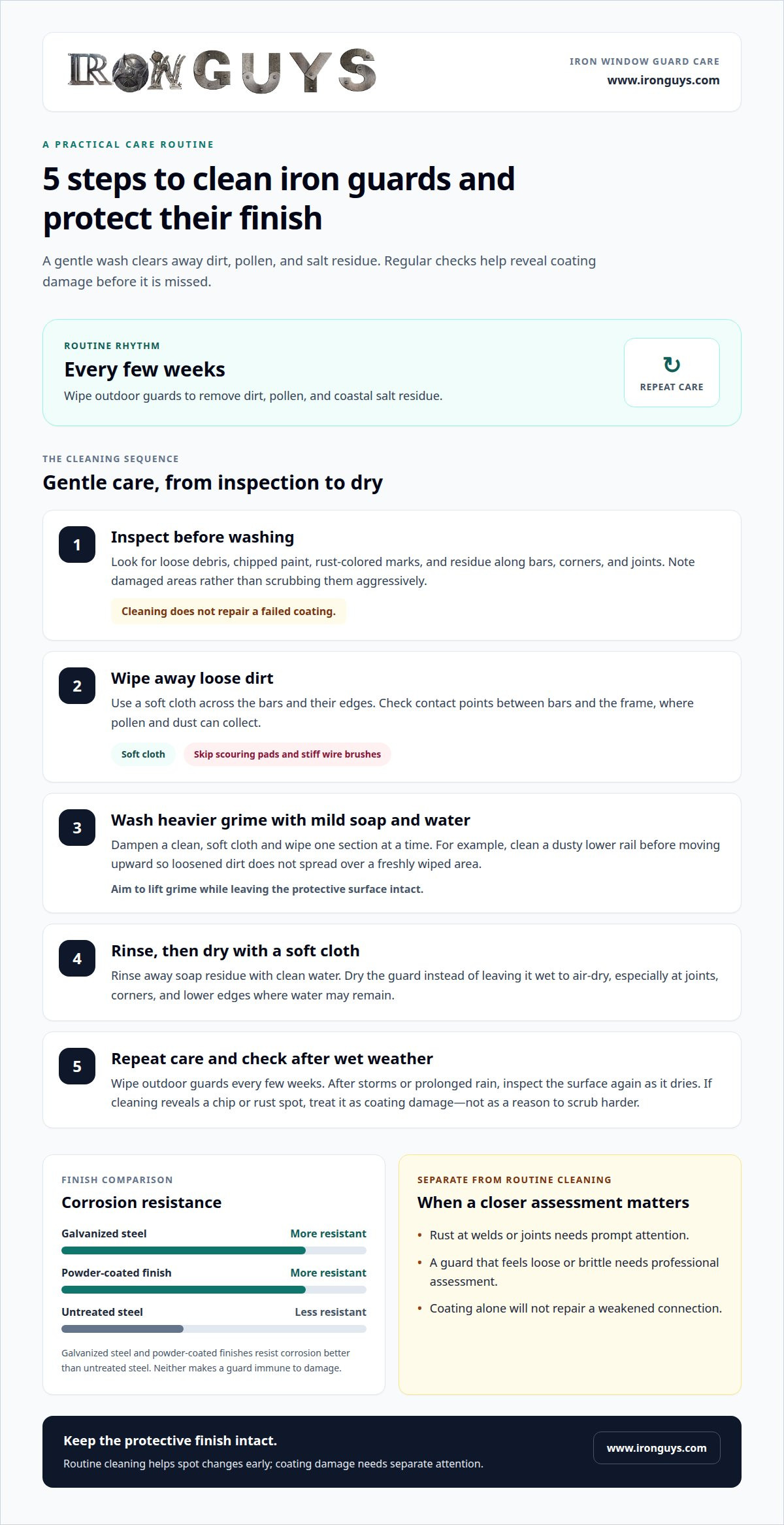
- Start with a visual check before cleaning. Look for loose debris, chipped paint, rust-colored marks, and residue along bars, corners, and joints. Salt can settle on exposed metal, especially on guards facing the coast or an open street. Note damaged areas rather than scrubbing them aggressively. Cleaning won’t repair a failed coating, so identifying damage first helps ensure a routine wash doesn’t mask a spot that needs separate attention.
- Wipe away loose dirt with a soft cloth. Work across the iron bars and around their edges, where pollen and dust can collect. A soft cloth removes everyday grime without the abrasion of a scouring pad or stiff wire brush. Pay attention to contact points between bars and the frame. These narrow areas can hold debris, so clean every reachable section rather than only the broad, visible surfaces.
- Use mild soap and water for heavier grime. Dampen a clean, soft cloth, apply the soapy water, and wipe one section at a time. For example, clean a dusty lower rail before moving upward, so loosened dirt doesn’t spread over a freshly wiped area. Avoid harsh abrasive tools that could scratch the coating. The aim is to lift grime while leaving the protective surface intact.
- Rinse away soap residue with clean water, then dry the guard with another soft cloth. Pay special attention to joints, corners, and lower edges, where water may remain after washing. Drying helps prevent moisture from sitting on the metal. Don’t leave a thoroughly washed guard wet to air-dry, particularly when water has collected in tight spaces or along a frame.
- Set a repeatable cleaning routine and adjust it to the guard’s exposure. Wipe outdoor steel security bars every few weeks to remove dirt, pollen, and salt residue. After storms or prolonged rain, inspect the surface again as it dries. If cleaning reveals a chip or rust spot, treat it as coating damage rather than scrubbing harder. This keeps routine care separate from repair.
Regular cleaning is simple, but it doesn’t replace coating maintenance. A clean surface makes changes easier to spot early, while a careful wash helps avoid unnecessary wear during routine care.
Galvanized steel and powder-coated finishes
Galvanized steel and powder-coated finishes resist corrosion better than plain, untreated steel. Compare how each finish protects the surface, then inspect its condition during routine maintenance.
- Identify the finish before assessing its condition. Galvanized steel has a corrosion-resistant surface treatment, while powder coating forms a protective layer over the metal. Both offer more resistance than untreated steel, but neither makes a guard immune to damage. For an outdoor window guard in coastal Los Angeles, account for salt in the air, which can speed rusting on exposed steel.
- Choose a finish based on the guard’s material and intended appearance. Galvanizing provides corrosion resistance at the steel surface; powder coating adds a finished outer layer. The two approaches protect differently, so don’t treat their names as interchangeable. Consider whether preserving a particular color or surface appearance matters, and whether the guard’s bars, corners, and joints can be inspected and maintained.
- Inspect the entire finish rather than judging only the broad, visible bars. Check corners, edges, joints, and places where the guard meets its frame. A scratch or chip can expose metal beneath a coating, creating a starting point for rust. Look for bubbling, peeling, or rust marks, too. After storms or prolonged rain, include this check in your review of the guard’s condition.
- Respond to damage according to the finish and affected area. Don’t cover rust or a loose coating with a fresh top layer. Remove surface rust and prepare the metal before applying a suitable protective coating. For a powder-coated guard, pay particular attention to chips that break through the finished layer. For galvanized steel, inspect visibly damaged areas rather than assuming the treatment protects exposed spots.
- Keep the finish under review throughout the guard’s service life. Inspect outdoor security bars regularly, especially after storms or prolonged rain. Salt residue, moisture, and coating damage can change a surface between checks. Note which areas need attention, such as a chipped corner or a rust mark near a joint, then follow up after maintenance.
Galvanized steel and powder coating both offer an advantage over untreated steel, but the finish still needs care. A sound coating and timely attention to damaged areas work together to limit corrosion.
Iron guard durability and maintenance
Durability depends on the steel’s condition and the protection around it. In coastal Los Angeles, salt air and moisture make regular checks especially useful.
- Track moisture exposure around the guard. Iron in steel reacts with oxygen and moisture to form iron oxide, commonly called rust. Salt in coastal air speeds rusting on outdoor steel, so a guard near the coast may need closer attention than one in a sheltered spot. Check for recurring dampness, water collecting near the frame, and surfaces that stay wet after rain.
- Inspect the guard once or twice a year, with an extra look after storms or long periods of rain. Check the full structure, not just the front-facing bars. Examine edges, corners, fasteners, welds, and joints for rust or coating damage. Corrosion left untreated can spread beneath a damaged coating, reducing the thickness and integrity of affected steel. Note changes so the same spots receive attention next time.
- Remove light surface rust carefully before it spreads. Use 000 or 0000 grade steel wool for light rust, working gently over the affected area. Moderate rust may need grade 0, 1, or 2 steel wool, followed by 0000 grade wool to polish the surface. Avoid aggressive scrubbing on intact coating nearby. Once bare metal is exposed, restore its protection instead of leaving it open to moisture.
- Look for condensation as well as direct rain. According to the U.S. Environmental Protection Agency, condensation can cause rust, and insulating surfaces prone to condensation can help prevent it. Check nearby surfaces where moisture regularly forms, such as a cool wall or window area beside the guard. Addressing the source of repeated condensation helps limit the time moisture contacts iron.
- Arrange a professional assessment if a guard feels loose or brittle, or if rust appears along welds and joints. These signs can point to more than a surface blemish. A coating can protect exposed metal, but it cannot restore a weakened connection or steel that has lost integrity. Keep the affected area accessible for assessment, and don’t treat a loose section as a paint-only repair.
Consistent maintenance helps catch deterioration while it remains localized. A clean, intact finish protects the surface, while corrosion at a joint or structural connection calls for more than cosmetic attention.
Make inspection a routine part of care, particularly where humidity is persistent. Regularly inspect iron window guards for rust or corrosion, especially in humid environments. A cast-iron wax method is a separate surface-care suggestion, not a substitute for checking bars, joints, and fasteners for deterioration. Focus on corrosion and changes in stability.
The commenter recommends heating a 12 x 12 section of cast iron until wax liquefies on contact, then allowing the wax to cool for 20 minutes before buffing off hazy residue. Treat that process as specific to cast iron and do not let a cosmetic finish distract from structural checks. Wax does not address a loose guard or weakened connection; prioritize assessment and repair when those concerns appear.
Rust-resistant finishes on iron and steel window guards
Finish choice affects how a guard resists corrosion and how repairs should be handled. Match surface preparation and coating to the metal and the finish you want to preserve.
-
Remove Rust Before Painting
Remove surface rust from an outdoor guard before painting. Clear loose corrosion and coating around the affected spot, then leave the surface clean and dry before priming. Painting over rust can trap corrosion beneath the new layer, where it may continue spreading. Work carefully around intact coating so preparation doesn’t create extra scratches or expose more metal than necessary.
For a small spot, focus on the affected area and check its edges for remaining rust. A rust-inhibiting primer followed by a weatherproof topcoat protects cleaned metal. For broader repainting, use at least one coat of oil-based primer followed by two coats of oil-based enamel paint. Let each layer dry according to its directions.
-
Consider Rust Converters
Use a rust converter only if its label identifies the guard’s metal and the planned coating system as compatible. Follow the product’s preparation, application, and drying directions; don’t assume a converter replaces rust removal or primer. Remove loose rust first, then treat the remaining surface as directed. This avoids relying on a product in a way its instructions don’t support.
Before using a rust converter, consider the existing finish and the extent of corrosion. A converter may change the surface appearance, so it may not suit a guard whose current finish you want to preserve. For extensive rust, or corrosion around welds and joints, prioritize assessing the metal’s condition rather than covering the area with another layer.
-
Apply a Rust-Resistant Finish
Choose a finish according to the appearance you want and the guard’s existing coating. A clear rust-resistant sealant can protect an outdoor security bar while keeping its current finish looking the same. Where repainting is needed, apply rust-inhibiting primer and a weatherproof topcoat to clean, dry metal. Coat edges and corners evenly, as these areas are easy to miss.
Galvanized steel and powder-coated finishes resist corrosion better than untreated steel, but any damaged area still needs attention. Inspect the coating regularly, especially after storms or prolonged rain. Refresh protective coatings every few years, and address chips when they appear. This keeps maintenance focused on the finish instead of waiting for corrosion to spread.
Iron Guys: window guards
Iron Guys helps property owners in Downtown LA, Hollywood, Santa Monica, Manhattan Beach, and surrounding Los Angeles communities with tailored ironwork for security and curb appeal. If your window guards need attention, the care steps above can help you spot coating damage and recognize when corrosion may need more than routine cleaning.
For broader property protection, Iron Guys offers security iron fences, automatic gates, electric remote control gates, and horizontal iron works. These options can complement existing security features while keeping a property’s design cohesive. Explore completed projects and customer reviews for examples of the workmanship and reliability local property owners value.
Contact Iron Guys to discuss your property’s ironwork needs.
Keep Your Property Protected Over Time
A consistent routine for preventing rust on iron window guards helps you spot concerns early and plan the right next step. If a guard has loose connections, brittle areas, or corrosion that extends beyond its finish, treat it as a structural concern, not just a paint touch-up.
For property owners considering broader ironwork, Iron Guys offers security iron fences, electric remote control gates, and automatic gates. These options can support a coordinated approach to security across a Los Angeles property, while the right choice depends on the specific project. Explore completed projects and customer reviews to see examples of the work and learn more about Iron Guys’ reputation.
Take the next step with care. A well-maintained property starts with thoughtful decisions and ongoing attention.
Frequently Asked Questions
What is the best rust-inhibiting primer and paint for iron window bars?
Choose a rust-inhibiting primer and exterior weatherproof topcoat intended for metal. For a painted finish, an oil-based system can include at least one primer coat followed by two coats of oil-based enamel. Check that the products are compatible with each other and the existing finish. If the bars have rust, remove it before priming; a new coat over corrosion can hide the problem without stopping its spread.
What are the steps for painting iron window guards to prevent rust?
Start by removing loose rust and damaged paint, then clean the guard and let it dry fully. Apply rust-inhibiting primer to exposed metal, followed by a weatherproof topcoat. For an oil-based system, apply at least one primer coat and two coats of oil-based enamel. Follow each product’s application and drying directions, and take care to cover edges and narrow areas that a brush can miss.
How often should iron window guards be inspected and repainted?
Inspect outdoor guards regularly, with an additional check after storms or prolonged rain. Look closely at corners, joints, welds, and other spots where coating damage may be easy to overlook. Refresh protective paint or coatings every few years, but address visible chips or rust sooner. A fixed repaint schedule shouldn’t replace checks for damage between maintenance rounds.
What are the best coatings for iron window guards in coastal or humid climates?
Galvanized steel and powder-coated finishes resist corrosion better than untreated steel. For an existing painted guard, use a rust-inhibiting primer and weatherproof topcoat after removing rust and preparing the surface. A clear rust-resistant sealant is another option when you want to preserve the current appearance. In coastal areas, salt can speed rusting, so inspect exposed surfaces and damaged coating closely.
Are there regulations for painting or maintaining iron window guards on residential buildings
Requirements can depend on the building and applicable local rules, especially if painting or maintenance could affect a guard’s operation or an exit. Check local building codes and fire regulations; for homes built before 1978, hire a certified lead professional for work that may disturb paint.